A sweatshirt can look great in a photo and still disappoint after real wear. The fabric may feel soft at first, then pill, shrink, lose shape, or feel too hot and heavy for daily use. That is why the question is not only which material sounds best. The real question is which material performs best for the intended product.
The best sweatshirt material depends on the product purpose, but in most cases the strongest options are cotton-rich fleece, French terry, cotton-polyester blends, loopback cotton, and selected double-knit constructions. A high-quality sweatshirt material should balance softness, weight, durability, recovery, wash performance, and end-use comfort rather than relying on one feature alone.
At Fusionknits, we treat sweatshirt material as the foundation of the whole garment. A strong silhouette, a clean neckline, and a good fit all become weaker if the fabric is wrong. That is why the best sweatshirt material is not decided by trend alone. It is decided by how the fabric supports comfort, structure, and long-term value in real use.
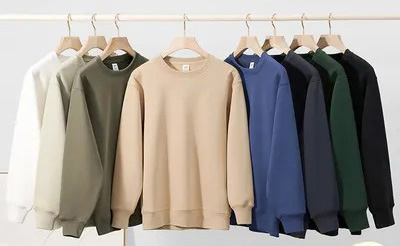
Why Does Sweatshirt Material Matter So Much?
A sweatshirt is one of the most repeated-use garments in modern apparel. People wear it at home, outside, while traveling, during layering seasons, and through frequent washing. This means material weaknesses show up quickly.
Sweatshirt material matters because it controls softness, warmth, breathability, pilling, drape, recovery, and wash durability. A weak fabric may feel good in the beginning, but it often loses quality after repeated wear and laundering.
The material does more than create hand feel. It affects how the neckline sits, how the rib holds the hem, how the body hangs, and whether the sweatshirt still looks presentable after several washes. Even the same pattern can feel completely different when made in a stronger or weaker fabric.
At Fusionknits, we usually evaluate sweatshirt fabric as a full product-performance system. The material should not only feel nice in a swatch. It should also work with fit, rib, stitching, and category positioning.
Why fabric changes the whole sweatshirt result
- It affects first-touch softness
- It changes the garment’s warmth level
- It influences body shape and drape
- It affects pilling resistance
- It controls shrinkage behavior
- It impacts long-term comfort
Why this matters in development
Sweatshirts are washed often
Fabric problems become visible faster than many buyers expect.
The category depends on repeat wear
Customers expect a sweatshirt to stay useful over time.
Material changes brand perception
A better fabric immediately makes the product feel more premium.
| Material factor | Effect on sweatshirt quality |
|---|---|
| Better surface quality | Less pilling and cleaner appearance |
| Better recovery | Stronger long-term shape |
| Better weight balance | Better comfort and drape |
| Better construction support | Better neckline and body stability |
Is 100% Cotton the Best Material for a Sweatshirt?
Cotton is one of the most trusted fibers in apparel, so many buyers assume it must always be the best answer. In reality, cotton can be excellent, but only when the fabric structure and product purpose support it.

100% cotton can be an excellent sweatshirt material, especially when the fabric is high-quality loopback cotton or brushed cotton fleece. It offers natural softness, breathability, and a comfortable hand feel, but it is not always the best option if stronger recovery, lower shrink risk, or easier care are also priorities.
At Fusionknits, we often use 100% cotton in premium sweatshirt programs where natural hand feel and cleaner casual comfort are leading priorities. Better cotton usually performs well in high-quality basics and premium washed garments. But pure cotton also has limits. It can shrink more, recover less effectively, and lose structure faster if the knit and finishing are not strong enough.
Why 100% cotton works well
- Soft natural feel
- Strong consumer trust
- Good breathability
- Strong premium-basic appeal
- Better natural-fiber story
Why 100% cotton is not always the full answer
Recovery may be weaker
The fabric can lose shape faster than stronger blends.
Shrinkage needs control
Without good finishing, pure cotton can become less stable.
Product role still matters
A heavy streetwear sweatshirt and a commercial school sweatshirt may need different performance priorities.
| Cotton direction | Best use |
|---|---|
| 100% cotton loopback | Premium everyday sweatshirt |
| 100% cotton fleece | Soft premium comfort sweatshirt |
| Weak low-density cotton knit | Lower long-term quality |
Are Cotton-Polyester Blends Better Than Pure Cotton?
In many broad-market and commercial programs, yes. Cotton-polyester blends are popular for a reason. They often solve practical product issues that pure cotton cannot solve as easily.
Yes, cotton-polyester blends are often better than pure cotton for many sweatshirt categories because they improve recovery, reduce shrink risk, increase durability, and support easier everyday care. A well-balanced cotton-poly blend can keep much of cotton’s comfort while adding better long-term performance.
At Fusionknits, cotton-poly fleece is often one of the most commercially useful sweatshirt materials. It performs especially well in broad-market basics, schoolwear, promotional programs, and everyday casualwear where durability and consistency matter as much as hand feel.
Why cotton-poly blends perform so well
- Better shape retention
- Better wash stability
- Lower shrink risk
- Better durability in repeated wear
- Easier broad-market commercial use
Why the blend has become so common
It reduces pure cotton’s weak points
The product stays more stable over time.
It supports frequent laundering
This matters in repeat-wear garments.
It works across many price levels
The blend gives flexibility in commercial development.
| Blend type | Main strength |
|---|---|
| Cotton-poly fleece | Strong all-around commercial fabric |
| Cotton-rich poly blend | Better comfort with more stability |
| Higher poly commercial blend | Stronger durability, different hand feel |
Is French Terry the Best Sweatshirt Material for All-Season Use?
In many cases, yes. French terry is one of the strongest all-season sweatshirt fabrics because it balances comfort, breathability, and everyday practicality better than many heavier alternatives.
Yes, French terry is often the best sweatshirt material for all-season use because it feels soft, breathable, and lighter than brushed fleece while still offering enough body for shape and comfort. It is especially strong in transitional weather and everyday casualwear.
At Fusionknits, French terry is one of the most reliable fabric structures in sweatshirt development. It sits between lightweight jersey and heavier fleece. That makes it easier to wear across spring, autumn, and indoor layering seasons. It also gives the sweatshirt a cleaner, more flexible identity.
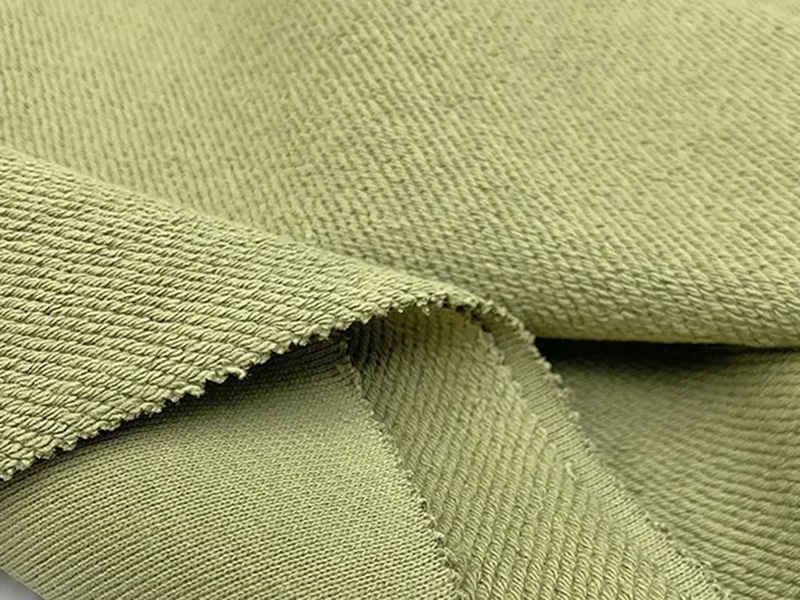
Why French terry is so effective
- Good breathability
- Strong all-season comfort
- Lighter than heavy fleece
- Better indoor wearability
- Good balance of softness and structure
Why buyers often choose it
It works in more climates
The garment feels less season-limited.
It layers well
The sweatshirt stays useful under jackets and coats.
It supports broad styling
French terry suits basics, travelwear, and premium casualwear.
| Fabric type | Best product role |
|---|---|
| French terry | All-season daily sweatshirt |
| Midweight terry | Strongest commercial balance |
| Stretch terry blend | Slightly more movement support |
Is Brushed Fleece the Best Material for Warmth and Softness?
For pure comfort and warmth, often yes. Brushed fleece remains one of the most popular sweatshirt fabrics because it gives that familiar soft interior feel customers often expect from a classic sweatshirt.
Yes, brushed fleece is often the best sweatshirt material for warmth and cozy softness because its brushed inside surface creates insulation and a plush feel. It is especially strong for cold-weather sweatshirts, comfort-led basics, and winter casualwear.
At Fusionknits, brushed fleece works best when the surface quality is strong and the weight matches the product role. A good fleece sweatshirt feels soft, warm, and substantial. A weak fleece sweatshirt may feel nice at first but pill too fast or lose shape after repeated washing.
Why brushed fleece stays popular
- Warm interior feel
- Strong comfort value
- Familiar sweatshirt identity
- Good winter layering performance
- Strong emotional comfort appeal
What makes better fleece better
Better yarn and knit structure
This supports cleaner long-term wear.
Better brushing control
The inside should feel soft without weakening the fabric too much.
Better density
The body should hold shape and feel stable.
| Fleece type | Best use |
|---|---|
| Midweight brushed fleece | Broad cold-weather basic |
| Heavy brushed fleece | Premium winter sweatshirt |
| Weak low-density fleece | Lower long-term value |
What Is Loopback Cotton, and Why Is It Considered Premium?
Loopback cotton is one of the most respected sweatshirt materials in premium casualwear. It is often linked with cleaner interiors, stronger structure, and better long-term quality when developed correctly.

Loopback cotton is a knit fabric with visible looped yarns on the inside rather than a brushed fleece finish. It is often considered premium because it offers better breathability, a cleaner internal structure, and a more refined sweatshirt feel, especially in high-quality cotton programs.
At Fusionknits, loopback cotton is especially strong in premium basics, minimalist collections, and brands that want a more elevated alternative to standard fleece. It feels less plush than brushed fleece, but often more refined and more breathable.
- Cleaner internal appearance
- Better breathability
- Stronger premium-basic identity
- Better trans-seasonal comfort
- More refined texture story
Why not every brand uses it first
It is more product-specific
Some customers still expect fleece softness in a sweatshirt.
It often sits in a higher product tier
The result can feel more premium, but also more niche in some markets.
The brand concept matters
Loopback cotton suits cleaner and more mature sweatshirt programs especially well.
| Fabric structure | Main benefit |
|---|---|
| Loopback cotton | Premium breathable comfort |
| Brushed fleece | Maximum softness and warmth |
| French terry | Best broad versatility |
Is Double-Knit a Good Sweatshirt Material?
Yes, especially when the product needs more structure, smoother surface quality, and a more elevated look. Double-knit sweatshirt fabrics are not the most common traditional answer, but they can be very effective in premium categories.
Yes, double-knit can be a very good sweatshirt material when the goal is a cleaner, more structured, and more polished product. It often offers better body, smoother surface appearance, and stronger silhouette control than softer casual sweatshirt fabrics.
At Fusionknits, double-knit sweatshirts are usually strongest in premium lifestyle collections and cleaner city casualwear. They may feel less traditional than fleece, but they bring a stronger refined look that some brands prefer.
Why double-knit works well
- Smoother outer surface
- Better body and structure
- Cleaner premium appearance
- Good for minimal design language
- Strong in elevated casualwear
Why it is not the universal answer
It may feel less cozy than fleece
The product mood is more polished than plush.
It changes category identity
The sweatshirt moves closer to refined casualwear than classic comfortwear.
Fabric cost and use level may differ
This material is often more strategic in premium collections.
| Fabric direction | Main product effect |
|---|---|
| Double-knit | More elevated structure |
| Fleece | Softer classic comfort |
| Terry | Easier everyday versatility |
Which Sweatshirt Material Pills the Least?
Pilling is one of the most common complaints in sweatshirt wear, so this question matters a lot. There is no single fabric that guarantees zero pilling, but some constructions perform much better than others.
The sweatshirt materials that usually pill the least are higher-quality dense knits, stronger loopback cottons, better-constructed cotton-poly blends, and smoother double-knit fabrics. Pilling depends not only on fiber content, but also on yarn quality, knit density, finishing, and garment care.
At Fusionknits, we see that pilling is often more about fabric engineering than about one fiber name alone. A weak 100% cotton fleece can pill badly. A strong cotton-poly blend can perform much better. Surface quality, brushing control, and knit density often decide the real result.
Factors that affect pilling most
- Yarn quality
- Knit density
- Surface finishing
- Brushing method
- Fiber blend balance
- Washing and drying method
Materials that often resist pilling better
Dense loopback cotton
The cleaner surface usually supports better wear.
Better cotton-poly commercial fleece
When engineered well, it can outperform weaker pure cotton fleece.
Smoother double-knit structures
These often have fewer loose surface fibers.
| Material type | Pilling risk |
|---|---|
| Weak brushed fleece | Higher |
| Strong loopback cotton | Lower |
| Better double-knit | Lower |
| Dense cotton-poly fleece | Moderate to lower when well made |
Which Sweatshirt Material Is Best for Different Product Types?
This is the most useful question because there is no one material that leads in every category. The best sweatshirt material depends on what the product is meant to do.
The best sweatshirt material changes by product type. French terry is often best for all-season everyday sweatshirts, brushed fleece is best for warmth and softness, loopback cotton is best for premium breathable basics, cotton-poly fleece is best for broad commercial durability, and double-knit is best for more structured premium casualwear.
At Fusionknits, the most accurate fabric decisions start with product role. A promotional sweatshirt should not always use the same material logic as a luxury basic. A streetwear oversized fleece should not be built like a refined minimal crewneck.
Better material choices by sweatshirt type
- Everyday basic sweatshirt: French terry or cotton-poly fleece
- Warm winter sweatshirt: brushed fleece
- Premium basic sweatshirt: loopback cotton
- Commercial school or team sweatshirt: cotton-poly blend
- Elevated lifestyle sweatshirt: double-knit
- Washed fashion sweatshirt: strong cotton-rich fleece or loopback
Why this use-based approach works best
It improves category clarity
The sweatshirt performs the way the customer expects.
It reduces product mismatch
Not every sweatshirt needs the same softness, weight, or structure.
It supports stronger assortment planning
Different products can serve different roles clearly.
| Sweatshirt type | Best material direction |
|---|---|
| Daily basic | French terry or cotton-poly fleece |
| Warm comfort style | Brushed fleece |
| Premium minimal style | Loopback cotton |
| Elevated casualwear | Double-knit |
How Should Brands Choose the Best Sweatshirt Material Professionally?
The strongest brands do not ask only which fabric sounds best. They ask which fabric best matches the intended use, target customer, price level, and long-term wear expectation.
Brands should choose the best sweatshirt material by reviewing fabric weight, hand feel, recovery, surface quality, pilling risk, shrinkage behavior, and end-use category together. The best material is the one that delivers the right balance of comfort, quality, and commercial purpose.
At Fusionknits, we usually recommend starting with practical product questions. Is the sweatshirt for cold weather or all-season use? Is the customer buying premium basics or broad commercial comfortwear? Is the brand selling softness, structure, or durability first? Those answers usually make the best fabric choice much clearer.
Better buyer questions
- What is the sweatshirt’s main purpose?
- Does the customer expect plush comfort or cleaner structure?
- How often will it be washed?
- Does the product need stronger recovery?
- What price level does the fabric need to support?
- Is pilling risk a major concern?
Why this approach works
It improves material accuracy
The fabric matches the intended product role.
It protects brand quality
The sweatshirt performs more honestly over time.
It supports better range planning
Each product can use the material that best suits its market role.
| Professional review point | Why it matters |
|---|---|
| End use | Defines fabric direction |
| Recovery | Defines long-term shape |
| Surface quality | Defines premium feel |
| Wash behavior | Defines customer satisfaction |
Conclusion
The best sweatshirt material depends on the product role, but the strongest options are usually cotton-rich fleece, French terry, cotton-polyester blends, loopback cotton, and selected double-knit fabrics. French terry is often the best all-season choice because it balances comfort and breathability.
Brushed fleece is often the best for warmth and softness. Loopback cotton is one of the best premium options because it feels refined and breathable. Cotton-poly blends are often the strongest commercial answer because they improve recovery and durability. Double-knit works especially well in more structured premium casualwear. That means the best material is not one universal answer. It is the fabric that fits the sweatshirt’s true purpose.
At Fusionknits, we believe the strongest sweatshirt fabric decisions come from product logic rather than trend language alone. A high-quality sweatshirt should feel right at first touch, but it should also hold shape, resist surface breakdown, and stay useful after repeated wear and washing. When brands choose material this way, they build sweatshirts that are more comfortable, more consistent, and much more valuable in the long term.