A tank top looks simple, but it can either improve the whole outfit or make the body look less balanced than it really is. Many people focus only on color or size, but the real difference usually comes from neckline, strap width, armhole shape, fabric, and overall fit.
The most flattering tank top is usually the one that balances the shoulders, chest, waist, and neckline without feeling too tight or too loose. In most cases, scoop neck, square neck, well-cut racerback, and clean regular-fit tanks in stable fabrics are the most flattering because they create a clearer upper-body line and feel more intentional on the body.
At Fusionknits, we do not see flattering fit as one universal body rule. We see it as product balance. A flattering tank top should work with the wearer’s proportions, not fight against them. That is why the best tank is rarely about copying one trend. It is about choosing the right shape, fabric, and fit for the intended body line and styling role.
Why Does Tank Top Shape Matter More Than People Expect?
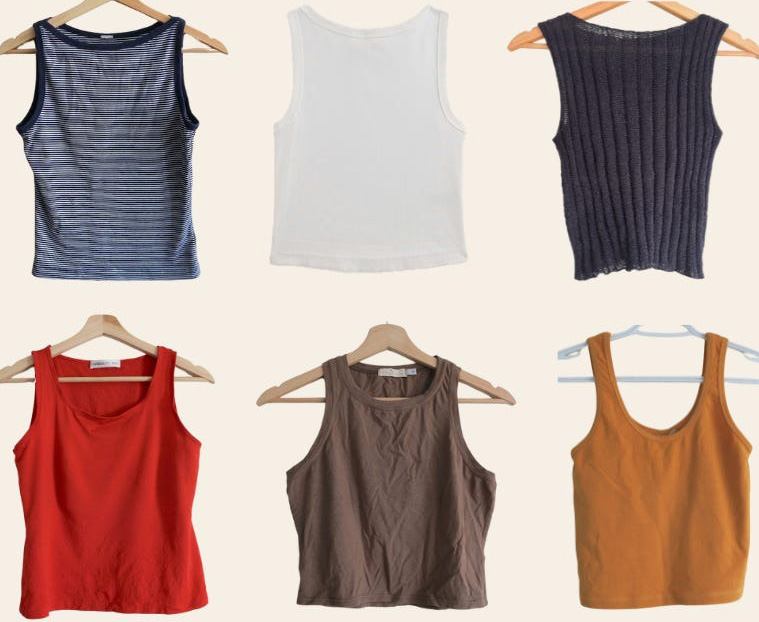
A tank top has fewer design elements than many other garments. That means every detail becomes more visible. The neckline, armhole, shoulder width, and body fit all influence the final look more strongly than in a more covered top.
Tank top shape matters so much because the garment leaves the shoulders, neck, and upper chest more exposed, so proportion becomes much easier to notice. A good shape can make the body look longer, cleaner, and more balanced, while a weak shape can make the same body look wider, shorter, or more awkward.
From a manufacturing point of view, tank tops are one of the clearest examples of how small pattern changes create big visual results. A slightly better neckline can improve the whole garment. A slightly wrong armhole can ruin it. This is why flattering tank tops depend heavily on pattern discipline.
At Fusionknits, we treat tank tops as fit-sensitive essentials. A flattering result usually comes from how the upper body is framed, not from decoration alone.
Why tank tops are so visually sensitive
- The neckline is highly visible
- The shoulder line is exposed
- The armhole affects proportion quickly
- The body fit is easy to judge
- There is less structure to hide mistakes
Why this matters in product development
Simplicity increases visual pressure
A basic garment has to rely more on proportion than on extra design details.
Upper-body framing is critical
The tank top can either open up the neckline or compress it visually.
Fit mistakes become obvious faster
Too tight or too loose is easier to see in a tank than in a sweatshirt.
| Design area | Why it affects flattery |
|---|---|
| Neckline | Frames face and upper chest |
| Strap width | Changes shoulder balance |
| Armhole shape | Affects comfort and exposure |
| Body fit | Controls silhouette |
Is the Most Flattering Tank Top Tight or Loose?
Neither extreme is usually the most flattering. The best result usually sits in the middle, where the tank follows the body enough to look intentional but still leaves enough ease to move naturally.

The most flattering tank top is usually not extremely tight or extremely loose. A slightly body-skimming fit is often the most flattering because it shows shape without pulling, clinging awkwardly, or collapsing into excess fabric.
At Fusionknits, we often see that the most flattering fit is the one that gives visual clarity without tension. A tank top should not strain across the chest or waist, but it should also not hang away from the body without purpose. A balanced fit usually creates the strongest line.
Why a balanced fit is usually best
- It keeps the body line clean
- It avoids visible pulling
- It reduces unwanted gaping
- It supports layering and solo wear
- It feels more polished than an extreme fit
What usually looks less flattering
Overly tight tanks
These often create pulling lines, armhole pressure, and visual tension.
Overly loose tanks
These can make the body look less defined and may gap around the armhole or neckline.
Wrong fabric with the wrong fit
A weak fabric can make even a good pattern look less flattering.
| Fit type | Visual effect |
|---|---|
| Very tight | More strain, less ease |
| Slightly body-skimming | Usually most flattering |
| Very loose | Less defined and weaker silhouette |
What Neckline Is Usually the Most Flattering on a Tank Top?
The neckline is one of the biggest deciding factors because it shapes the whole upper body. It affects how the neck looks, how open the chest area feels, and how balanced the shoulder line appears.
The most flattering tank top necklines are usually scoop neck, square neck, and well-cut soft V or balanced racer shapes, depending on the body and the styling goal. These necklines often work well because they open the upper body, create cleaner framing, and avoid the compressed look that some high necklines can create.
At Fusionknits, neckline design is one of the strongest tools in flattering tank development. A scoop neck often feels softer and more open. A square neck can feel cleaner and more structured. A racer shape can look athletic and strong when the shoulder balance is correct.
Necklines that are often most flattering
- Scoop neck
- Square neck
- Soft V-neck in selected tanks
- Balanced racerback front neckline
- Clean rounded neck with strong shoulder balance
Why these necklines work well
They open the upper body
This often creates a longer and more balanced visual line.
They frame the collarbone well
A flattering tank usually supports this area instead of crowding it.
They feel more intentional
The neckline becomes part of the design, not just a hole in the garment.
| Neckline type | Flattering effect |
|---|---|
| Scoop neck | Softer and lengthening |
| Square neck | Structured and balanced |
| Soft V-neck | More vertical line |
| Racer shape | Sporty and defined |
Are Wide Straps More Flattering Than Thin Straps?
In many cases, yes. Wide straps often create better balance and stronger support. But thin straps can still be flattering in the right product category and body context.
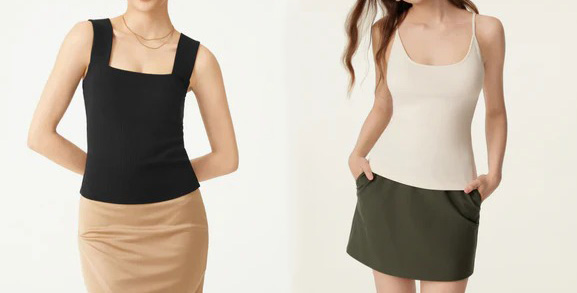
Wide straps are often more flattering than thin straps because they frame the shoulder more clearly, offer better balance, and usually make the tank top feel more stable and more intentional. Thin straps can still be flattering, but they often create a more delicate and less universally balanced effect.
At Fusionknits, strap width is a major design choice, not a small trim detail. Wide straps usually work well in broad commercial basics because they feel cleaner, more wearable, and easier to fit. Thin straps can be beautiful in more delicate fashion or layering products, but they are usually more body-sensitive.
Why wider straps often look better
- They create more visual support
- They balance the shoulder line
- They reduce the “underwear” feeling
- They often improve bra compatibility in women’s products
- They make the tank feel more complete
When thin straps can still work
In feminine fashion-led tanks
They can create a lighter, more delicate mood.
In layering categories
They may be designed more for hidden use than for strong solo wear.
In warm-weather resort styling
A lighter look may be part of the product goal.
| Strap width | Typical flattering effect |
|---|---|
| Wide strap | Strongest broad balance |
| Medium strap | Versatile and clean |
| Thin strap | Delicate but more limited |
Is a Racerback Tank Top the Most Flattering Option?
It can be, especially in activewear and more athletic styling. But not every racerback is flattering. The back shape, front neckline, and armhole must all be designed carefully.
A racerback tank can be very flattering when it is cut with balanced armholes and a clean upper-back shape. It often flatters by highlighting the shoulder line and creating a sportier, more sculpted look. However, a badly cut racerback can expose too much around the armhole or make the upper body feel overly narrow.
At Fusionknits, racerback tanks work best when the pattern supports the body instead of over-cutting it. A well-designed racerback feels dynamic and balanced. A weak one often gaps or pulls too much around the upper chest and underarm.
Why racerbacks can be flattering
- They define the shoulder line
- They create a more athletic shape
- They work well in active and casual styling
- They often make the back look cleaner and stronger
When racerbacks are less flattering
If the armholes are too deep
The garment may feel too exposed or unstable.
If the front neckline is too closed
The upper body may look compressed.
If the straps narrow too aggressively
The tank may lose visual balance.
| Racerback quality | Visual result |
|---|---|
| Balanced racerback | Strong and flattering |
| Overcut racerback | Too exposed and less balanced |
| Closed front with narrow back | More restrictive-looking |
What Fabric Makes a Tank Top Look More Flattering?
Fabric affects how the tank sits on the body. A good fabric can smooth, support, and drape. A weak fabric can cling, sag, or reveal too much. That is why flattering fit and flattering fabric always work together.

The most flattering tank top fabrics are usually stable rib knits, cotton-elastane blends, modal-stretch blends, compact jerseys, and other fabrics with enough recovery and body to sit cleanly on the body. The best fabric usually feels soft, but not weak, and supportive, but not stiff.
At Fusionknits, flattering tank tops often depend on a fabric that can follow the body without collapsing into it. Stretch rib works well because it offers shape and recovery. Compact jersey works well because it keeps a cleaner line. A very limp fabric can still work in a loose tank, but it usually needs careful design.
Fabrics that often flatter best
- Cotton-elastane rib
- Modal-stretch rib
- Compact cotton jersey
- Nylon-stretch active knit
- Smooth viscose-elastane blends with enough body
Why better fabric improves flattery
It controls cling better
The tank feels smoother instead of showing every fabric weakness.
It supports the neckline and armhole
A good structure keeps the garment cleaner.
It helps the fit stay consistent
The tank looks better after movement and repeated wear.
| Fabric type | Flattering effect |
|---|---|
| Stretch rib | Clean body-skimming fit |
| Compact jersey | Smooth and stable |
| Modal stretch blend | Soft with better drape |
| Weak thin knit | Often less flattering |
What Tank Top Length Is Usually the Most Flattering?
Length changes body proportion very quickly. A tank that stops in the wrong place can make the torso look shorter or less balanced. A better length helps the whole silhouette feel easier.
The most flattering tank top length is usually one that ends around the high hip or just below the natural waist balance point, depending on the product category. Cropped tanks can also be flattering when they are intentionally proportioned, but the strongest broad-market length is usually a balanced standard length that supports the waist and hip line cleanly.
At Fusionknits, length should always match the styling role. A regular tank top used in casualwear should usually not be too long and not too short. A fashion crop tank can be flattering when it is clearly intentional. The key is proportion, not only category name.
Lengths that often work best
- Standard hip-length tank
- Slightly shortened modern basic tank
- Intentional cropped tank in fashion use
- Longline tank only when used for layering
Why length affects flattery
It changes torso proportion
The eye reads the upper and lower body differently depending on hem position.
It affects layering value
A tank that is too long can feel heavy under other garments.
It changes body balance
A good hem point helps the garment feel more integrated with the rest of the outfit.
| Tank length | Typical flattering effect |
|---|---|
| Standard hip length | Strongest broad balance |
| Slightly cropped | Modern and clean |
| Very longline | More limited use |
| Intentional crop | Strong in fashion styling |
What Kind of Tank Top Flatters the Most Body Types?
The most universally flattering tank top is usually not the most dramatic one. It is the one that gives structure, balance, and ease without being too extreme in shape.
The kind of tank top that flatters the most body types is usually a medium-width strap tank with a scoop or square neckline, a slightly body-skimming fit, a balanced armhole, and a stable fabric such as stretch rib or quality jersey. This combination usually works well because it creates clean framing without overexposing or overcompressing the body.
At Fusionknits, this kind of tank often performs best commercially because it is easier to wear, easier to style, and easier to trust. It feels like a real wardrobe piece rather than a risky fashion experiment.
Features of the most broadly flattering tank
- Medium to wide straps
- Scoop or square neckline
- Balanced armhole depth
- Slight body-skimming fit
- Supportive but soft fabric
- Clean standard length
Why this combination works
It supports the shoulders and chest
The upper body feels framed instead of exposed.
It avoids both extremes
The garment is not too tight, too loose, too delicate, or too aggressive.
It fits more styling situations
The tank can work alone or under layers more easily.
| Feature | Broad flattering value |
|---|---|
| Medium strap | Better shoulder balance |
| Scoop or square neck | Cleaner upper-body framing |
| Body-skimming fit | Better silhouette |
| Stable fabric | More polished result |
How Should Brands Design a More Flattering Tank Top?
Brands often make tank tops too basic in development. The strongest tanks are usually the result of careful decisions, not generic block patterns.
Brands should design a more flattering tank top by focusing on neckline shape, strap width, armhole balance, fabric recovery, and body-skimming proportion. The best tank top design usually comes from controlled simplicity, where each detail supports the wearer’s shape instead of competing with it.
At Fusionknits, flattering tank design begins with pattern testing. A brand should not approve a tank top only because the front looks acceptable on a hanger. It should be tested in movement, on body, and under styling conditions. Good tank tops often look effortless, but they are usually highly considered products.
Better design priorities for a flattering tank
- Refine the neckline carefully
- Avoid over-deep armholes
- Choose strap width intentionally
- Match fit to fabric correctly
- Control body length
- Test both solo wear and layering use
Why this approach works
It improves comfort and confidence
The wearer feels better in the garment.
It reduces fit complaints
A better pattern creates a more reliable product.
It increases repeat wear
A flattering basic becomes a stronger wardrobe staple.
| Design priority | Product result |
|---|---|
| Better neckline | More flattering frame |
| Better armhole | Cleaner wear and coverage |
| Better fabric-fit match | Stronger silhouette |
| Better length | Better proportion |
Conclusion
The most flattering tank top is usually the one that creates balance across the shoulders, neckline, chest, and waist without feeling too tight or too loose. In most cases, scoop neck, square neck, and well-cut racerback tanks in stable fabrics such as stretch rib or quality jersey are the strongest options.
Medium or wide straps often flatter more broadly than very thin straps, and a slightly body-skimming fit usually performs better than extreme tightness or excessive looseness. Length matters too, because a tank top that ends at the right point can improve the whole body proportion more effectively than many people expect.
At Fusionknits, we see flattering tank tops as a product of thoughtful pattern work rather than trend alone. A great tank top should support the wearer’s shape, move naturally, and hold its line over time. When neckline, strap, armhole, fabric, and fit are all aligned correctly, the tank top becomes one of the strongest and most versatile essentials in a wardrobe.