Many buyers assume joggers must be warmer than sweatpants because joggers often look more fitted at the ankle and leg. That idea sounds reasonable, but it is not the full answer. Warmth in knit bottoms comes from fabric, weight, brushing, and construction much more than from product name alone.
At Fusionknits, we do not consider joggers automatically warmer than sweatpants. In most cases, warmth depends more on fabric type, fabric weight, inner finish, and fit balance than on whether the product is labeled as a jogger or a sweatpant. A fleece jogger can be warmer than a lightweight sweatpant, but a heavy fleece sweatpant can easily be warmer than a thin jogger.
As a professional apparel manufacturer, we see this confusion often in development and sourcing. Buyers compare one tapered jogger with one loose sweatpant and assume the silhouette alone decides thermal performance. In reality, the warmer product is usually the one with better insulation, not the one with the more modern name.
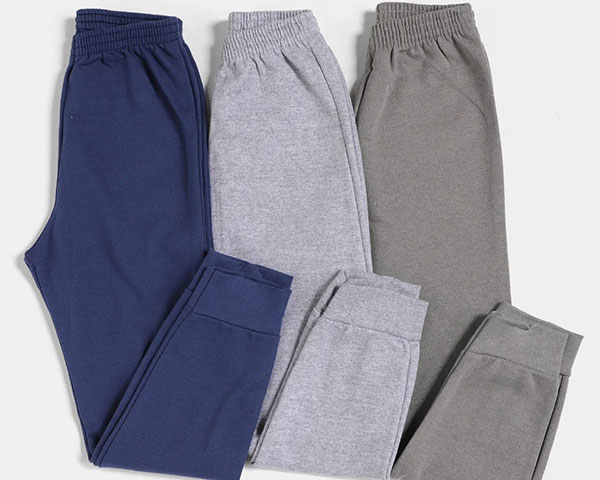
Does the name “jogger” or “sweatpant” decide warmth?
No. The product name only describes category and silhouette. It does not guarantee fabric thickness, inner brushing, or insulation level. That is why two garments from these categories can perform very differently in cold weather.
The name does not decide warmth. Joggers and sweatpants can both be warm or cool depending on the knit fabric, GSM, interior finish, and construction. The label tells the buyer about shape and style direction more than real thermal performance.
At Fusionknits, we always evaluate warmth by fabric system first. A jogger may have a tapered fit, but if it uses a lighter French terry knit, it may feel cooler than a classic sweatpant built from heavy brushed fleece. The category name alone is never enough.
Why names can be misleading
- Joggers describe silhouette more than insulation
- Sweatpants describe comfortwear heritage more than exact weight
- Both categories can use multiple fabric types
- Both can be designed for different seasons
- Retail naming often focuses on style before performance
Why fabric should be checked first
Product names are broad
A brand can call many different knit pants “joggers” or “sweatpants.”
Warmth comes from construction
Insulation is created by fabric structure, not by category wording.
| Product factor | Does it decide warmth well? |
|---|---|
| Product name | No |
| Fabric weight | Yes |
| Interior brushing | Yes |
| Knit density | Yes |
What actually makes joggers or sweatpants warm?
Warmth in knit bottoms usually comes from how much air the fabric can trap and how much body heat the garment can hold. That means fiber, knit structure, fabric weight, and inner finish all matter.

What actually makes joggers or sweatpants warm is the fabric system: brushed fleece, heavyweight terry, dense knit construction, higher GSM, and a fit that helps retain body heat. A warmer pant is usually the one with more insulating fabric, not simply the one with a tapered or loose shape.
At Fusionknits, brushed fleece remains one of the strongest warmth drivers in comfort bottoms. French terry can also work well, but it usually feels cooler than fleece when the weight is similar because the inside loop structure traps less plush insulating air than a brushed surface.
Main factors that increase warmth
- Higher fabric weight
- Brushed fleece interior
- Denser knit construction
- Stronger wind resistance from thicker fabric
- Better body heat retention
Why these factors matter more than category
Fabric holds the heat
The thermal value comes from the knit, not the label.
Construction supports insulation
A better-built fabric stays more stable in repeated wear and wash.
| Warmth factor | Why it helps |
|---|---|
| Brushed fleece | Traps more warm air |
| Heavy GSM | Adds body and insulation |
| Dense knit | Reduces heat loss |
| Better fit sealing | Helps hold warmth in |
Are joggers warmer because they are more tapered?
Sometimes slightly, but not enough to make that the main rule. A tapered leg can reduce extra air space and create a cleaner ankle finish, which may help hold warmth a little better. But that benefit is usually secondary.
Joggers can feel slightly warmer in some cases because their tapered leg and cleaner ankle opening may reduce heat loss a little better than a looser pant. However, this effect is usually smaller than the effect of fabric weight and inner finish.
At Fusionknits, we treat silhouette as a supporting factor, not the main thermal factor. A jogger that tapers well into the ankle can feel more sealed and more controlled, especially outdoors. But if the fabric is light, that small shape advantage will not make it truly warm on its own.
How taper can help a little
- Less extra air movement in the lower leg
- Cleaner ankle finish
- Slightly closer body relationship
- Better fit over socks and sneakers
Why taper is not the full answer
A thin jogger is still a thin jogger
Leg shape cannot replace insulation.
Warmth still starts with fabric
The silhouette only supports what the material already provides.
| Fit feature | Warmth effect |
|---|---|
| Tapered leg | Slight support |
| Cuffed ankle | Some heat retention help |
| Heavy fleece fabric | Major warmth effect |
Are sweatpants warmer because they are usually heavier?
In many classic comfortwear products, often yes. Traditional sweatpants are frequently built in plush fleece or heavier comfort knits, which can give them a warmth advantage over lighter joggers. But again, this is a product tendency, not a universal rule.
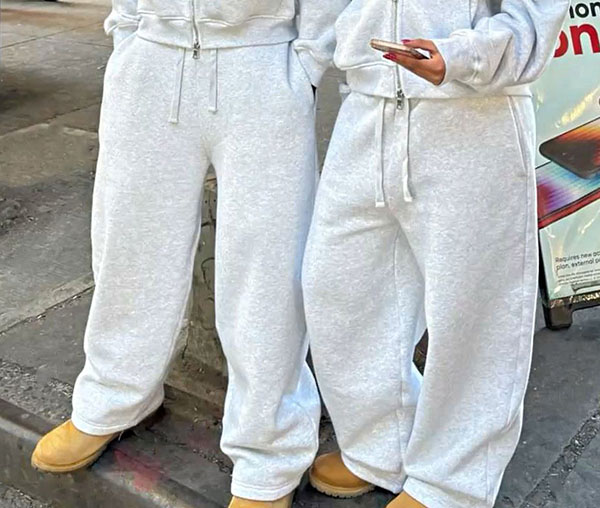
Sweatpants are often warmer when they use heavier fleece or thicker comfort knits, which is common in classic lounge and winter basics. Their warmth usually comes from heavier fabric, not from the fact that they are sweatpants by name.
At Fusionknits, many traditional sweatpants do use soft brushed fleece and more volume through the leg. That combination can feel warmer, especially indoors or in colder seasons. But if a brand develops lightweight summer sweatpants, that advantage disappears quickly.
Why sweatpants can often feel warmer
- Heavier fleece is common in the category
- More comfort-led development often means softer thicker fabric
- Winter lounge programs often use sweatpant blocks
- Plush interiors are common in classic sweatpant products
Why this is still not automatic
Some sweatpants are lightweight
Not every sweatpant is built for cold weather.
Some joggers are also heavyweight
A premium fleece jogger may outperform a lighter sweatpant easily.
| Product tendency | More common in sweatpants? |
|---|---|
| Plush fleece | Yes |
| Heavy comfort knits | Often yes |
| Lightweight summer fabric | Also possible |
Does the ankle opening affect warmth?
Yes, but only as one supporting factor. Ankle shape matters because heat can escape through openings, but this still matters less than fabric and inner finish.
Yes, the ankle opening affects warmth because a cuffed or closer ankle can help reduce heat loss compared with a wider open leg. That said, this feature only improves warmth meaningfully when the fabric already provides enough insulation.
At Fusionknits, cuffs are often useful in both joggers and sweatpants because they improve fit control and help the garment feel more closed at the bottom. Joggers often use this feature more deliberately as part of the tapered silhouette.
Why ankle finish matters
- Helps reduce open airflow
- Keeps the lower leg more controlled
- Works well with socks and footwear layering
- Supports a more sealed silhouette
Why it should not be overstated
Cuffs do not replace heavyweight fabric
They support warmth, but do not create it by themselves.
Loose fabric with cuffs can still be warm
A sweatpant can use cuffs and still remain more comfort-led than a jogger.
| Ankle type | Warmth support |
|---|---|
| Open hem | Lower |
| Elastic or cuffed hem | Higher |
| Tapered cuffed hem | Higher with better shape |
Which is warmer in real life: joggers or sweatpants?
The most honest answer is that either one can be warmer depending on the fabric and season. If both garments are made from the same heavyweight fleece, the difference in warmth may be small. If one uses much heavier material, that one usually wins clearly.

In real life, neither joggers nor sweatpants are always warmer by category. The warmer product is usually the one with heavier, denser, and more insulating fabric. If a jogger and a sweatpant use the same heavyweight fleece, their warmth can be very similar, with only small differences from fit and ankle shape.
At Fusionknits, this is why we always guide buyers back to the material specification. A category name should never replace real fabric review.
How to judge the warmer product more accurately
- Check fabric GSM
- Check if the inside is brushed fleece or terry
- Check knit density
- Check ankle finish
- Check whether the garment is built for winter or trans-seasonal use
What buyers should ask suppliers
What is the fabric composition?
A heavy cotton-poly fleece behaves differently from lightweight cotton jersey.
What is the inner finish?
Brushed fleece usually feels warmer than loopback terry.
| Product check | Better warmth clue? |
|---|---|
| “Jogger” or “sweatpant” name | No |
| Heavy fleece spec | Yes |
| Brushed inside | Yes |
| Cuffed ankle | Helpful, but secondary |
Which is better for brands to develop in colder seasons?
Both can work, but the better choice depends on styling direction and customer expectation. A winter loungewear line may lean more toward plush sweatpants. A cold-season athleisure line may prefer heavyweight joggers.
For colder seasons, sweatpants are often stronger in lounge and comfort-led collections, while heavyweight joggers are often stronger in athleisure and modern everyday casualwear. The better choice depends on whether the brand wants pure softness or cleaner style versatility.
At Fusionknits, we often recommend using both categories with clear fabric logic. A winter essentials line can include heavy fleece sweatpants for home and downtime, then add heavyweight joggers for broader street-ready daily use.
Conclusion
Joggers are not automatically warmer than sweatpants, and sweatpants are not automatically warmer than joggers. Warmth depends mainly on fabric weight, knit density, interior finish, and overall garment construction.
A tapered jogger may hold warmth slightly better at the ankle, but that advantage is usually smaller than the effect of heavyweight fleece or brushed interior fabric. A classic sweatpant can often feel warmer because many sweatpants are built in plush, comfort-led fleece, but that is a product tendency, not a guaranteed rule.
At Fusionknits, we always recommend judging warmth by fabric system first and silhouette second. If the goal is true cold-weather performance, buyers should look at GSM, fleece brushing, knit density, and ankle finish before looking at whether the label says jogger or sweatpant. Once those factors are clear, the warmer product becomes much easier to identify and much easier to develop correctly.