Many buyers use the words joggers and sweatpants as if they describe the same product. In actual garment development, that creates confusion. The two categories are closely related, but they are not identical. When brands, sourcing teams, and customers mix them together, fabric choice, fit expectations, and product positioning often become weaker.
At Fusionknits, we define joggers and sweatpants as part of the same comfortwear family, but not the same garment. Sweatpants are usually more comfort-led, softer in silhouette, and more relaxed through the leg. Joggers are usually more tapered, more shape-driven, and more versatile in modern casualwear and athleisure styling.
As a professional apparel manufacturer, we see this confusion often. A buyer asks for joggers but sends reference photos of loose fleece sweatpants. Another buyer asks for sweatpants but expects a slim tapered silhouette. Once the category language becomes clear, product development becomes much more accurate.
Why do people think joggers and sweatpants are the same?
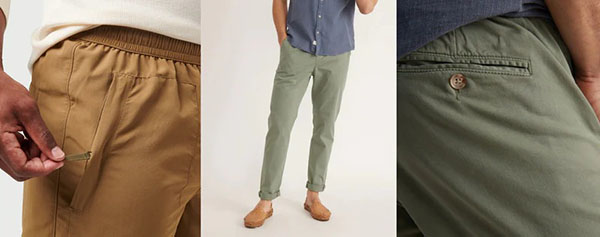
The confusion is understandable because both garments belong to the same wider category. They are both casual knit pants. They usually have elastic waistbands. They are both connected to comfort, sport, and off-duty wear. On the surface, they look closely related.
People think joggers and sweatpants are the same because both are soft casual pants, both often use similar knit fabrics, and both are worn in athletic, lounge, and everyday settings. But the difference becomes clearer once fit, leg shape, and styling role are examined more closely.
At Fusionknits, we usually explain that sweatpants are the more traditional comfortwear reference, while joggers are the more updated silhouette. They overlap, but they do not play exactly the same role in a collection.
Why the terms overlap so easily
- Both are knit bottoms
- Both often use fleece or terry
- Both usually have elastic waists
- Both work in comfortwear
- Both can appear in sports-inspired wardrobes
Why the confusion matters
Product briefs become less accurate
A factory cannot develop the best product if the silhouette goal is unclear.
Customer expectations become weaker
If the name says jogger but the fit feels like a sweatpant, the product may disappoint.
| Product term | Broad identity |
|---|---|
| Sweatpants | Relaxed comfort knit pants |
| Joggers | Tapered comfort or active knit pants |
Are joggers and sweatpants actually the same product?
No, not in the professional product sense. They are related, but they are not the same garment category once silhouette and end use are considered carefully.

No, joggers and sweatpants are not the same product. Sweatpants usually focus more on softness, ease, and lounge comfort, while joggers usually focus more on tapered shape, cleaner leg line, and broader everyday styling outside pure lounge use.
At Fusionknits, we do not separate these categories just to sound technical. We separate them because the pattern, fabric, and final market use are often different. That difference affects fit approval, sample development, and sell-through potential.
What they still have in common
- Soft casual identity
- Knit-based construction
- Elastic waist comfort
- Athletic or leisure roots
- Strong use in modern comfortwear
What separates them
Silhouette
Joggers are usually more shaped.
Product mood
Sweatpants are usually more relaxed and softness-led.
| Product question | Sweatpants | Joggers |
|---|---|---|
| Main purpose | Comfort and lounge | Shape and versatile casualwear |
| Leg line | Looser | More tapered |
| Styling role | Softer and more relaxed | Cleaner and more modern |
Is the fit the biggest difference between joggers and sweatpants?
Yes, in most cases it is. Fabric matters too, but fit is usually the first and clearest difference that changes how the product feels and how the customer reads it.
Yes, fit is usually the biggest difference. Sweatpants often have a roomier, more relaxed leg shape, while joggers usually narrow through the thigh, knee, and especially the lower leg to create a more controlled silhouette.
At Fusionknits, once we review the pattern block, the category usually becomes obvious. A jogger is not just a sweatpant with a cuff. A true jogger normally has a more deliberate taper through the leg.
Typical sweatpant fit traits
- More room in the thigh
- Softer line through the calf
- More relaxed overall proportion
- Less emphasis on ankle shape
Typical jogger fit traits
- More tapered thigh-to-ankle shape
- Cleaner lower-leg profile
- More controlled silhouette
- Stronger fit with sneakers and streetwear styling
| Fit area | Sweatpants | Joggers |
|---|---|---|
| Thigh | Looser | More controlled |
| Calf | Softer line | Narrower line |
| Ankle | Less shape-driven | More shape-driven |
Do joggers and sweatpants use the same fabrics?
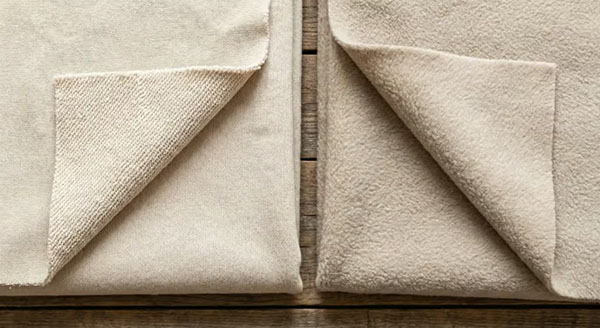
Sometimes they do, but not always. Both categories can use fleece, French terry, jersey, interlock, or blends. The difference is that the fabric often needs to support a different silhouette.
Joggers and sweatpants can use similar fabric families, but sweatpants more often lean toward plush fleece and comfort-led knits, while joggers often use fabrics with better recovery, cleaner body, or more shape support to hold a tapered silhouette.
At Fusionknits, sweatpants often work especially well in brushed fleece because comfort is the priority. Joggers can still use fleece, but they also perform well in smoother terry, interlock, or stretch blends that help the leg stay cleaner.
Common sweatpant fabrics
- Brushed fleece
- Heavy fleece
- French terry
- Loopback knits in premium comfortwear
Common jogger fabrics
- French terry
- Cotton-stretch blends
- Interlock
- Smoother fleece
- Performance knit blends
Why fabric still matters
Shape support changes
A tapered jogger often needs more recovery than a loose sweatpant.
Product mood changes
A plush fleece sweatpant feels more lounge-led than a smoother jogger knit.
| Fabric type | Stronger for sweatpants | Stronger for joggers |
|---|---|---|
| Plush fleece | Yes | Sometimes |
| Smooth terry | Sometimes | Yes |
| Stretch knit | Less often | Often |
Are joggers more stylish than sweatpants?
In broad commercial terms, yes, that is often how the market sees them. Joggers usually feel more style-ready because their silhouette works more easily in streetwear, athleisure, and casual city dressing.
Joggers are usually seen as more stylish than sweatpants because their tapered shape creates a cleaner leg line and makes them easier to wear outside pure lounge or gym settings. Sweatpants are often seen as softer, more comfort-first, and less shape-focused.
At Fusionknits, this is one reason joggers became such a strong category. They kept the comfort language of sweatpants, but gave it a more wearable everyday silhouette. That made them more commercially flexible.
Why joggers often feel more modern
- Tapered ankle line
- Better fit with sneakers
- Cleaner silhouette in outfits
- Stronger streetwear and athleisure value
- Less visual bulk through the lower leg
Why sweatpants still matter
Pure comfort remains important
A looser product can still be the right answer for many markets.
Not every customer wants taper
Some customers prefer softness and ease over shape.
| Style role | Stronger category |
|---|---|
| Clean everyday casualwear | Joggers |
| Lounge and comfort-led use | Sweatpants |
Are cuffs enough to make pants joggers?
No. This is one of the most common misunderstandings in the category. A cuff helps, but it does not define the entire product by itself.

No, cuffs alone do not make pants joggers. Many sweatpants also use cuffed hems. What makes a jogger a jogger is usually the full tapered silhouette working together with the cuffed or narrowed ankle, not the cuff by itself.
At Fusionknits, we always review the full leg shape, not only the hem finish. A loose fleece pant with rib cuffs can still be a sweatpant. A jogger usually has a more deliberate narrowing from upper leg to ankle.
What cuffs do in joggers
- Finish the taper cleanly
- Support sneaker styling
- Reduce visual bulk at the ankle
- Strengthen the active-casual look
What cuffs do in sweatpants
Add hold and comfort
But the overall silhouette may still stay relaxed.
| Ankle detail | Sweatpants | Joggers |
|---|---|---|
| Cuffs possible | Yes | Yes |
| Taper into cuff | Less defined | More defined |
| Loose lower leg | More common | Less common |
Which is better for a brand to develop: joggers or sweatpants?
Neither is universally better. The stronger choice depends on customer profile, product category, and styling goal. In many collections, both are useful, but they should be named and developed clearly.
At Fusionknits, we see joggers as stronger for modern casualwear, athleisure, and cleaner everyday styling, while sweatpants are stronger for loungewear, winter comfortwear, and relaxed fleece programs. The better product depends on what the customer actually wants the garment to do.
A performance-inspired brand may need tapered joggers. A comfort-led essentials line may need soft fleece sweatpants. A premium casual collection may use both, but with clearly different pattern blocks and product language.
When joggers are the stronger choice
- Athleisure collections
- Everyday casualwear
- Cleaner streetwear silhouettes
- Travel and active-inspired basics
When sweatpants are the stronger choice
- Loungewear collections
- Plush winter basics
- Relaxed unisex comfortwear
- Soft homewear programs
| Brand need | Better product |
|---|---|
| Everyday versatility | Joggers |
| Pure comfort and lounge | Sweatpants |
So, what is the clearest answer?
The clearest answer should be simple enough for customers and buyers, but still accurate enough for real product use.
Joggers are not the same as sweatpants. Sweatpants are usually looser, softer, and more comfort-led, while joggers are usually more tapered, more shape-focused, and more versatile in modern casual styling. They belong to the same family, but they are not the same silhouette or the same product role.
At Fusionknits, this distinction helps brands build better tech packs, better assortments, and better customer expectations. Once the fit goal is defined clearly, the whole product becomes easier to develop well.
Conclusion
Joggers and sweatpants are closely related, but they are not the same product. Sweatpants are usually more relaxed, more softness-led, and more strongly connected to lounge and classic athletic comfort.
Joggers are usually more tapered, more controlled through the leg, and more useful in everyday casualwear, athleisure, and modern streetwear styling. Both categories can use similar fabrics and both may include elastic waists and cuffed hems, but the final silhouette and product role are different.
At Fusionknits, we believe the most important step is category clarity. A brand should not label every cuffed knit pant as a jogger, and it should not call every tapered pant a sweatpant. Once the fit, fabric, and end use are aligned correctly, both joggers and sweatpants can become strong and commercially valuable products. The key is to develop them as what they really are, not as interchangeable names.