Many new polo shirt businesses fail because they start with a logo, a few color ideas, and a random supplier list. That is not enough. Polo shirts look simple, but they are highly technical products. Fabric, collar structure, placket balance, fit, and wash performance all shape whether the final garment feels premium or forgettable.
At Fusionknits, we believe the best way to start a polo shirt business is to begin with a clear market position, a defined customer, a strong core polo product, and a reliable manufacturing plan. A successful polo business is built on fabric logic, fit discipline, sourcing consistency, and a product story customers can trust.
As a professional apparel manufacturer, we see polo shirts as one of the most commercially stable categories in menswear and casualwear. They work in smart-casual fashion, uniforms, golfwear, resortwear, and premium basics. But that same versatility also creates competition. If a brand wants to enter this market successfully, it must build the business around product clarity, not guesswork.
Why Is a Polo Shirt Business Still Worth Starting?
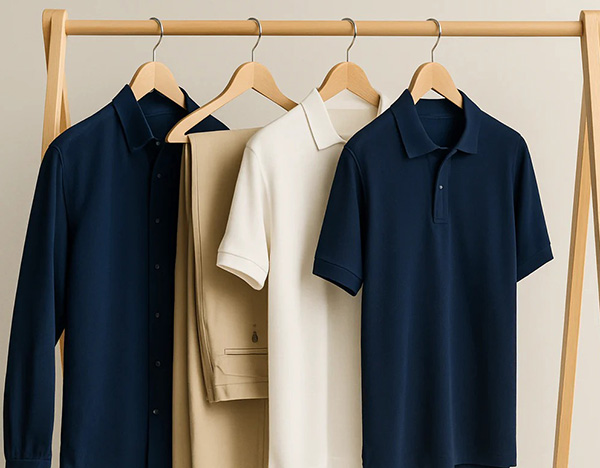
The polo shirt remains relevant because it solves a real wardrobe problem. It offers more structure than a T-shirt, but more comfort than a woven shirt. That middle position keeps demand strong across many customer groups.
A polo shirt business is still worth starting because polo shirts have broad market demand, repeat-purchase potential, and strong use across uniforms, golfwear, casualwear, travelwear, and premium basics. A good polo can serve both functional and style-driven markets, which gives the category long-term business value.
At Fusionknits, we see polo shirts continue to perform because they are practical. Customers do not only buy them for trend. They buy them because polos are easy to wear, easy to style, and easy to repeat in daily life. That makes them a strong product for both established brands and new businesses.
Why the category stays commercially strong
- Broad age appeal
- Easy entry into smart-casual wardrobes
- Strong reorder potential
- Useful in both B2B and lifestyle markets
- Easy category expansion into uniforms, golfwear, and premium basics
Why this matters for a new business
The product already has customer recognition
A new brand does not need to teach the market what a polo shirt is.
The category supports different price levels
A brand can position itself in commercial basics, premium essentials, or higher-end lifestyle polos.
| Business strength | Why it matters |
|---|---|
| Repeat wear | Better reorder opportunities |
| Broad use | Larger addressable market |
| Stable product identity | Easier branding and positioning |
Who Should a New Polo Brand Serve First?
One of the biggest mistakes we see is trying to sell to everyone at the same time. A stronger business starts with one clear customer profile and one clear use case.

A new polo shirt business should start by choosing a defined target market such as uniform buyers, golfwear customers, premium basics shoppers, resortwear buyers, or smart-casual everyday consumers. The clearer the customer, the easier it becomes to develop the right product and marketing message.
At Fusionknits, customer clarity changes everything. A corporate polo needs durability, consistency, and easier care. A golf polo needs performance fabric and movement support. A premium casual polo needs better fabric refinement and stronger fit balance. These are different businesses inside the same category.
Common target markets for polo businesses
- Corporate and uniform buyers
- Golf and performance customers
- Premium basics consumers
- Resort and leisurewear buyers
- Smart-casual everyday wear customers
Why this decision matters early
Product development becomes more accurate
Fabric, fit, collar, and price level all become easier to define.
Marketing becomes more focused
The brand can speak clearly to a real problem instead of using vague language.
| Customer group | Best product direction |
|---|---|
| Uniform buyers | Durable commercial polo |
| Golf customers | Performance polo |
| Premium basics buyers | Refined cotton polo |
| Casual wear customers | Classic piqué polo |
What Type of Polo Shirt Should a New Brand Launch First?
A new polo business does not need too many styles at the beginning. It needs one strong hero product that represents the brand clearly and can sell repeatedly.
At Fusionknits, we recommend launching with one core polo type first, usually a classic cotton piqué polo, a premium refined polo, or a performance polo, depending on the target market. The first product should be the clearest expression of the brand’s value.
A classic piqué polo is often the strongest first choice because it is familiar, versatile, and commercially proven. It works well in broad casualwear and smart-casual markets. But if the brand is clearly performance-led or premium-led, the first product should reflect that identity from the start.
Strong first-launch directions
- Classic cotton piqué polo
- Premium mercerized cotton polo
- Performance golf polo
- Uniform-ready stable polo
Why one hero style is better than many weak ones
Product focus improves
The brand becomes easier to understand and easier to remember.
Sampling risk is lower
More energy can go into making one polo excellent.
| Launch style | Best business role |
|---|---|
| Classic piqué polo | Broad commercial starting point |
| Premium cotton polo | Elevated basics positioning |
| Performance polo | Golf and active market entry |
What Fabric Should a Polo Shirt Business Use?
Fabric is one of the most important decisions in the entire business because it defines comfort, collar support, breathability, hand feel, and wash performance.
The right polo fabric depends on the business model. Cotton piqué is usually the best starting point for classic polos, mercerized cotton is strong for premium polos, and polyester or stretch performance knits are better for golfwear and technical polos. The best fabric is the one that matches the customer’s real use.
At Fusionknits, we always choose fabric by product role, not by trend alone. A premium refined polo should not feel like a basic uniform polo. A golf polo should not be developed like a lifestyle piqué polo. Once the market is clear, the fabric decision becomes much stronger.
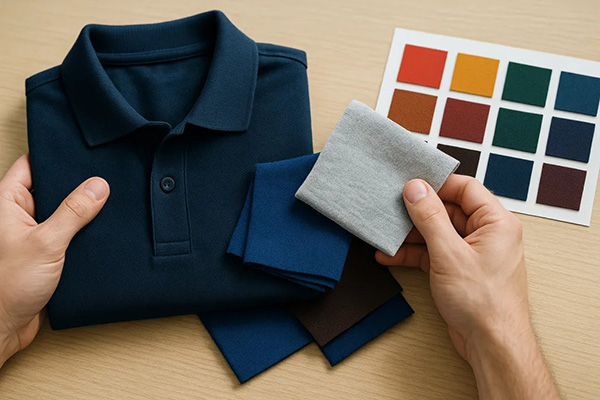
Common fabric directions for polo businesses
- Cotton piqué for classic polos
- Mercerized cotton for refined polos
- Cotton jersey for soft casual polos
- Cotton blends for durable commercial polos
- Performance knits for golf and activewear
Why fabric selection defines the business
The fabric creates the first product impression
Customers feel quality through hand feel, texture, and body.
The fabric controls repeat satisfaction
A polo that shrinks, pills, or loses collar shape weakens the whole brand.
| Fabric type | Best product role |
|---|---|
| Cotton piqué | Everyday classic polo |
| Mercerized cotton | Premium smart-casual polo |
| Performance knit | Golf and active polo |
| Cotton blend | Durable commercial polo |
How Important Are Collar, Placket, and Fit?
These areas are critical. In our manufacturing experience, many average polos fail not because the concept is wrong, but because the collar curls, the placket pulls, or the fit feels awkward.
A polo shirt business must take collar, placket, and fit very seriously because these three areas define the product’s visual quality and wearability. A strong polo should have a stable collar, a clean front placket, and a fit that looks polished without feeling tight.
At Fusionknits, we treat these points as core technical zones. A weak collar makes the shirt look cheap. A weak placket makes the front collapse. A poor fit damages comfort and customer trust. If a brand wants repeat orders, these parts must be right from the start.
Core fit and construction areas to control
- Collar structure
- Placket shape
- Shoulder balance
- Chest ease
- Sleeve opening
- Body length
Why these details drive business success
The customer sees product quality immediately in the upper front area.
They drive repeat buying
A polo that fits well and keeps shape is much easier to reorder.
| Product area | Why it matters |
|---|---|
| Collar | Defines first impression |
| Placket | Controls front balance |
| Fit | Drives comfort and silhouette |
| Sleeves | Improve the overall body line |
How Should a New Brand Choose a Manufacturer?
A polo shirt supplier must understand more than basic sewing. The factory should understand knitwear, collar development, placket execution, shrink control, and quality consistency.

To start a polo shirt business successfully, the brand needs a manufacturer with real polo experience, strong fabric sourcing, reliable sample development, and stable production quality. A good polo supplier should understand both product engineering and brand requirements.
At Fusionknits, we believe the right manufacturing partner should do more than take an order. The supplier should help improve the product, protect consistency, and reduce risk in sampling and bulk production.
What to check in a polo manufacturer
- Real polo-shirt production experience
- Knitwear and fabric sourcing strength
- Strong sample room capability
- Collar and placket quality
- Clear communication
- Reliable quality-control process
Red flags to avoid
Weak sample collars or unstable fronts
These problems often become worse in bulk.
Factories with only general casualwear ability
A polo needs more category-specific control than many brands expect.
| Supplier factor | Why it matters |
|---|---|
| Polo experience | Better product execution |
| Sampling strength | Faster refinement |
| QC discipline | Better repeat production |
How Should a Polo Shirt Business Price and Grow?
A strong business does not price randomly. It prices through product reality. Then it grows by strengthening the core product before expanding into too many directions.
A polo shirt business should price according to fabric, construction, trims, packaging, logistics, and brand position. Growth should begin with one strong core polo, then expand into more colors, second fabric types, women’s polos, performance polos, or long-sleeve versions once the main product is stable.
At Fusionknits, we often advise brands to grow in layers. First, make the hero polo dependable. Then expand the range with logic. This creates a stronger business than launching too many low-focus styles at once.
Smart growth steps
- Improve the core bestseller
- Add strong commercial colors
- Introduce a second polo category
- Expand into women’s or performance lines
- Build stronger packaging and product storytelling
Why this works better
Trust grows before complexity
Customers return to what already performs well.
Inventory stays more manageable
The brand scales through proven product logic.
| Growth step | Best result |
|---|---|
| Core polo refinement | Better repeat purchase |
| Color expansion | Broader customer appeal |
| Second product lane | Stronger category depth |
Conclusion
At Fusionknits, we believe starting a polo shirt business means building much more than a simple collared basic. It requires a clear target customer, a strong hero product, the right fabric system, disciplined control over collar, placket, and fit, and a manufacturing partner that truly understands polo construction.
A successful polo business usually starts with one strong product lane, most often a classic piqué polo, then grows through consistency, clearer branding, and product expansion that stays connected to the original idea.
The brands that succeed in polos are usually the ones that respect the category. They understand that a polo shirt is simple only on the outside. In production, it is a technical and strategic product. When fabric, fit, construction, and sourcing all work together, a polo shirt business becomes far easier to scale into a stable and professional apparel brand.