Weighted hoodies sound interesting, but many buyers still wonder whether they are a real product category or just a novelty. The answer depends on what problem the garment is meant to solve. A weighted hoodie is not trying to replace a standard fleece hoodie. It is usually designed to create a calming, grounded feeling through light added weight and deep-pressure-style comfort, which is why it sits closer to sensory clothing than to ordinary casualwear.
Weighted hoodies can be worth it for people who want calming pressure, sensory support, or a more grounded wearing experience, but they are not automatically better than regular hoodies for everyone. Their value depends on comfort needs, weight distribution, fabric quality, everyday practicality, and whether the wearer actually benefits from deep pressure stimulation. Weighted clothing is commonly described as providing deep pressure or proprioceptive input, and weighted hoodie sellers position the product around that same use case.
At Fusionknits, we see weighted hoodies as a niche but meaningful sub-category inside comfortwear. They make the most sense when the brand clearly understands the user: someone looking for calm, focus, sensory regulation, or wearable comfort beyond what a normal hoodie provides. If that user need is real, the category has value. If it is not, then a weighted hoodie can feel too specialized for daily wardrobe use.
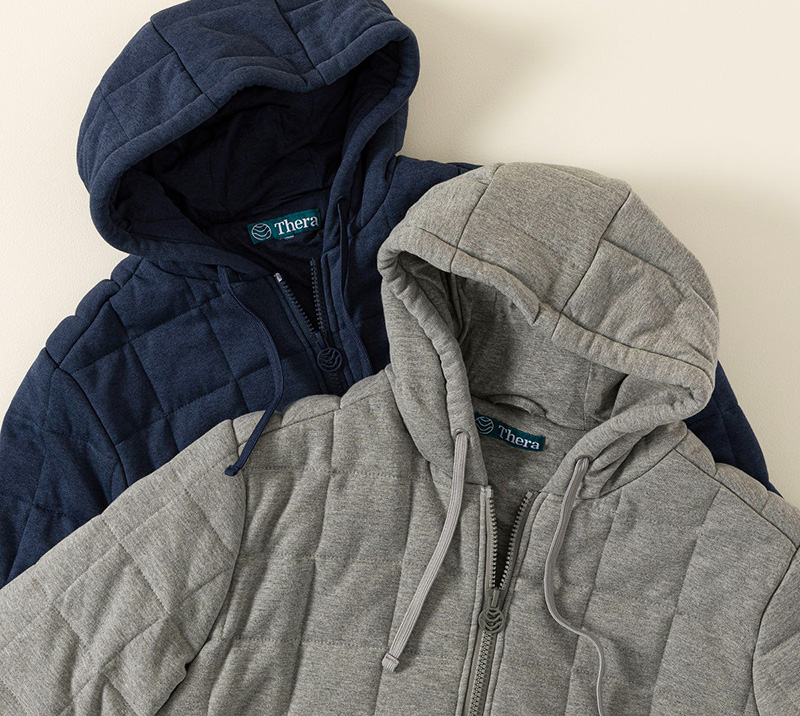
What is a weighted hoodie actually supposed to do?
A weighted hoodie is not just a heavier sweatshirt. The purpose is usually to apply gentle, distributed pressure across the upper body, similar in concept to weighted blankets or other weighted garments designed for sensory comfort. Deep pressure stimulation is commonly described as the core idea behind these products.
A weighted hoodie is supposed to provide a calmer, more grounded wearing experience by combining standard hoodie comfort with evenly distributed extra weight. The main goal is usually not warmth alone. It is gentle pressure, emotional comfort, and sensory support during daily life. That is why weighted hoodies are often discussed in relation to anxiety, sensory sensitivity, ADHD, autism-related sensory needs, or general calming routines, although individual results vary.
At Fusionknits, this difference matters because it changes how the garment should be designed. A normal hoodie is built around softness, warmth, and casual styling. A weighted hoodie should also consider weight placement, pressure balance, and whether the hoodie still feels wearable during movement, sitting, and long periods of use.
What makes it different from a regular hoodie
- Added weight distribution
- Sensory-comfort focus
- More grounded body feel
- More specialized wearer need
- Less emphasis on pure fashion
Why purpose matters so much
A regular hoodie solves a clothing problem
It gives warmth, layering value, and casual comfort.
A weighted hoodie solves a different problem
It is usually aimed at emotional ease, focus, or sensory regulation.
| Garment type | Main goal |
|---|---|
| Regular hoodie | Warmth, layering, casual comfort |
| Weighted hoodie | Calm, pressure, sensory comfort |
Are weighted hoodies worth it for anxiety or stress?
For some people, yes. For others, not necessarily. The strongest case for a weighted hoodie is when the wearer already responds well to deep pressure or weighted products. Weighted hoodie brands and sensory-clothing discussions consistently frame the product this way.
Weighted hoodies can be worth it for anxiety or stress if the wearer finds deep pressure calming and wants that benefit in a wearable, portable format. They are less likely to feel worth it if the wearer does not respond strongly to weighted comfort or prefers lighter, more flexible clothing.
At Fusionknits, we would not describe the category as universally necessary. It is much more need-based than that. A person who already likes weighted blankets, compression garments, or sensory wraps may find a weighted hoodie genuinely useful. A person who mainly wants a stylish everyday sweatshirt may not.
Why some people find them useful
- Portable comfort
- More wearable than a blanket
- Helpful during study, travel, or downtime
- Can support a calming routine
- May feel like a gentle “hug” effect
Why they are not for everyone
The extra weight changes normal wear feel
Some people may find it comforting. Others may find it tiring.
The benefit is personal
Deep-pressure-style comfort does not feel equally useful to every wearer.
| User type | Likely value |
|---|---|
| Likes weighted blankets | Often higher |
| Wants only a normal hoodie | Often lower |
| Sensitive to garment pressure | More mixed |
Are weighted hoodies practical for everyday use?
This is where the category becomes more complicated. A weighted hoodie may feel calming, but it also has to function like clothing. It has to be wearable, washable, breathable enough, and not too tiring for ordinary use.
Weighted hoodies are practical for everyday use only when the weight level, fabric, and fit are well balanced. If the hoodie is too heavy, too warm, or too restrictive, it may feel more like a specialty product than a true daily staple.
At Fusionknits, we see practicality as one of the biggest design challenges in this category. A weighted garment should not only deliver pressure. It must still move well with the body, hold shape, and remain comfortable in normal life. If a wearer can only use it while sitting still at home, the value becomes narrower.
Practical advantages
- More portable than a weighted blanket
- Easier for short daily use
- Good for seated work or quiet routines
- Can feel emotionally reassuring
Practical limits
Weight can reduce versatility
A weighted hoodie will not feel as easy as a standard fleece hoodie.
Heat management matters
A calming garment that traps too much heat becomes less wearable.
Care and washing matter
Specialized construction may need more careful maintenance.
| Daily-use factor | Weighted hoodie result |
|---|---|
| Portability | Strong |
| Ease of movement | More limited than normal hoodie |
| Warm-weather use | Often weaker |
| Sensory comfort | Potentially strong |
Do weighted hoodies replace weighted blankets?
Usually no. They solve a related need, but not the same use moment. A weighted blanket is generally stronger for rest, sleep, or fully stationary use, while a weighted hoodie is more about mobility and daytime wear.
Weighted hoodies do not usually replace weighted blankets. Instead, they offer a more portable and wearable version of the same calming-pressure idea. A blanket is usually better for rest and sleep, while a weighted hoodie is usually better for light daytime use, travel, study, or work-from-home routines. Weighted sweater and weighted blanket coverage consistently shows the same split between wearable pressure and stationary comfort.
At Fusionknits, this distinction matters because buyers should not market the product with the wrong expectation. A weighted hoodie is strongest as wearable sensory comfort, not as a complete substitute for all weighted products.
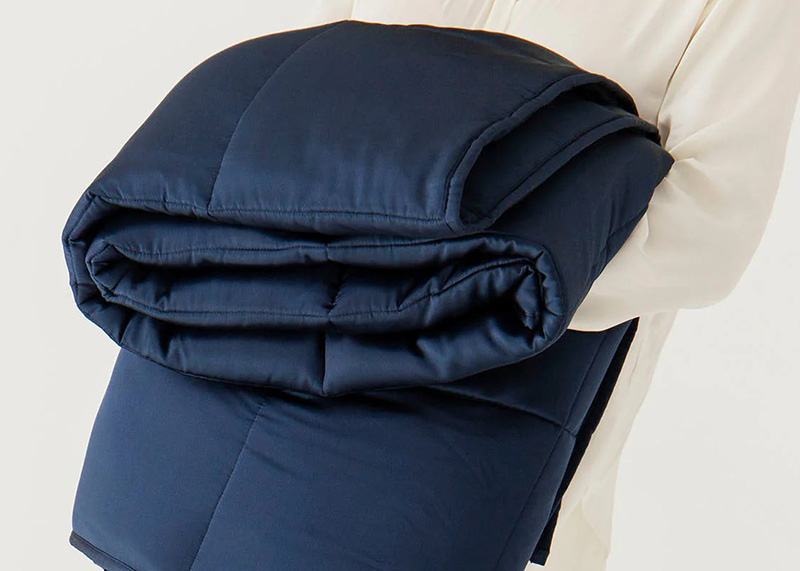
Better use cases for a weighted hoodie
- Desk work
- Light travel
- Reading
- Study sessions
- Calm downtime outside bed
Better use cases for a weighted blanket
Sleep routines
Blankets usually support full-body rest more effectively.
Stationary comfort
They do not need to balance mobility with wearability.
| Product | Best use moment |
|---|---|
| Weighted hoodie | Daytime portable comfort |
| Weighted blanket | Rest and sleep support |
What makes a weighted hoodie actually good quality?
This is one of the most important questions because weighted clothing can fail quickly if the garment is poorly engineered. Quality matters even more here than in a standard hoodie because the product carries extra construction demands.
A good weighted hoodie needs balanced weight distribution, secure internal construction, comfortable fabric, stable fit, manageable total weight, and enough softness to keep the pressure feeling calming instead of harsh. If the weight is uneven or the hoodie feels bulky and unstable, the product loses much of its value.
At Fusionknits, a strong weighted hoodie should still feel like clothing first. The wearer should not feel that the product is fighting the body. The weight should feel intentional, even, and wearable. The fabric should also support comfort, because pressure without softness can make the garment feel more stressful instead of less.
Quality signs to look for
- Even weight placement
- Secure internal structure
- Soft inner feel
- Good shoulder balance
- Stable hood and body shape
- Realistic total weight
Quality problems to avoid
Uneven pressure
This makes the product feel awkward instead of grounding.
Excess bulk
Too much bulk can reduce the hoodie’s real-life usefulness.
Weak durability
Weighted garments need stronger construction because more stress sits in the seams and body.
| Quality factor | Why it matters |
|---|---|
| Weight distribution | Core comfort function |
| Fabric softness | Keeps pressure wearable |
| Construction strength | Protects long-term performance |
| Fit balance | Improves daily use |
So, are weighted hoodies worth it?
The most honest answer is yes for the right wearer, and not necessarily for everyone else. They are not a universal hoodie upgrade. They are a specialized comfort product.

Weighted hoodies are worth it when the wearer wants calming pressure, responds well to sensory comfort, and values a wearable alternative to weighted blankets. They are less worth it when the buyer mainly wants a normal hoodie, dislikes heavier garments, or has no real need for deep-pressure-style support. Product coverage around weighted hoodies and sweaters consistently frames the category around niche but meaningful comfort use rather than broad mainstream necessity.
At Fusionknits, we would define weighted hoodies as a purpose-led category. They are worth it when the product solves a real emotional or sensory need and when the design is executed well enough to make that benefit practical. Without those two things, the product risks becoming a novelty instead of a truly useful garment.
Conclusion
Weighted hoodies can be worth it, but only when they are judged by the right standard. They are not better than regular hoodies in every way.
They are better only when the wearer wants the calming, grounding effect of gentle added pressure and prefers that feeling in a wearable format. Their value is strongest for people who already respond well to weighted comfort, sensory clothing, or deep pressure stimulation. Their value is weaker for buyers who only want a standard everyday hoodie.
At Fusionknits, the category makes the most sense when it is treated as functional comfortwear rather than a trend item. A strong weighted hoodie should combine balanced pressure, soft fabric, stable construction, and real everyday usability. When those parts come together, the product can be genuinely worthwhile. When they do not, a regular high-quality hoodie may be the better choice.