A tank top looks simple, so many buyers assume it should be easy to get right. In real product development, that is not true. A weak tank top can stretch out, gap at the armhole, lose shape after washing, or feel uncomfortable after only a few wears.
A good tank top is made with the right fabric, balanced fit, clean neckline, stable armholes, and reliable construction. It should feel comfortable on the body, hold its shape in movement, and stay useful as both a standalone piece and a layering essential.
At Fusionknits, we see tank tops as one of the most detail-sensitive categories in apparel. There are fewer design elements than in a sweatshirt or hoodie, so every technical decision matters more. A small mistake in strap width, neckline depth, or fabric recovery can change the whole product. That is why a good tank top is never just a basic garment. It is a product built on precision.
Why Is a Tank Top Harder to Make Well Than It Looks?
A tank top has very little to hide behind. It does not have sleeves, collars, cuffs, or layered construction to distract from fit problems. That means the fabric, shape, and finishing all become more visible.
A tank top is harder to make well than it looks because it depends heavily on proportion, fit control, and fabric behavior. When the product is this simple, every small mistake becomes easier to see and easier to feel.
At Fusionknits, we often explain that simple products usually need more discipline, not less. A tank top must sit correctly at the shoulder, chest, and armhole. It must feel light, but not weak. It must be easy to wear, but not shapeless. That balance is what separates a good tank top from a forgettable one.
Why the category is more technical than expected
- The upper body is more exposed
- The neckline becomes a major design feature
- The armhole must balance comfort and coverage
- The fabric is under more direct fit pressure
- Poor finishing becomes visible very quickly
Why this matters for brands
A simple garment reveals quality faster
Customers notice fabric weakness and fit mistakes quickly.
The tank top often acts as a wardrobe essential
That means expectations are higher than the price point may suggest.
| Product factor | Why it matters more in a tank top |
|---|---|
| Fit | Highly visible on the body |
| Fabric | Directly affects comfort and shape |
| Neckline | Frames the whole upper body |
| Armhole | Controls both function and confidence |
What Fabric Makes a Tank Top Good?
Fabric is one of the biggest quality drivers in a tank top because it decides softness, recovery, drape, and long-term wear. A tank top that feels good for one fitting but loses shape after washing is not a good product.

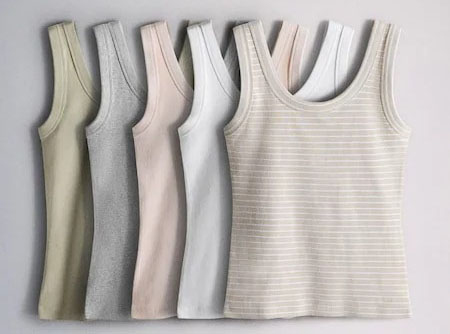
A good tank top usually uses fabric with the right balance of softness, recovery, breathability, and body. Common strong choices include cotton-elastane rib, compact cotton jersey, modal-stretch blends, and smooth performance knits depending on the product’s purpose.
At Fusionknits, we always match fabric to product role. A fitted rib tank needs stretch and recovery. A relaxed summer tank needs drape and airflow. A training tank needs movement support. The best fabric is not the one that sounds best on paper. It is the one that supports the intended fit and use.
Fabric directions that often work well
- Cotton-elastane rib for fitted basics
- Compact cotton jersey for clean structure
- Modal blends for softness and drape
- Nylon-stretch or performance knits for active tanks
- Slub or lightweight jersey for casual relaxed tanks
What good tank top fabric should do
Hold shape after wear
A tank top should not stretch out too quickly.
Feel comfortable against the skin
This matters more because tanks usually have direct body contact.
Match the silhouette correctly
A close fit needs more recovery. A relaxed fit needs better drape.
| Fabric type | Best product use |
|---|---|
| Stretch rib | Fitted everyday tank |
| Compact jersey | Clean basic tank |
| Modal blend | Soft draped tank |
| Performance knit | Active tank |
Should a Good Tank Top Be Tight or Loose?
Usually neither extreme is best. A good tank top should match its product role, but in most commercial categories, the best result comes from balanced fit.
A good tank top should usually sit close enough to look intentional, but not so tight that it pulls or restricts movement. In relaxed categories, it can be looser, but it should still maintain enough shape to avoid looking careless or unstable.
At Fusionknits, we usually say that fit should support the function. A layering tank may sit closer to the body. A summer casual tank may need more ease. But both should feel controlled. Too much tightness creates pressure and distortion. Too much looseness creates gaping and weak silhouette.
Signs the fit is working well
- The chest line stays smooth
- The hem does not ride up too easily
- The body follows the frame without strain
- The tank still feels easy in motion
- The garment works both alone and under layers
Signs the fit is wrong
Too tight
The fabric pulls, the neckline distorts, and comfort drops.
Too loose
The armhole gaps, the neckline falls away, and the tank loses clean shape.
| Fit type | Typical result |
|---|---|
| Too tight | Restrictive and less flattering |
| Balanced | Clean and wearable |
| Too loose | Weak and less controlled |
How Important Are the Neckline and Armholes?
They are critical. In a tank top, these two areas do much of the design work. They shape the upper body, affect comfort, and strongly influence whether the garment feels polished.
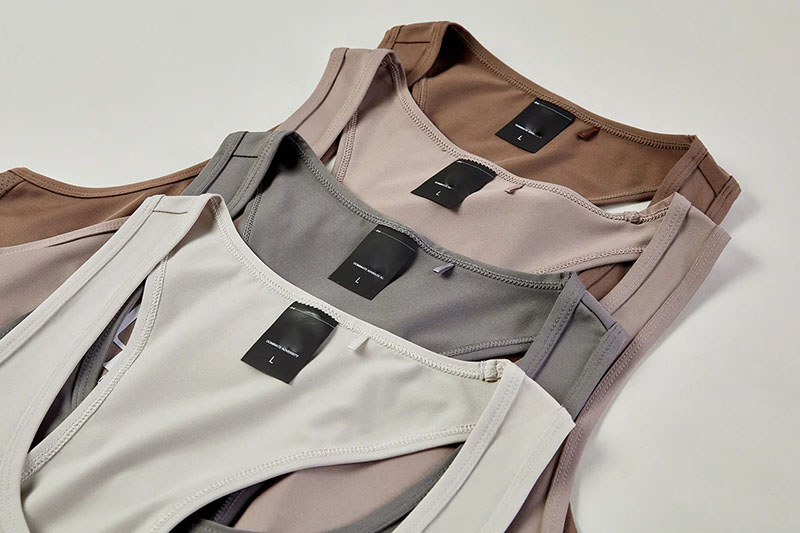
The neckline and armholes are some of the most important parts of a good tank top because they control framing, comfort, and confidence. A good neckline should sit cleanly and flatter the upper body, while good armholes should allow movement without gaping or cutting in.
At Fusionknits, we treat the neckline and armhole as core construction zones, not minor details. A neckline that is too high can make the tank feel heavy. One that is too low can reduce versatility. The same applies to armholes. Too tight is uncomfortable. Too deep feels unstable.
What a good neckline should do
- Frame the upper chest cleanly
- Match the tank’s styling role
- Stay stable after washing
- Work with the strap width and shoulder shape
What a good armhole should do
Allow comfortable movement
The wearer should not feel cut into at the underarm.
Stay close enough to the body
The tank should not gap too much during wear.
Keep visual balance
The armhole should match the tank’s overall silhouette.
| Design area | Good result |
|---|---|
| Neckline | Clean, flattering, stable |
| Armhole | Comfortable, controlled, wearable |
| Strap area | Balanced with the shoulder line |
What Construction Details Make a Tank Top Better?
A tank top may not have many pieces, but the few pieces it does have must be built well. Construction is what keeps the garment from turning into a weak basic after a few wears.
A good tank top needs strong construction, especially in the neckline, armhole binding, side seams, and hem finishing. Clean stitching, consistent seam control, and durable reinforcement are key signs of a better product.
At Fusionknits, construction quality is especially important because tank tops are often washed often and worn close to the skin. Weak stitching becomes visible quickly. A poorly finished binding can wave or twist. A weak hem can lose shape. These details decide whether the product stays useful.
Construction signs of a better tank top
- Clean neckline binding
- Strong armhole finish
- Straight and balanced side seams
- Smooth hem construction
- Reliable stitching consistency
- Good fabric-to-trim compatibility
Why construction matters so much
Tanks are frequent-use garments
They often go through more repeated wear than fashion tops with more limited use.
Small finishing issues stand out fast
There are fewer design details to distract from quality weakness.
| Construction area | Why it matters |
|---|---|
| Neck binding | Supports shape and durability |
| Armhole finish | Controls wear comfort |
| Side seams | Helps maintain silhouette |
| Hem | Protects long-term shape |
Does a Good Tank Top Need to Work for More Than One Styling Use?
In many cases, yes. One of the strongest signs of a good tank top is versatility. A strong tank should not feel locked into one narrow use unless it is a very specialized product.

Yes, a good tank top usually works across more than one styling use. It should function well as a layering piece, a standalone top, or a casual base item unless it is designed for a very specific purpose such as sport performance or fashion-led statement wear.
At Fusionknits, we see versatility as one of the biggest commercial strengths in tank tops. Customers usually want them to do more than one job. A good rib tank may be worn alone in summer and under an overshirt in cooler months. A good active tank may still look clean enough for travel or lounge use.
Why versatility adds value
- Increases repeat wear
- Makes the product easier to justify
- Broadens customer appeal
- Supports wardrobe building
- Strengthens commercial performance
When specialization still makes sense
Active tanks
These may prioritize function over broad styling.
Fashion tanks
These may prioritize silhouette or neckline effect over everyday versatility.
| Product type | Versatility level |
|---|---|
| Basic rib tank | High |
| Scoop-neck layering tank | High |
| Performance training tank | Medium |
| Directional halter tank | Lower |
What Makes Customers Trust a Tank Top Enough to Buy Again?
Repeat purchase comes from reliability. A good tank top should not only look good in the first photo or first fitting. It should hold up over time.
Customers trust a tank top enough to buy again when it keeps its shape, stays comfortable, washes well, and continues to look clean after repeated use. Long-term reliability is one of the strongest signs of a truly good tank top.
At Fusionknits, we see repeat-buy potential as the real test of a basic garment. A customer may try a tank once because of color or price. They buy again because the fit stayed right, the fabric stayed stable, and the product remained easy to wear.
What builds repeat purchase confidence
- Reliable fit
- Good wash performance
- Stable neckline and armholes
- Strong fabric recovery
- Comfortable direct-skin wear
- Easy styling value
Why reliability matters more than trend
Basics win through repetition
A good tank top is often worn far more than trend-driven garments.
The customer feels the difference quickly
Comfort and fit are hard to fake in a close-contact category.
| Trust factor | Customer effect |
|---|---|
| Shape retention | Stronger confidence |
| Wash stability | Better long-term value |
| Daily comfort | Higher repeat use |
| Versatility | Better wardrobe integration |
Conclusion
A good tank top is made from the right fabric, balanced fit, clean neckline, stable armholes, and strong construction. It should feel comfortable on the skin, move naturally with the body, and stay useful after repeated wear and washing.
The best tank tops are not only soft. They are also stable. They are not only simple. They are also precise. That is why a good tank top usually comes from careful control of fabric, silhouette, and finishing rather than from decoration or trend alone.
At Fusionknits, we believe a strong tank top should solve real wardrobe needs with clarity. It should work as a standalone top, a layering piece, or a repeat-use basic depending on the category. When fit, fabric, neckline, armhole, and construction all work together, the tank top becomes much more than a simple essential. It becomes one of the most dependable products in a collection.