
In international garment trade, FOB (Free On Board) is one of the most widely used Incoterms between apparel manufacturers and global fashion brands. It clearly defines how responsibilities, costs, and risks are divided between the seller (factory) and the buyer (importer).
Under FOB terms, the seller is responsible for producing the goods, handling export procedures, and delivering the shipment onto the vessel at the named port of shipment. Once the goods are loaded on board, responsibility and risk transfer to the buyer. While this definition is straightforward, its real-world execution in apparel manufacturing and export involves detailed coordination across production, logistics, and customs processes.
In international trade, a clear understanding of FOB Incoterms is essential for both buyers and suppliers. This article focuses on explaining FOB in detail, including its practical meaning in garment sourcing, operational workflow, risk structure, and its comparison with other common Incoterms.
What Is FOB in International Maritime Trade?
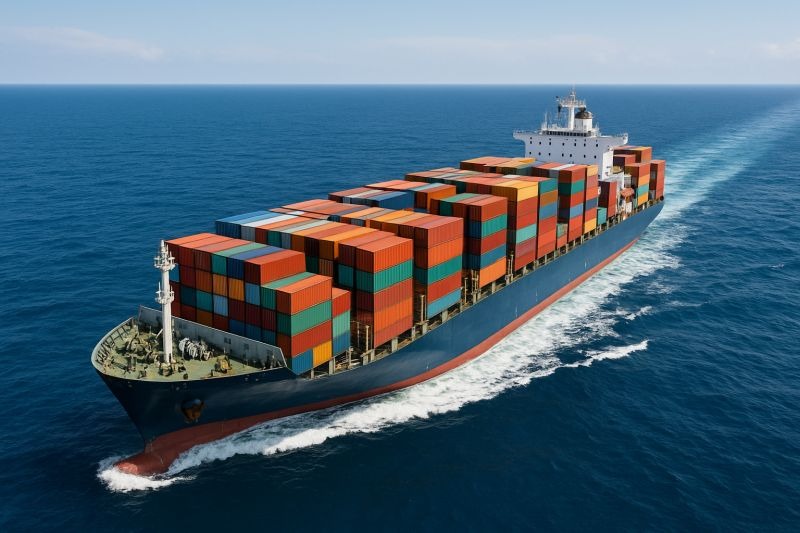
FOB (Free On Board) is an Incoterm used in sea freight and inland waterway transport, where the seller is responsible for the goods until they are loaded onto the vessel at the port of shipment.
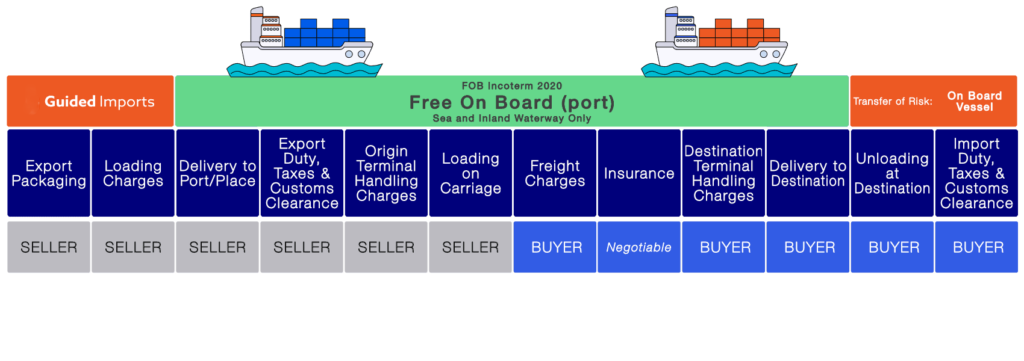
Under FOB terms, the seller covers all costs and responsibilities up to the point of loading. This includes production support, export documentation, customs clearance in the origin country, port handling, and delivery of goods to the terminal for shipment. The seller also ensures that the cargo is properly prepared and safely handed over for loading onto the nominated vessel.
Once the goods are successfully loaded on board the ship, the responsibility and risk transfer immediately to the buyer. From that moment onward, the buyer takes full control of the shipment, including ocean freight, insurance, import clearance, duties, and final inland delivery in the destination country.
FOB is strictly used for sea freight and inland waterway transport, and it is one of the most common Incoterms in bulk cargo and apparel export trade. In garment sourcing, it is especially popular when buyers prefer to manage their own logistics and shipping arrangements through appointed freight forwarders.
Key Characteristics of FOB in Maritime Trade
- Clear risk transfer point at vessel loading
- Seller manages production and export clearance
- Buyer controls international shipping and import process
- Applicable only to sea and inland waterway transport
In apparel exports, FOB provides a clear and structured division of responsibilities, allowing factories to focus on manufacturing while buyers control global logistics strategy.
How FOB Works in Real Garment Manufacturing
To understand FOB in practice, it is more helpful to look at it from the buyer’s point of view.
If you are a fashion brand owner ordering 8,000 oversized hoodies from a garment factory in China, with the cooperation term set as FOB Shenzhen (Yantian Port).
At this point, FOB clearly defines one rule:
The factory is responsible for production and delivery to the vessel, and the buyer is responsible for everything after shipment.
Step 1: What Is Included in FOB Cost
Under FOB terms, the price you pay to the factory usually includes:
- Fabric sourcing and garment production
- Accessories (labels, trims, packaging materials)
- Cutting, sewing, finishing, and QC
- Export packaging and carton labeling
- Inland trucking to port
- Export customs declaration in China
FOB price = production cost + inland logistics + export handling + loading preparation
Not included:
- Ocean freight
- Insurance
- Import duties and taxes
- Destination delivery
Step 2: After Order Confirmation
Once you confirm the order:
- Product details and samples are approved
- FOB port is fixed (e.g., Shenzhen Yantian)
- Buyer appoints freight forwarder
Production and shipping preparation run in parallel.
Step 3: Factory Execution (Seller Responsibility)
The factory handles:
- Bulk garment production
- Quality control inspection
- Export packing and carton labeling
- Trucking to port
- Export customs clearance
All manufacturing and export risks remain on the seller side.
Step 4: Risk Transfer at Vessel Loading
The most critical FOB moment happens at the port:
- Container is loaded onto the vessel
- Bill of Lading (B/L) is issued
From this moment:
- Seller responsibility ends
- Buyer assumes full shipment risk
Step 5: What the Buyer Does After Shipment
After goods are shipped:
- Receive Bill of Lading
- Pay ocean freight
- Arrange insurance (optional)
- Handle import customs clearance
- Complete final delivery
The factory is no longer involved in logistics execution.
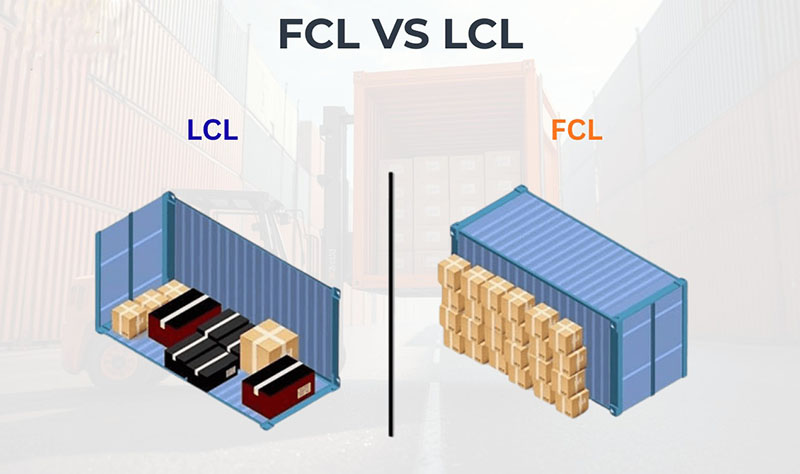
Step 6: FCL vs LCL in FOB Shipping
Shipping structure also affects FOB execution:
FCL (Full Container Load):
- One buyer uses one container
- Faster, safer, and more stable
- Lower risk of damage or delay
- Most common for apparel bulk orders
LCL (Less than Container Load):
- Multiple buyers share one container
- Higher handling and consolidation risk
- Longer processing time
In apparel FOB trade, FCL is generally preferred for efficiency and control.
Key Summary
- FOB covers production + delivery to port
- Buyer controls shipping and import process
- Risk transfers when goods are loaded onto vessel
- Shipping method affects efficiency but not responsibility rule
FOB is essentially a structured handover system between factory and buyer.
FOB vs DDP vs CIF in Apparel Trade
In garment international trade, FOB is often compared with DDP and CIF because these Incoterms represent different levels of responsibility and cost control between factory and buyer.
FOB vs DDP (Key Difference in Responsibility and Cost Control)
Under FOB (Free On Board):
- Factory handles production and delivery to port
- Buyer pays shipping, insurance, import duties, and final delivery
- Risk transfers at vessel loading
FOB = buyer-controlled logistics model
Under DDP (Delivered Duty Paid):
- Factory handles everything from production to final delivery
- Includes freight, customs clearance, duties, and last-mile delivery
- Buyer only receives goods at destination
DDP = factory-controlled end-to-end model
Risk overview:
- FOB risk: Buyer bears sea freight and import-side risks after loading
- DDP risk: Buyer has low logistics risk but higher dependency on supplier execution
FOB vs CIF (Key Difference in Cost and Shipping Structure)
Under FOB (Free On Board):
- Factory delivers goods to port and loads onto vessel
- Buyer arranges freight and insurance
- Buyer controls shipping route and timing
FOB = buyer-controlled logistics
Under CIF (Cost, Insurance & Freight):
- Factory arranges and pays ocean freight to destination port
- Factory includes basic insurance
- Buyer handles import clearance and destination costs
CIF = seller-controlled shipping to destination port
Risk overview:
- FOB risk: Buyer controls shipping but assumes transit risk after loading
- CIF risk: Buyer has less control over shipping decisions, but still assumes risk after vessel departure in practice
Why FOB Is the Industry Standard in Apparel Trade
In global apparel sourcing, FOB has become the most widely adopted Incoterm not simply because it is “popular,” but because it fits naturally into how the garment supply chain actually operates between factories and international fashion brands.
Apparel production is highly structured and process-driven—fabric sourcing, bulk production, quality control, finishing, and export packaging are all centralized at the factory side. At the same time, buyers such as brands and wholesalers are usually more focused on market strategy, pricing, and logistics optimization rather than day-to-day shipping operations.
FOB sits exactly between these two roles. It allows the factory to fully manage what it does best—production and export handling—while giving the buyer full control over the international shipping process, including freight cost negotiation, carrier selection, and delivery scheduling.
Another reason FOB is widely used is its clarity of responsibility boundary. In real garment trade, disputes often arise when responsibility is not clearly defined during transit. FOB solves this by creating a precise transfer point: once the goods are loaded onto the vessel, the risk officially shifts to the buyer. This clarity reduces misunderstanding and improves trust between both parties.
Because of this balance—factory control over production + buyer control over logistics + clear legal risk transfer point—FOB has naturally become the standard operating model in most apparel export transactions worldwide.
Conclusion
FOB is a fundamental trade framework that defines responsibility, cost, and risk division in international apparel logistics. It ensures that production and shipping processes are clearly structured and efficiently managed.
we support global apparel brands under FOB and other Incoterms with full manufacturing and export coordination. With experience across production, quality control, and logistics handling, we help clients simplify the process of importing from China and ensure smooth execution from factory to shipment.