Many people think creating a sweatshirt is simple because the product looks basic. Then they discover that fabric, fit, rib quality, print method, and supplier choice can completely change the result. A sweatshirt that looks good in a sketch can still fail in real life if the construction is weak or the product direction is unclear.
To create your own sweatshirt, you need to define the product purpose, choose the right fit and fabric, build clear design details, prepare a proper tech pack, develop samples carefully, and work with the right manufacturer. The best sweatshirt is not built from decoration alone. It is built from a balanced product system.
At Fusionknits, we see sweatshirt development as a process of turning an idea into a wearable and repeatable product. A strong sweatshirt should feel right, fit right, wash well, and represent the brand clearly. That is why the best way to create your own sweatshirt is to start with product logic before moving into graphics, labels, or packaging.
What Should You Decide Before Designing a Sweatshirt?
The first step is not choosing a color or adding a logo. The first step is deciding what kind of sweatshirt you are actually trying to make. Without that clarity, the whole development process becomes weak.
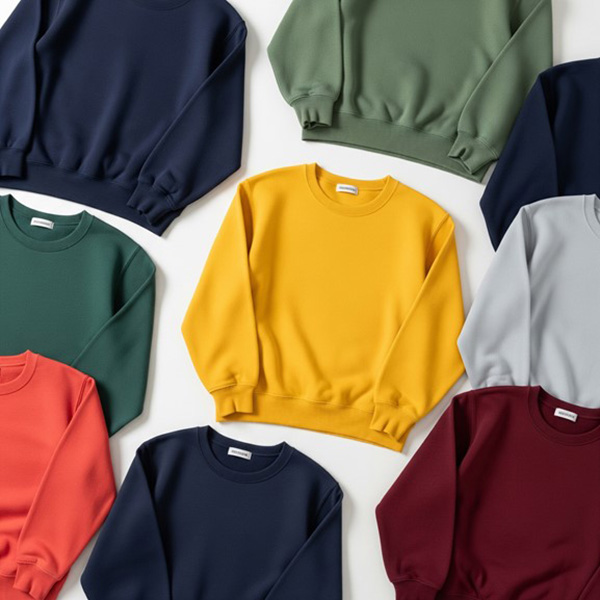
Before designing a sweatshirt, you should decide the target customer, the purpose of the product, the price level, the fit direction, and the visual style. These decisions shape everything that comes later, from fabric choice to factory communication.
At Fusionknits, this early planning stage matters because a sweatshirt for premium basics is not built the same way as a sweatshirt for streetwear, college merchandise, lifestyle branding, or fashion retail. A graphic sweatshirt, an oversized fleece sweatshirt, and a clean minimal crewneck may look related, but they need different product decisions from the beginning.
Questions to answer first
- Who will wear the sweatshirt?
- Is it premium, casual, streetwear, or promotional?
- Will it be oversized, regular, or slim?
- Is the sweatshirt meant for cold weather or all-season wear?
- Will design lead the product, or will fabric and fit lead it?
Why early planning matters
It reduces design confusion
A clear product idea makes later decisions easier.
It improves supplier communication
Factories work better when the product role is well defined.
It protects brand consistency
The sweatshirt becomes part of a stronger overall identity.
| Early decision | Why it matters |
|---|---|
| Customer type | Defines style and price |
| Product purpose | Defines construction direction |
| Fit category | Defines pattern development |
| Market position | Defines quality level |
What Type of Sweatshirt Should You Create First?
Not every sweatshirt should begin from the same silhouette. A strong product starts with the right format. The style you choose changes the full development process.

The best type of sweatshirt to create first is usually a clear core silhouette such as a regular-fit crewneck, an oversized crewneck, a cropped fashion sweatshirt, or a graphic casual sweatshirt. The right choice depends on your customer and brand direction.
At Fusionknits, we often recommend starting with the most commercially dependable version of your idea. A regular crewneck works well for broad casual markets. An oversized sweatshirt works well for streetwear-led brands. A washed graphic sweatshirt works well when identity and mood matter most.
Common sweatshirt styles to choose from
- Regular-fit crewneck
- Oversized crewneck
- Cropped sweatshirt
- Raglan sweatshirt
- Washed vintage-style sweatshirt
- Graphic statement sweatshirt
How to choose the best starting silhouette
Choose the one that fits your customer best
Do not start with the trendiest shape if it does not fit your target market.
Start with the easiest hero product
The first sweatshirt should be strong enough to represent the brand clearly.
Avoid too many versions at the beginning
One good shape is better than three weak ones.
| Sweatshirt type | Best use |
|---|---|
| Regular crewneck | Broad casual use |
| Oversized crewneck | Streetwear and fashion |
| Cropped style | Youth or fashion-led lines |
| Washed graphic piece | Vintage or lifestyle brands |
How Do You Choose the Right Fabric for a Sweatshirt?
Fabric is one of the most important parts of the whole product. It affects comfort, drape, price, surface quality, and wash performance. A weak fabric can make the sweatshirt feel cheap no matter how good the design looks.
To choose the right fabric for a sweatshirt, you should match the material to the product purpose. Common options include brushed fleece for warmth, French terry for all-season use, loopback cotton for premium basics, and cotton-poly blends for stronger recovery and commercial stability.
At Fusionknits, fabric selection starts with function. A heavyweight streetwear sweatshirt usually needs a denser fleece. A daily-wear basic may work better in midweight terry. A promotional product may need a stable commercial blend that balances cost and performance. The key is not only softness. The key is whether the fabric supports the intended use over time.
Common sweatshirt fabric options
- Brushed fleece
- French terry
- Loopback cotton
- Cotton-poly fleece
- Cotton-elastane blends
- Double-knit structures
What to evaluate in sweatshirt fabric
Weight
The fabric should fit the climate and product purpose.
Surface quality
A cleaner face usually supports better quality and printing results.
Recovery
The garment should hold shape after wear and washing.
Hand feel
The fabric should match the brand promise.
| Fabric type | Best product role |
|---|---|
| Brushed fleece | Warm comfort sweatshirt |
| French terry | Everyday basic sweatshirt |
| Loopback cotton | Premium clean sweatshirt |
| Cotton-poly fleece | Commercial broad-use sweatshirt |
How Do Fit and Measurements Affect the Final Sweatshirt?
Many people focus on the front design but ignore the pattern. This is one of the biggest mistakes in sweatshirt development. A great print on a weak fit will still feel like a weak product.
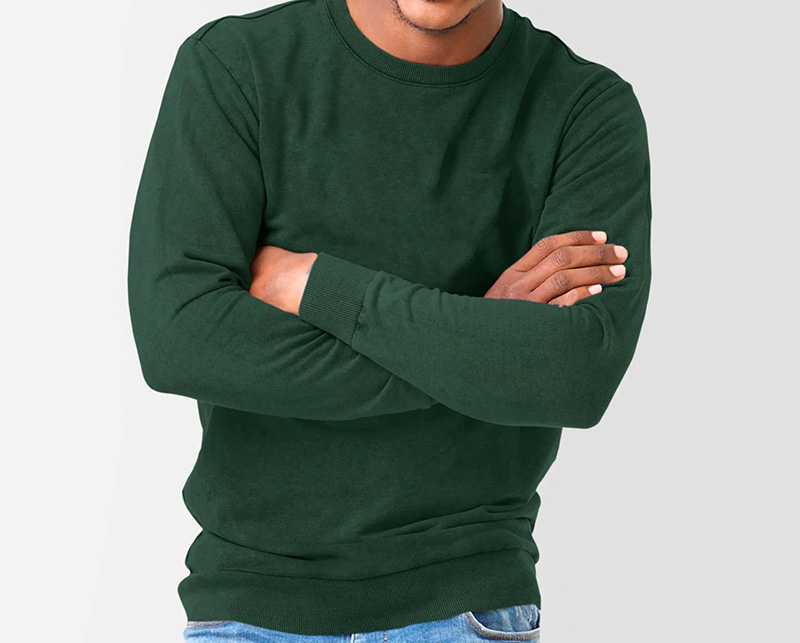
Fit and measurements affect the final sweatshirt by shaping comfort, silhouette, and perceived quality. Shoulder width, chest ease, body length, sleeve shape, cuff tension, and neckline scale all influence whether the product feels balanced and wearable.
At Fusionknits, fit is one of the clearest signals of product discipline. A good sweatshirt should look intentional, not accidental. Oversized should still feel controlled. Regular fit should still feel current. A poor neckline, sleeve volume, or body length can make even a strong fabric feel wrong.
Key fit areas to review
- Shoulder balance
- Chest width
- Body length
- Sleeve volume
- Neck opening
- Rib cuff and hem size
Why fit matters so much
It changes comfort
The sweatshirt should move naturally and feel easy to wear.
It changes appearance
A better proportion makes the product look more premium.
It affects repeat use
Customers return to a sweatshirt that feels right on the body.
| Fit area | Why it matters |
|---|---|
| Shoulder | Creates the core silhouette |
| Chest | Changes ease and mood |
| Body length | Controls proportion |
| Sleeve shape | Affects both style and comfort |
What Design Details Should You Add to Make It Your Own?
This is where personal identity enters the product. But strong sweatshirt design does not always mean adding more details. Often, the most effective choices are the most controlled ones.
To make a sweatshirt your own, you should define a few clear design details such as fit direction, color palette, print or embroidery style, seam placement, rib proportion, wash finish, and labeling. The best design choices usually support one clear brand story instead of adding too many unrelated elements.
At Fusionknits, the strongest sweatshirts usually feel cohesive. A product can be minimal and still distinctive. It can also be graphic-led and still feel controlled. The real goal is not decoration alone. The goal is identity that fits the product naturally.
Design details that shape identity
- Front and back graphics
- Embroidery placement
- Wash and vintage effects
- Neck label design
- Rib width
- Seam style
- Hem and cuff finish
- Color story
How to make details work together
Choose one main visual language
Do not mix too many moods into one garment.
Let fabric and fit support the design
A strong print needs the right blank underneath.
Keep the product wearable
The best sweatshirt still needs repeat-use value.
| Design element | Brand effect |
|---|---|
| Graphic placement | Strong visual identity |
| Embroidery | Premium detail |
| Wash finish | More personality and depth |
| Labeling | Better branding consistency |
Should You Use Printing, Embroidery, or Both?
This depends on the look you want, the fabric, the budget, and the expected product level. Each method changes the final sweatshirt in a different way.
You should use printing if you want stronger visual graphics, wider artwork possibilities, or more cost-efficient decoration at volume. You should use embroidery if you want texture, a more premium feel, and cleaner logo treatment. Some sweatshirts use both when the brand concept supports it.
At Fusionknits, the decision should come from product logic. Heavy graphic streetwear may work best with screen printing or specialty wash prints. Premium basics may look better with small embroidery. A collegiate sweatshirt may combine chest embroidery with printed back artwork if the design stays balanced.
Common decoration methods
- Screen printing
- DTG printing
- Puff print
- Embroidery
- Appliqué
- Mixed-media decoration
How to choose the right one
Printing works well for visual storytelling
It gives more image and layout freedom.
Embroidery works well for cleaner branding
It usually feels more durable and premium in small logo use.
Both can work if the product supports it
The sweatshirt should not become visually overloaded.
| Decoration method | Best use |
|---|---|
| Screen print | Bold graphics and volume production |
| Embroidery | Logos and premium details |
| Puff print | Raised graphic effect |
| Combined methods | More layered identity |
How Do You Create a Proper Tech Pack for Your Sweatshirt?
A real product cannot move clearly into sampling without technical instructions. Reference photos are not enough for factory development.
To create a proper sweatshirt tech pack, you should include front and back flat sketches, full measurements, fabric specs, rib specs, construction notes, artwork placement, colorways, label details, and packaging instructions. A strong tech pack turns your idea into a producible garment.
At Fusionknits, a good tech pack protects time, money, and product accuracy. Many first samples fail not because the factory lacks skill, but because the instructions are incomplete. A sweatshirt may come back too short, too light, or with the wrong neck opening simply because the brief was not clear enough.
A strong sweatshirt tech pack should include
- Front and back drawings
- Measurement chart with tolerances
- Fabric and GSM details
- Rib composition and dimensions
- Stitching notes
- Artwork size and placement
- Wash effect notes
- Label and packaging instructions
Why tech packs matter
They reduce misunderstanding
The supplier gets a clearer production target.
They improve sample speed
Fewer questions usually mean fewer delays.
They improve consistency
The product becomes easier to repeat in bulk.
| Tech pack section | Why it matters |
|---|---|
| Flat sketch | Visual product clarity |
| Measurements | Fit accuracy |
| Fabric details | Material control |
| Artwork notes | Brand consistency |
How Do You Turn Your Sweatshirt Idea Into a Sample?
Once the design is clear, the next step is sample development. This is where the concept becomes real. It is also where many hidden problems appear for the first time.
To turn your sweatshirt idea into a sample, you need to send the tech pack to a suitable manufacturer, choose the fabric and trims, approve the first prototype, review fit and finishing, then revise the sample until the product matches your intended design and performance level.
At Fusionknits, sampling is where smart founders stay patient. The first sample is rarely the final answer. The purpose of sampling is to test the product honestly. Does the fit work? Does the fabric drape correctly? Does the rib recover well? Does the print feel right on the chosen fabric? That process builds a stronger final sweatshirt.
A smart sample process
- Submit clear tech pack
- Confirm fabric and trim selection
- Review first prototype
- Check fit and proportion
- Review decoration quality
- Test wash performance if needed
- Revise before bulk production
What to review in the sample
Fabric hand feel
Does it match your brand position?
Fit and silhouette
Does it sit the right way on the body?
Construction quality
Are seams, rib, and neckline clean and stable?
Branding details
Do print, embroidery, and labels feel right?
| Sample stage | Main focus |
|---|---|
| First prototype | Structure and fit |
| Revised sample | Corrections and refinement |
| Final pre-production | Bulk approval standard |
How Do You Find the Right Manufacturer to Make It?
A strong sweatshirt needs the right production partner. Not every supplier is equally good at knitwear, fleece, fit balance, or branded finishing.
To find the right manufacturer for your sweatshirt, choose a supplier with strong knitwear experience, good sample development, reliable communication, stable fabric sourcing, realistic MOQ options, and clear quality control. The best supplier should understand both construction and brand expectations.
At Fusionknits, we believe the right factory should not only make what you ask for. It should also understand what makes the sweatshirt better. A good manufacturer can help identify fabric problems, improve pattern balance, and guide finishing decisions before they become bulk mistakes.
What to check in a supplier
- Sweatshirt and knitwear experience
- Sample quality
- Fabric sourcing ability
- Communication speed
- MOQ flexibility
- Print and embroidery support
- QC process
Red flags to avoid
Weak sample quality
This often predicts weaker bulk control.
Limited fabric understanding
Sweatshirt success depends heavily on fleece and knit behavior.
Unrealistic low pricing
This often hides compromises in material or construction.
| Supplier quality | Why it matters |
|---|---|
| Knitwear expertise | Better execution |
| Strong sample room | Better development |
| Clear QC process | Lower bulk risk |
| Good communication | Faster decisions |
What Should You Do Before Producing It in Bulk?
This is one of the most important steps because bulk production multiplies every mistake. A product should be approved only after the key technical and visual points are stable.
Before producing your sweatshirt in bulk, you should confirm the final fit, approve fabric and rib quality, approve color and decoration, review shrinkage and wash results, confirm labels and packaging, and lock the final production sample. Bulk should begin only after the full product system is stable.
At Fusionknits, bulk approval is where discipline matters most. Many problems can still be prevented at this stage. A careful founder checks more than the front print. They check measurement consistency, construction accuracy, trim details, and how the product will actually reach the customer.
Final bulk checks
- Approved sample
- Final measurement spec
- Fabric and color approval
- Rib and trim approval
- Artwork confirmation
- Packaging confirmation
- Production timeline review
Why this stage matters
Bulk errors are expensive
Small mistakes become large inventory problems.
Approval protects consistency
The factory needs one clear standard to follow.
Better preparation supports smoother delivery
Production becomes easier to control.
| Bulk approval area | Why it matters |
|---|---|
| Final sample | Production reference |
| Fabric approval | Quality protection |
| Packaging approval | Brand finish |
| Measurement lock | Fit consistency |
Conclusion
Creating your own sweatshirt means much more than choosing a blank and adding a graphic. A strong sweatshirt begins with a clear product purpose, the right customer focus, the right silhouette, and the right fabric system. From there, the product must be shaped through disciplined fit development, controlled design details, a proper tech pack, thoughtful sampling, and the support of a manufacturer that understands knitwear and construction. The best sweatshirt is not simply attractive in concept. It must also feel right, hold shape, wash well, and match the brand promise in real use.
At Fusionknits, we believe the best sweatshirt creation process starts with product logic and ends with repeatable quality.
When fabric, fit, decoration, construction, and supplier communication are aligned correctly, a sweatshirt becomes more than an idea. It becomes a real product with long-term value. That is how founders move from inspiration to a sweatshirt that customers actually want to wear again and again.