Many new embroidered sweatshirt businesses start with one idea that feels exciting: add a logo to a sweatshirt and sell it. Then the real problems appear. The embroidery puckers the fabric. The sweatshirt quality does not match the branding. The design looks good on screen but too heavy in production. The supplier can make sweatshirts, but not embroidery well. This is where many new businesses lose direction.
At Fusionknits, we believe the best way to start an embroidered sweatshirt business is to build it around three things first: a clear customer, a sweatshirt base that can support embroidery properly, and an embroidery style that matches the brand position. A strong embroidered sweatshirt business is not only about decoration. It is about product balance, manufacturing control, and clear market identity.
As a professional apparel manufacturer, we see embroidered sweatshirts as a product category where garment quality and decoration quality must work together. A weak sweatshirt can make good embroidery look average. Poor embroidery placement can damage a premium sweatshirt. That is why this business should begin with product discipline, not only with logo ideas.
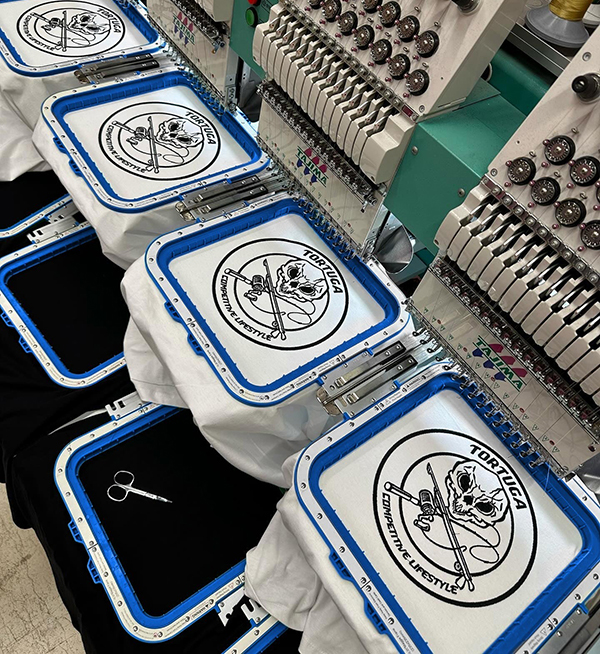
Why is an embroidered sweatshirt business still a good idea?
An embroidered sweatshirt sits in a strong product space. It combines comfortwear with visible brand value. It can work in streetwear, schoolwear, corporate gifting, premium basics, resort merchandise, teamwear, and small lifestyle brands. That makes the category commercially flexible.
At Fusionknits, we see embroidered sweatshirts as a good business idea because they combine repeat-wear comfort with higher perceived value. Embroidery can make a sweatshirt feel more premium, more brand-specific, and more giftable than a plain fleece basic.
This category also supports different business models. A brand can build a fashion label around embroidered sweatshirts. A B2B company can sell custom programs to businesses, schools, or events. A niche creator can launch small runs with a strong visual identity. The product is broad enough to support all of these paths.
Why the category stays attractive
- Sweatshirts already have repeat-wear value
- Embroidery adds visual identity
- The product works in fashion and B2B markets
- Customers often see embroidery as more premium than print
- The category allows both small and large order strategies
Why this matters for new businesses
The base product is already familiar
Customers understand sweatshirts immediately, so the brand can focus on design and positioning.
Embroidery adds margin opportunity
A well-made embroidered sweatshirt can justify a stronger price than a plain basic.
| Business strength | Why it helps |
|---|---|
| Broad customer appeal | Easier market entry |
| Premium decoration feel | Better value perception |
| Repeat-use garment | Better reorder potential |
Who should an embroidered sweatshirt business sell to first?
One of the biggest early mistakes is trying to serve every customer type at the same time. A stronger brand starts with one clear audience and one clear product purpose.

At Fusionknits, we recommend choosing one target customer first, such as streetwear buyers, premium basics customers, school and university programs, corporate branding clients, teamwear buyers, or lifestyle gift markets. The clearer the customer, the easier it becomes to build the right sweatshirt and embroidery direction.
A streetwear customer may want oversized fleece with bold embroidery placement. A corporate buyer may want cleaner left-chest embroidery on stable midweight sweatshirts. A premium basics customer may want minimal tonal embroidery on loopback or French terry. These are all embroidered sweatshirts, but they are not the same product business.
Strong target-market options
- Streetwear and youth fashion
- Premium basics consumers
- Corporate branding clients
- Schools and universities
- Teams, clubs, and events
- Gift and merchandise programs
Why customer clarity matters
Product development becomes more accurate
The sweatshirt weight, fit, embroidery scale, and thread direction all become easier to define.
Selling becomes easier
The brand can explain why the product exists and who it is made for.
| Customer type | Best product direction |
|---|---|
| Streetwear buyer | Oversized fleece with bolder embroidery |
| Corporate client | Clean commercial sweatshirt with smaller logo |
| Premium basics buyer | Refined sweatshirt with minimal embroidery |
What kind of sweatshirt works best for embroidery?
Not every sweatshirt handles embroidery equally well. This is one of the most important technical points in the whole business. A sweatshirt base must support the needlework without puckering, distorting, or losing shape.
At Fusionknits, the best sweatshirts for embroidery are usually midweight to heavyweight fleece, French terry, loopback cotton, or stable cotton-rich blends with enough body to support stitch density. A weak or overly lightweight sweatshirt often performs poorly because the fabric cannot carry embroidery cleanly.
We usually prefer sweatshirts with a stable surface and enough thickness to support embroidery backing. Very soft, thin, or unstable knits may look attractive at first touch, but they can create production problems once stitched.
Strong sweatshirt base options for embroidery
- Midweight fleece sweatshirts
- Heavyweight fleece sweatshirts
- French terry crewnecks
- Loopback cotton sweatshirts
- Cotton-rich blend basics with good recovery
What makes a sweatshirt embroidery-friendly
Surface stability
The fabric should stay smooth under the embroidery field.
Enough body
The sweatshirt should carry the stitch weight without collapsing.
| Sweatshirt base | Embroidery suitability |
|---|---|
| Heavy fleece | Very strong |
| Midweight French terry | Strong |
| Loopback cotton | Strong premium option |
| Lightweight unstable knit | Weak |
What kind of embroidery design works best for a new business?
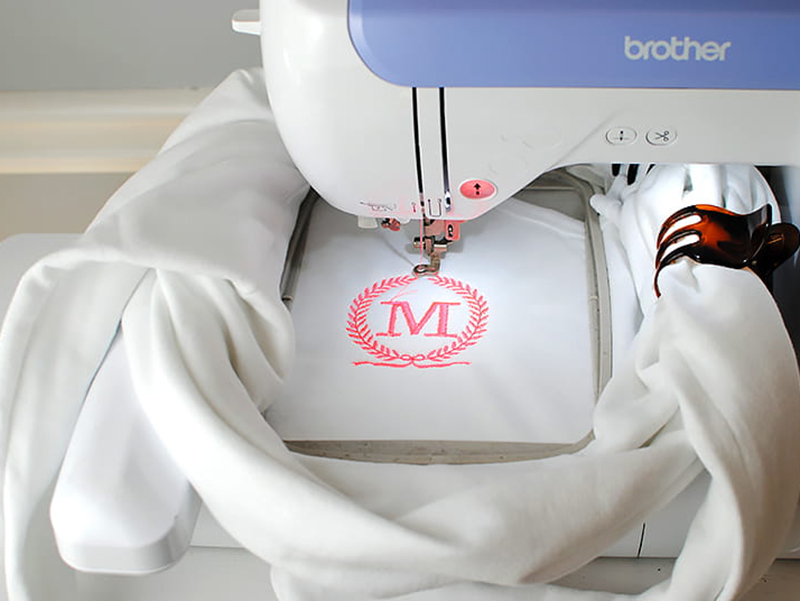
Many new brands make the mistake of starting with embroidery that is too complicated, too dense, or too large. Good embroidery business strategy usually starts with designs that are clean, repeatable, and production-friendly.
At Fusionknits, the best embroidery designs for a new sweatshirt business are usually simple, clean, and scalable. Small chest logos, tonal wordmarks, minimal icons, collegiate lettering, and controlled back embroidery are often stronger first products than overly dense or overly complex artwork.
Embroidery should match the sweatshirt, not fight it. A refined sweatshirt often works better with smaller embroidery. A streetwear sweatshirt may support larger placements, but the stitch density still needs control. Clean embroidery usually scales better in production and in retail photography.
Strong embroidery directions for early-stage brands
- Small chest logo
- Tonal embroidery
- Script wordmark
- Collegiate text
- Sleeve embroidery
- Small back-neck detail
- Controlled central chest design
Why simpler embroidery is often stronger
It reduces production risk
Smaller and cleaner designs are easier to stabilize.
It improves repeatability
A business grows faster when the product can be reproduced consistently.
| Embroidery style | Best early use |
|---|---|
| Left-chest logo | Broad commercial use |
| Tonal wordmark | Premium basics |
| Collegiate embroidery | Merchandise and schoolwear |
How should a new brand choose embroidery placement and size?
Placement changes both the mood of the product and the technical difficulty. A design that looks good digitally may fail physically if it sits in the wrong place on the sweatshirt.
At Fusionknits, we recommend that new embroidered sweatshirt brands start with proven placements such as left chest, center chest, sleeve, or upper back. The size should stay balanced with the garment weight, stitch density, and target market.
Left chest remains one of the safest and most commercially flexible options. Center chest works well for stronger fashion or merchandise identity. Sleeve embroidery can feel more premium and understated. Large embroidery can work, but only when the sweatshirt body, backing, and artwork are planned correctly.
Strong early placement options
- Left chest
- Center chest
- Sleeve near cuff
- Upper back neck area
- Limited full-back embroidery in selected styles
Why placement matters so much
It changes the product identity
A small chest mark feels different from a bold central logo.
It changes technical performance
Seam areas, rib areas, and unstable fabric zones should be avoided when possible.
| Placement | Main product mood |
|---|---|
| Left chest | Clean and versatile |
| Center chest | Bold and visible |
| Sleeve | Refined and detail-led |
| Upper back | Subtle branding |
How do you find the right manufacturer for embroidered sweatshirts?
This is where many businesses either become stable or become inconsistent. A sweatshirt supplier is not automatically a strong embroidery supplier. The best manufacturing partner must understand both.

At Fusionknits, the right manufacturer for an embroidered sweatshirt business should have strong sweatshirt production experience, stable embroidery quality, sampling capability, design digitizing support, and reliable communication across both garment and embellishment development.
A good factory should be able to advise on stitch count, backing, embroidery size, puckering risk, and how the sweatshirt fabric will react under the needle. Without that support, the brand may end up solving technical problems too late.
What to check in an embroidery sweatshirt supplier
- Sweatshirt production experience
- Embroidery machine quality
- Digitizing and sample support
- Backing and stabilizer knowledge
- Fabric and stitch compatibility control
- Reliable communication
- Consistent QC system
Warning signs to avoid
Good sweatshirts but weak embroidery
The final product still fails if decoration quality is poor.
Good embroidery but weak garment quality
A premium logo cannot save a weak sweatshirt base.
| Supplier factor | Why it matters |
|---|---|
| Embroidery sampling | Helps reduce risk early |
| Sweatshirt expertise | Protects base garment quality |
| QC discipline | Improves repeat consistency |
How should a new embroidered sweatshirt business price its products?
Pricing should not be guessed. An embroidered sweatshirt has more cost layers than a plain one, so the price must reflect the true structure of the product.
At Fusionknits, embroidered sweatshirt pricing should be built from sweatshirt fabric and construction cost, embroidery stitch count and complexity, sampling cost, labels and packaging, freight, and the margin needed to keep the business sustainable.
Many new businesses underprice because they compare themselves only to plain sweatshirts or to large brands with different scale advantages. A stronger approach is to price according to actual value. Embroidery adds cost, but it should also add identity and perceived quality.
Main pricing components
- Sweatshirt base cost
- Embroidery stitch and machine cost
- Sampling and setup
- Labels and trims
- Packaging
- Freight and duties
- Marketing cost
- Profit margin
Why proper pricing matters
Embroidery should create a stronger product story, not only more labor.
Better pricing supports growth
Sampling, reorders, and better packaging all depend on healthy margin.
| Cost element | Why it matters |
|---|---|
| Embroidery complexity | Direct cost impact |
| Sweatshirt quality | Drives customer perception |
| Packaging and branding | Supports final value |
How should the business grow after launch?
A strong embroidered sweatshirt business should not grow through random design expansion. It should grow through better control of its strongest product and then add depth in a clear way.
At Fusionknits, we recommend growing an embroidered sweatshirt business by refining the bestselling base sweatshirt, improving embroidery execution, expanding into stronger colorways, and then adding a second fit or second embroidery style only after the core product is stable.
The first goal is not to offer ten different silhouettes. The first goal is to make one or two products work very well. Once those products sell consistently, the business can expand into hoodies, zip-ups, premium loopback sweatshirts, oversized fits, or B2B custom embroidery programs.
Strong next growth steps
- Improve the hero sweatshirt
- Expand core colors
- Add one second silhouette
- Add one second embroidery style
- Improve packaging and photography
- Introduce custom or B2B programs carefully
Why this growth path works
It builds consistency first
The business becomes known for a reliable product, not only new ideas.
It keeps production manageable
Growth follows product logic, not design overload.
| Growth step | Best result |
|---|---|
| Hero product refinement | Better repeat purchase |
| Color expansion | Broader customer reach |
| Second silhouette | Stronger category depth |
Conclusion
Starting an embroidered sweatshirt business means building more than a decorated basic. It means choosing the right target customer, selecting a sweatshirt base that can support embroidery properly, keeping the embroidery design clean and production-friendly, and working with a manufacturer that understands both garment quality and embellishment control.
The strongest early strategy is usually one reliable hero sweatshirt with one or two well-balanced embroidery placements, then steady growth through better colors, stronger execution, and clearer brand identity.
At Fusionknits, we believe embroidered sweatshirt businesses succeed when decoration and garment quality are developed together from the start. A good embroidered sweatshirt should look branded, but it should also feel stable, wearable, and professionally made. When the base fabric, fit, embroidery style, and production system all work together, the product becomes much easier to scale into a lasting apparel business.