When selecting premium sweaters or cardigans, a common question arises: is 100% wool or 100% cashmere warmer? Both fibers are natural, soft, and insulating, yet they differ in fiber structure, density, and thermal performance.
100% wool and 100% cashmere both provide excellent warmth, but wool generally offers higher insulation due to coarser, denser fibers, while cashmere feels softer, lighter, and more luxurious. The choice depends on climate, intended use, and personal preference for weight versus softness.
At Fusionknits, we analyze fiber properties, knit construction, and finishing methods to ensure each garment delivers optimal warmth, comfort, and aesthetic appeal for the target market.
How Do Wool and Cashmere Differ?
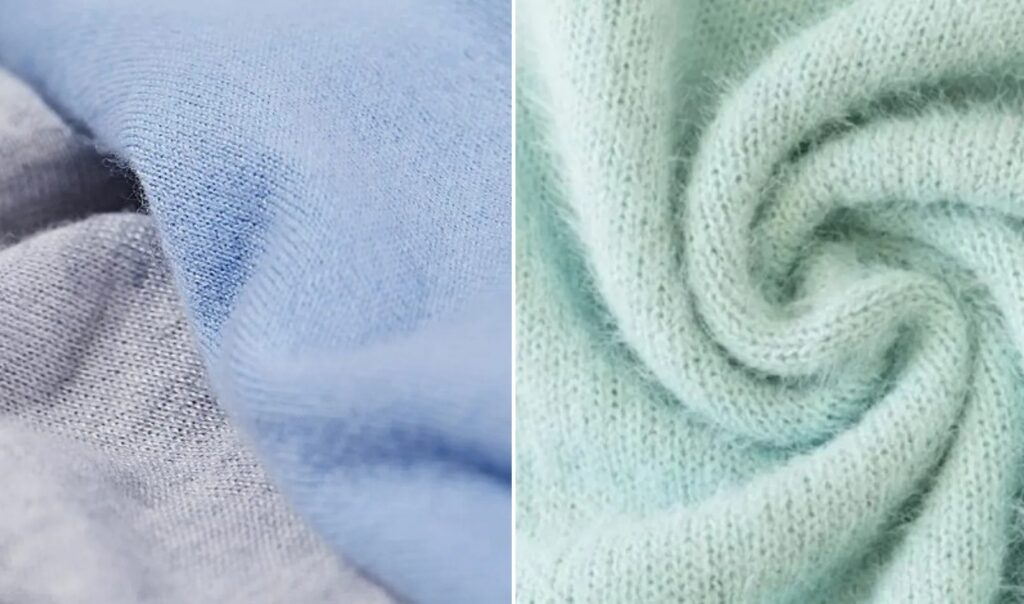
Wool is sourced from sheep, with crimped fibers that provide elasticity, insulation, and breathability. Cashmere, from cashmere goats, has finer, smoother fibers that create a soft, luxurious hand feel, but with slightly less density and insulation.
Wool tends to be warmer per weight due to higher fiber crimp and density, which traps more air for thermal regulation. Cashmere is lighter and softer, often preferred for its luxury feel, though additional layering may be required in colder climates.
At Fusionknits, we select high-grade merino wool and fine cashmere based on fiber diameter, length, and resilience to optimize both warmth and comfort in cardigans.
Key Differences
- Wool: Coarser, denser, highly insulating
- Cashmere: Finer, softer, lighter, less dense
- Wool: Resilient, maintains shape well
- Cashmere: Luxurious feel, lightweight
Why Wool Provides Superior Insulation
The natural crimp of wool fibers traps air effectively, creating a thermal barrier that maintains warmth even when the garment is slightly damp. Fine merino wool combines softness with exceptional insulation, ideal for colder climates.

100% wool garments are generally warmer than cashmere of the same thickness, as denser fibers trap more heat and provide consistent insulation.
At Fusionknits, wool cardigans are knit with gauges and stitch patterns that maximize warmth while ensuring comfort and drape.
Insulation Factors
- Fiber crimp and density
- Panel thickness and knit gauge
- Ribbed hems and cuffs to retain heat
- Layering compatibility for added warmth
Production Considerations
- Medium to heavy gauge knitting for insulation
- Reinforced ribbing for edge stability
- Finishing processes to enhance resilience and softness
How Cashmere Feels Lighter but Softer
Cashmere fibers are finer and smoother, producing a soft, luxurious feel. While lighter than wool, cashmere provides gentle warmth suitable for indoor wear or mild climates.
100% cashmere cardigans offer an elegant, soft touch but may require layering to match wool’s thermal performance in colder environments.
At Fusionknits, cashmere fibers are carefully spun to maintain softness, reduce pilling, and ensure thermal efficiency without adding bulk.
Features of Cashmere
- Soft, lightweight fibers
- Luxurious tactile experience
- Gentle warmth ideal for layering
- Minimal itch compared to coarse wool
Production Strategies
- Fine gauge knitting to preserve softness
- Reinforced seams to maintain shape
- Careful finishing to prevent shrinkage and pilling
Can Blends Optimize Warmth and Comfort?
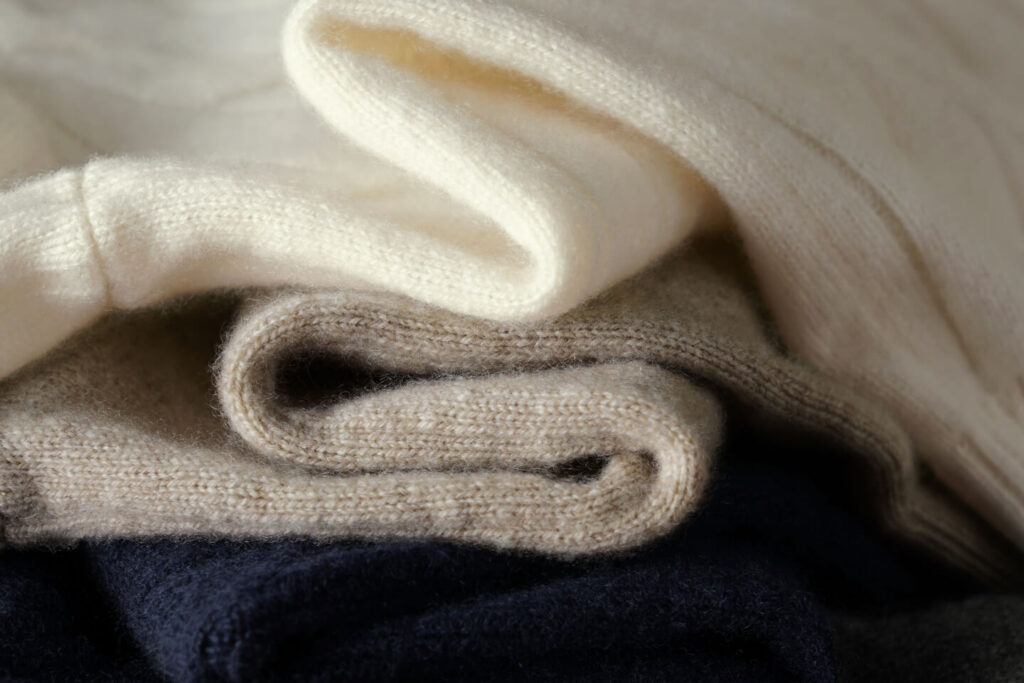
Blending wool and cashmere can produce cardigans that combine the insulation of wool with the softness of cashmere. A 70% wool, 30% cashmere blend, for example, delivers warmth and durability while maintaining a luxurious hand feel. Blends also mitigate cashmere’s tendency to stretch or pill excessively.
Blended cardigans provide versatile options for consumers seeking both comfort and thermal efficiency. They allow lightweight, stylish garments that maintain warmth without compromising softness or longevity.
At Fusionknits, we engineer fiber blends carefully, tailoring ratios based on garment weight, seasonal requirements, and market positioning. Combined with precise knitting and finishing techniques, blended cardigans maintain uniform texture, elasticity, and thermal performance across all sizes.
Benefits of Wool-Cashmere Blends
- Combines wool’s warmth with cashmere’s softness
- Reduces bulk while retaining thermal efficiency
- Enhances drape and garment silhouette
- Improves durability over pure cashmere
- Allows cost-effective premium garment production
Production Considerations
- Uniform fiber distribution during spinning
- Knit gauge adjustments for blended fibers
- Reinforced ribbing and paneling for shape retention
- Careful finishing to prevent pilling and maintain softness
How Knit Style Impacts Thermal Performance
Knit style significantly affects a cardigan’s warmth. Dense, tightly knitted patterns trap air and provide insulation, while open-knit or lace patterns enhance breathability but reduce heat retention. Ribbing, cable knits, and double-knit techniques improve both warmth and structural integrity.
Even premium fibers will underperform if the knit structure does not optimize insulation. Stitch density, panel alignment, and ribbing design are crucial to ensuring thermal efficiency without sacrificing comfort or style.
At Fusionknits, knit style is selected based on fiber type, garment weight, and seasonal intent. Winter garments utilize tight gauges and textured stitches for insulation, while spring and transitional cardigans employ lighter knits for breathability. Advanced knitting machines and rigorous monitoring ensure uniformity and consistent thermal performance across production.
Knit Style Strategies
- Tight gauge for high insulation
- Medium gauge for layered, transitional garments
- Ribbed hems and cuffs to trap body heat
- Double-knit or textured stitches for warmth and durability
- Open-gauge patterns for summer or spring styles
Seasonal Use and Consumer Preferences
Choosing between 100% wool, 100% cashmere, or blends depends on climate, season, and consumer preference. Wool cardigans excel in cold weather and outdoor activities. Cashmere suits indoor wear, mild climates, or luxury layering. Blends offer versatile performance in transitional seasons.

Consumer expectations and climate significantly influence fiber choice, knit style, and design. Wool is preferred for practical warmth, cashmere for luxury and softness, and blends balance both qualities.
At Fusionknits, product lines are developed with seasonal trends, consumer behavior, and fashion preferences in mind, ensuring cardigans deliver appropriate warmth, comfort, and style throughout the year.
Seasonal Recommendations
| Fiber Type | Ideal Season | Performance & Style Benefits |
|---|---|---|
| 100% Wool | Autumn/Winter | Maximum insulation, durability, resilience |
| 100% Cashmere | Spring/Indoor | Soft, lightweight, luxurious feel |
| Wool-Cashmere Blend | Transitional | Balanced warmth, softness, versatile styling |
| Cotton or Linen | Spring/Summer | Breathable, lightweight, easy-care |
Consumer Insights
- Premium markets favor cashmere or blends for luxury
- Functional markets prefer wool or wool-blends for thermal efficiency
- Fashion-conscious consumers look for blends with texture and color innovation
Maintenance and Longevity Considerations
Wool is resilient and easier to care for than cashmere, which requires gentle handling. Proper maintenance ensures both fibers retain softness, shape, and thermal properties.
Following fiber-specific care prolongs garment lifespan. Wool can be hand-washed or machine-washed on a wool cycle; cashmere typically requires hand washing or dry cleaning. Blends simplify care while preserving warmth and softness.
At Fusionknits, detailed care instructions accompany each cardigan, guiding consumers on washing, drying, and storage to maintain quality over time.
Care Guidelines
- Wool: Cool hand wash or wool cycle, dry flat
- Cashmere: Gentle hand wash, reshape flat, occasional dry cleaning
- Blends: Follow fiber blend recommendations, use gentle washing cycles
Conclusion
100% wool and 100% cashmere each have distinct strengths: wool offers superior insulation and durability, while cashmere provides softness, lightness, and luxury. Carefully engineered blends combine the advantages of both fibers, delivering warmth, comfort, and longevity suitable for a variety of climates and consumer preferences.
At Fusionknits, we combine premium fiber selection, optimized knit construction, and precise finishing techniques to produce cardigans and sweaters that excel in thermal performance, style, and wearability.
Whether using pure wool, pure cashmere, or blends, our garments are designed to provide lasting comfort, luxurious texture, and functional warmth, making them high-quality wardrobe essentials for all seasons.