In international apparel sourcing and manufacturing, choosing the right Incoterms is essential for controlling cost, managing logistics risk, and ensuring smooth delivery. Among the most commonly used terms in global garment trade are FCA (Free Carrier) and FOB (Free On Board).
Both FCA and FOB are widely applied in exports of clothing products from China to global markets. However, they differ significantly in transport mode applicability, delivery responsibility, and risk transfer point. So whether you are a buyer or seller, knowing these variations will help you make an ideal shipping agreement that will turn into a good sourcing decisions and avoid unnecessary logistics risks.
This article explains FCA vs FOB from a practical apparel manufacturing perspective, helping you clearly understand how each term works in real trade operations.
What is FCA (Free Carrier)?
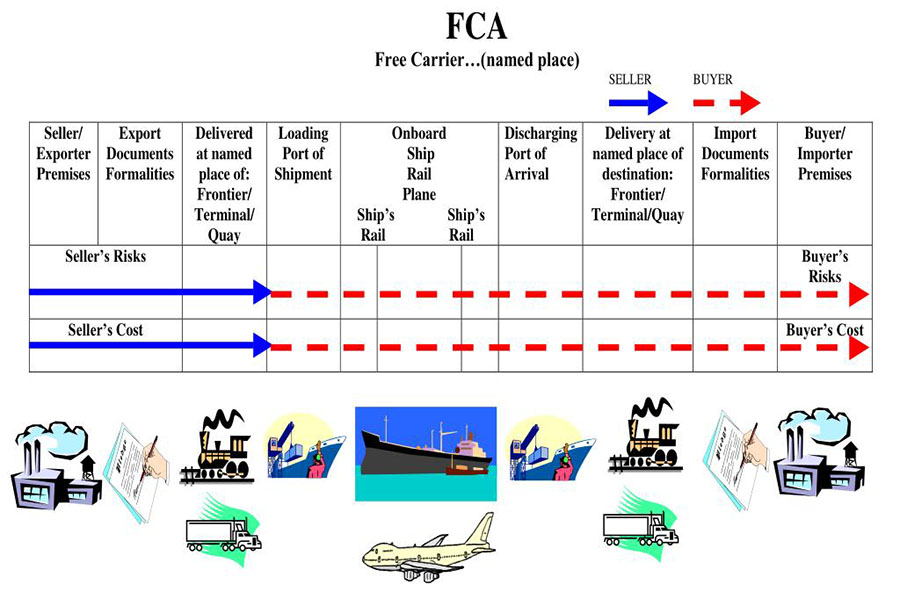
FCA (Free Carrier) is an international trade term where the seller delivers the goods to a named place in the exporting country, and at that exact point the risk transfers from the seller to the buyer. In apparel manufacturing and sourcing, FCA is widely used because it provides a clear separation between export responsibilities handled by the supplier and international logistics controlled by the buyer.
Under FCA terms, the seller is responsible for production, packaging, inland transportation within China, and export customs clearance. Once the goods are delivered to the agreed location—such as a freight forwarder’s warehouse, airport terminal, or seaport terminal—the buyer takes full responsibility for international freight, insurance, and import procedures.
In simple terms, FCA means the supplier completes all export-side work in China, and you take over the shipment once it reaches your nominated logistics point.
For example, if you are purchasing 20,000 hoodies from a factory in Dongguan under FCA Shenzhen Port terms, the factory first completes production, quality control, packaging, and export declaration in China. After that, the goods are transported to Shenzhen port or directly to your nominated freight forwarder’s warehouse.
At the moment your forwarder receives the cargo, risk transfers immediately to you, even though the goods have not yet left China.
From that point onward:
- You arrange international shipping (sea or air freight)
- You pay for freight and insurance if needed
- You handle import customs clearance in your destination country
- You manage final delivery to your warehouse or distribution center
This structure gives you flexibility in global logistics while keeping export compliance on the supplier side.
What is FOB (Free On Board) ?
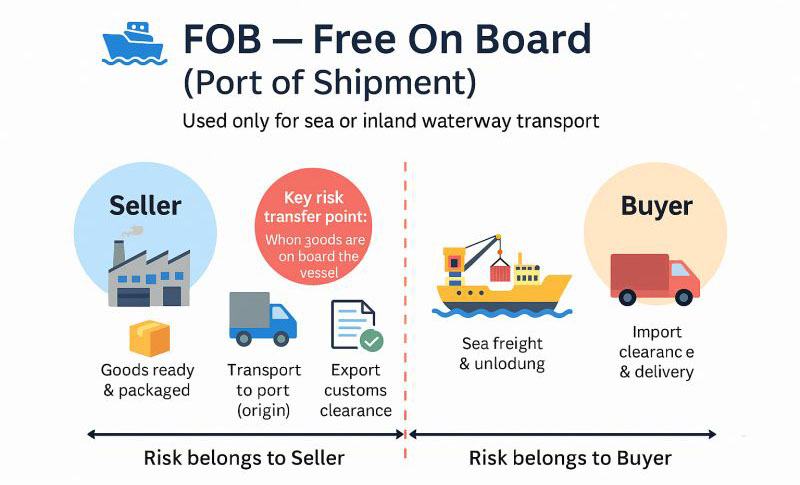
FOB (Free On Board) is one of the most widely used international trade terms in global apparel export, especially for sea freight shipments from China. Under FOB terms, the seller is responsible for delivering the goods to the designated port and loading them onto the vessel nominated by the buyer. Once the goods are successfully loaded on board the ship at the port of origin, the responsibility and risk transfer from the seller to the buyer.
In simple terms, FOB means the seller delivers goods to the port and loads them onto the ship, and from that moment you take over responsibility.
For example, if you are purchasing 20,000 hoodies from a garment factory in Ningbo under FOB terms, the factory will first complete production, packaging, and export customs clearance in China. After that, the seller arranges inland transportation from the factory to Ningbo port.
At the port, the goods are loaded onto the vessel nominated by you or your freight forwarder. Once the cargo is safely on board the ship, risk transfers to you as the buyer, even though the goods have not yet arrived in your country.
From that point onward:
- You handle international sea freight
- You manage cargo insurance (if needed)
- You complete import customs clearance in your destination country
- You arrange final inland transportation to your warehouse
In apparel trade, FOB is widely preferred because it balances supplier responsibility and buyer control, making it one of the most reliable and commonly used Incoterms for containerized garment shipments.
Key Differences Between FCA and FOB
In international apparel sourcing, FCA and FOB are two of the most commonly used Incoterms, especially for garment exports from China. Although they are often used in similar shipping scenarios, they represent two very different logistics structures in terms of delivery responsibility, transport flexibility, and risk transfer timing. Choosing between them directly affects how your goods move from the factory to the international shipping stage, and how much control you have over the logistics process.
In practice, the difference is not only about who pays more or less, but about where the handover point is defined in the supply chain and how much operational responsibility is shifted from the supplier to you as the buyer. This makes FCA and FOB critical decisions in apparel trade, especially when dealing with container shipments, air freight, and multimodal logistics systems.
Difference in Delivery Point
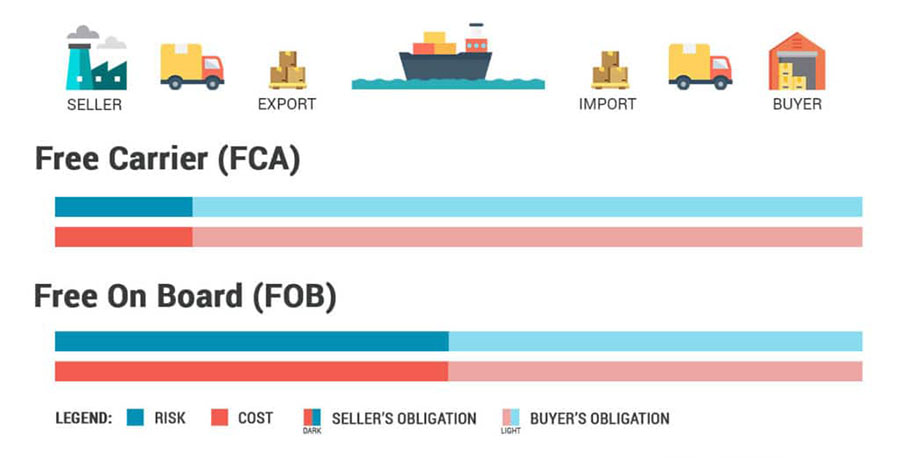
In international apparel sourcing, the most critical difference between FCA and FOB is the delivery point, which directly determines when responsibility and risk transfer from the seller to you as the buyer. Although both terms are widely used in China garment exports, they represent two completely different handover structures in the logistics chain.
With FCA (Free Carrier), the seller delivers the goods to a named place inside the exporting country, such as a freight forwarder warehouse, airport cargo terminal, or port logistics center. Once the goods are handed over to your nominated carrier at this location, your responsibility begins immediately, even though the goods have not yet been loaded onto the vessel or aircraft.
In contrast, under FOB (Free On Board), the seller’s responsibility continues further into the port process. The goods must be transported to the port of origin and loaded onto the vessel nominated by you. Only after the cargo is successfully loaded on board does the risk transfer from seller to buyer.
For buyer:
- FCA = responsibility transfers before the ship loading stage (at a named place)
- FOB = responsibility transfers after the goods are loaded onto the vessel
This difference may seem small, but in real apparel logistics it significantly affects your coordination work, because FCA shifts responsibility earlier in the chain, while FOB keeps the seller involved until port loading is completed.
Difference in Transportation Methods
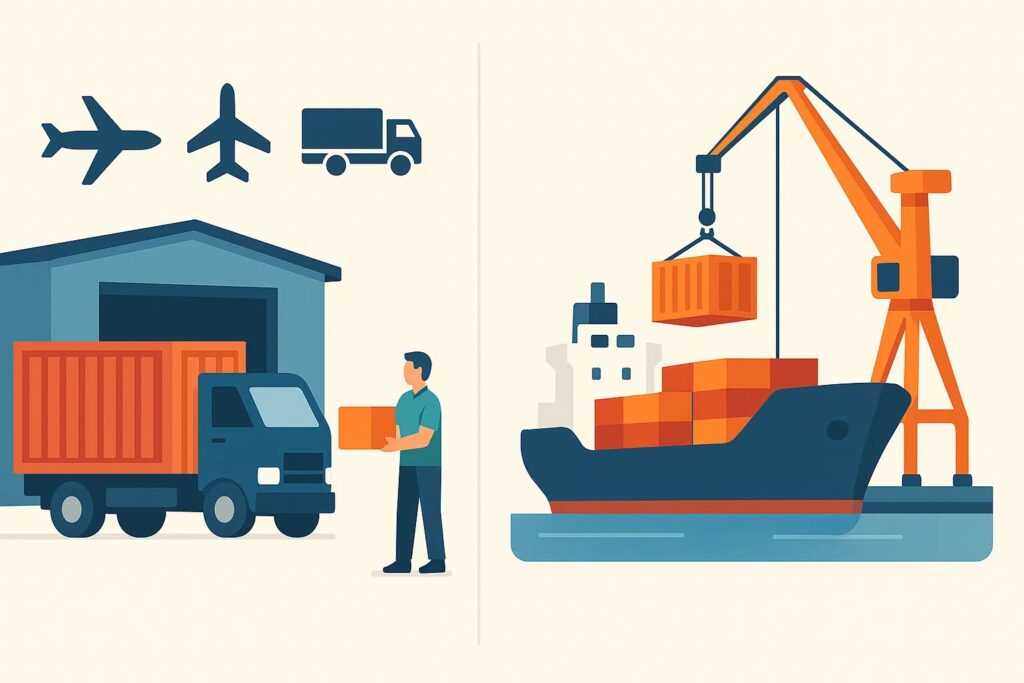
In international apparel logistics, FCA and FOB differ not only in responsibility and delivery point, but also in the overall transportation structure and how goods move from the factory to the global shipping network. For you as a buyer, this difference directly affects how much control you have over the shipping process and how logistics is organized in practice.
With FCA (Free Carrier), transportation is more flexible and can be arranged through multiple transport modes, including air freight, sea freight, rail, or even express and multimodal logistics. The seller is only responsible for moving the goods within the origin country to the named place, such as a freight forwarder warehouse or airport terminal. From there, you take over the shipment and decide how the international transport will be handled, including carrier selection and freight arrangement.
In contrast, FOB (Free On Board) is strictly limited to sea freight or inland waterway transport, and the entire logistics flow is designed around port operations. The seller must transport the goods to the port of origin and complete loading onto the vessel nominated by you. This makes FOB more structured and standardized for container shipping, especially in apparel exports such as T-shirts, hoodies, and bulk garment orders.
For buyer:
- FCA = flexible transport options (air, sea, multimodal), early handover before port loading
- FOB = sea freight only, structured port-to-vessel shipping process with loading included
This difference is especially important in real apparel sourcing. If your shipment requires speed, consolidation, or air freight flexibility, FCA gives you more control. If your shipment is large-scale container cargo with stable sea freight routes, FOB provides a more traditional and predictable shipping structure.
Difference in Risk Transfer
In international apparel sourcing, the difference in risk transfer timing between FCA and FOB is one of the most important factors that directly affects your financial exposure, logistics safety, and overall supply chain risk management. Although both Incoterms define a clear handover point between seller and buyer, the exact moment when responsibility shifts is not the same, and this difference becomes very important when shipping garments orders from China.
With FCA (Free Carrier), the risk transfers to you at the moment the goods are handed over to your nominated carrier at the agreed named place in the origin country. This means even before the goods are loaded onto the main international transport (such as a vessel or aircraft), you already assume responsibility for any loss or damage. If any issue happens during inland transportation within China or while handling at the forwarder’s warehouse or terminal, the risk is already on your side as the buyer.
In contrast, under FOB (Free On Board), the seller continues to bear the risk until the goods are physically loaded onto the vessel at the port of origin. Only after the cargo is safely on board does the responsibility transfer to you. This provides an additional protection window for you as a buyer during inland transport and port handling operations in China.
For buyer:
- FCA = risk transfers earlier (at handover to carrier in China)
- FOB = risk transfers later (after goods are loaded onto the ship)
This difference is especially important in apparel logistics, because pre-shipment handling, trucking, and port operations in China involve multiple parties. Under FCA, you take control—and risk—sooner in the process, while under FOB, the supplier remains responsible until the goods are safely loaded onto the vessel.
Difference in Seller Responsibility Scope
In international apparel sourcing, one of the most important differences between FCA and FOB is the scope of responsibility that the seller must complete before risk transfers to you as the buyer. This difference directly affects how much operational workload remains on the supplier and how much coordination you need to manage in the export process.
Under FCA (Free Carrier), the seller’s responsibility is relatively limited to the origin-side logistics. The supplier is responsible for producing the garments, completing packaging and labeling, handling inland transportation within China, and finishing export customs clearance. Once the goods are delivered to your nominated carrier or freight forwarder at the agreed named place, the seller’s obligations are fully completed. After this handover point, all remaining logistics activities are managed by you.
In contrast, under FOB (Free On Board), the seller’s responsibility extends further into the port operations stage. In addition to production, inland transport, and export customs clearance, the seller must also deliver the goods to the port of origin and ensure they are properly loaded onto the vessel nominated by you. Only after the cargo is safely on board does the seller’s responsibility end.
For buyer:
- FCA = seller stops responsibility at handover to carrier/forwarder in China
- FOB = seller continues responsibility until goods are loaded onto the ship
This means FOB requires the supplier to manage more logistics coordination at the port level, while FCA shifts the responsibility earlier in the process, giving you more direct control but also requiring closer management of international shipping arrangements.
Conclusion
FCA and FOB are both important Incoterms in international apparel trade, but they represent different levels of logistics control and responsibility. FCA provides greater flexibility across transport modes and earlier risk transfer, while FOB remains the most commonly used structure for sea freight container shipments.
As a professional garment manufacturing company, we have extensive experience in apparel production and global export operations. We can support your business with full-service solutions including product development, manufacturing, quality control, and international logistics coordination. If you need assistance with FCA, FOB, or any apparel sourcing requirements from China, please feel free to contact us anytime.