A hoodie can look good on a product page and still disappoint after a few washes. This is where many buyers get misled. A soft hand feel or a trendy fit does not automatically mean real quality.
A high-quality hoodie is a hoodie made with strong fabric, stable construction, balanced fit, durable trims, and reliable wash performance. It should feel comfortable at first touch, but it should also keep its shape, surface quality, color, and structure after repeated wear and laundering.
At Fusionknits, we judge hoodie quality as a full product system. A great hoodie is not only about heavyweight fleece or a luxury label. It is about how the fabric, hood, rib, seams, fit, and finishing all work together. When those parts are aligned correctly, the hoodie looks better, wears better, and creates better long-term value for both brands and customers.
Why Is Hoodie Quality More Complex Than It Looks?
A hoodie seems like a simple category. It has a body, sleeves, a hood, and often a pocket. But the real product performance depends on many technical points that customers notice very quickly once the garment enters daily use.
Hoodie quality is more complex than it looks because the product depends on fabric behavior, fit balance, hood construction, rib recovery, seam durability, and finishing control. A hoodie may look acceptable when new, but poor quality usually appears fast through shrinkage, pilling, twisting, bagging, or weak shape retention.
From a manufacturing point of view, hoodies are high-repeat garments. People wear them often, wash them often, and expect them to remain dependable. That makes quality problems more visible than in many occasional fashion products. If the cuffs stretch out, the hood collapses, or the surface pills after a short time, the customer loses trust quickly.
At Fusionknits, that is why hoodie quality must be judged by repeat performance, not only by first appearance.
Why hoodie quality shows up fast
- Hoodies are washed often
- They are worn in many conditions
- Customers expect long-term comfort
- Shape matters in both casual and premium markets
- Fabric surface is highly visible in wear
Why this matters in product development
A hoodie is a repeat-use product
Small construction weaknesses become obvious very quickly.
The category depends on comfort and structure together
A hoodie that is soft but unstable still feels low quality.
Customers compare hoodies easily
Because the product is familiar, poor quality is easier to notice.
| Quality area | Why it matters |
|---|---|
| Fabric stability | Controls long-term wear |
| Construction | Protects shape and durability |
| Fit balance | Affects both comfort and appearance |
| Finishing | Supports premium perception |
Does Fabric Quality Decide Most of the Hoodie’s Value?
Yes, in many cases fabric is the biggest quality driver. It affects the first impression, but also the long-term performance of the garment. A hoodie built in weak fleece cannot be rescued by better branding alone.

Yes, fabric quality decides a major part of a hoodie’s value because it controls softness, weight, pilling resistance, recovery, warmth, drape, and wash behavior. A high-quality hoodie usually starts with a better fabric system, not only a better design.
At Fusionknits, fabric choice begins with category role. A premium oversized hoodie may need heavyweight cotton-rich fleece. A trans-seasonal hoodie may need a strong French terry. A commercial everyday hoodie may use a well-balanced cotton-poly fleece for better recovery and easier care. The key is not one single fiber story. The key is whether the fabric matches the product goal and holds up over time.
Strong hoodie fabric directions
- Cotton-rich brushed fleece
- Quality cotton-poly fleece
- French terry for lighter use
- Dense loopback knits
- Double-knit for more structured premium hoodies
What stronger fabric usually does better
Holds shape more reliably
The body and sleeves stay cleaner after wear.
Pills less aggressively
A smoother and stronger surface supports better durability.
Feels better over time
Softness should remain, not disappear after a few washes.
| Fabric trait | Quality effect |
|---|---|
| Better yarn quality | Cleaner surface |
| Better density | Better shape and drape |
| Better recovery | Stronger long-term wear |
| Better finishing | Stronger hand feel |
Is Heavier Always Better in a High-Quality Hoodie?
Not always. Weight can help, but weight alone is not quality. A heavy hoodie can still perform poorly if the fabric is unstable, the fit is weak, or the fleece finish is badly controlled.
No, heavier is not always better. A high-quality hoodie should have the right weight for its purpose, not just the highest GSM. Heavyweight fabric can support premium feel and stronger drape, but true quality still depends on yarn, knit structure, recovery, and finishing.
At Fusionknits, heavyweight hoodies often perform strongly in premium basics and streetwear, but only if the fabric is engineered correctly. A weak heavy fleece may feel impressive in hand yet still shrink badly or pill quickly. A medium-weight hoodie in a stronger knit can outperform it in daily wear.
When heavier weight helps
- Premium oversized hoodies
- Cold-weather fleece programs
- Streetwear-led silhouettes
- More structured body shapes
When weight alone does not solve quality
Poor surface quality still pills
Mass does not automatically protect the face of the fabric.
Weak recovery still distorts the garment
A heavy hoodie can still stretch out or lose balance.
Wrong use case creates discomfort
An overly heavy hoodie may feel restrictive in milder climates.
| Hoodie weight | Quality meaning |
|---|---|
| Lightweight | Can be high quality if purpose-led |
| Midweight | Often strongest broad-market balance |
| Heavyweight | Strong when fabric quality is high |
What Construction Details Show That a Hoodie Is High Quality?
Many of the strongest quality signals are not obvious from far away. They come from the hidden discipline of construction. These details affect how the hoodie survives real use.
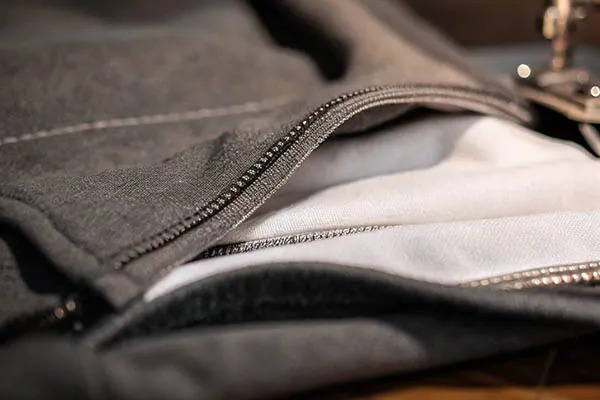
A high-quality hoodie usually shows strong construction through clean seams, stable shoulder assembly, well-built hood panels, durable pocket attachment, strong rib integration, and balanced topstitching. Construction quality becomes visible through how well the garment keeps its shape after wear and washing.
At Fusionknits, construction is where many average hoodies lose value. The seams may be acceptable in a fitting room, but poor seam balance often appears later as twisting, puckering, or distortion. A high-quality hoodie should feel stable across the shoulder, pocket, side seam, and hood join areas.
Construction signals of better quality
- Clean and consistent stitching
- Stable shoulder seams
- Well-attached kangaroo pocket
- Balanced hood construction
- Strong side seam alignment
- Good rib-to-body integration
Why these points matter
Weak seams reduce garment life
Daily wear puts constant stress on key areas.
Poor construction distorts fit
Even good fabric can underperform in a weak assembly.
The hoodie looks more refined and dependable.
| Construction area | What high quality looks like |
|---|---|
| Shoulder seam | Stable and balanced |
| Pocket attachment | Flat, secure, and clean |
| Side seams | Straight and consistent |
| Topstitching | Even and controlled |
How Important Is the Hood in Defining Hoodie Quality?
The hood is one of the most important parts of the product because it strongly affects both appearance and identity. A weak hood can make the whole garment feel cheaper, even when the body fabric is decent.
The hood is extremely important in defining hoodie quality because it shapes the garment’s silhouette, comfort, and overall product perception. A high-quality hood should feel balanced, deep enough to function well, and structured enough to hold its shape without collapsing awkwardly.
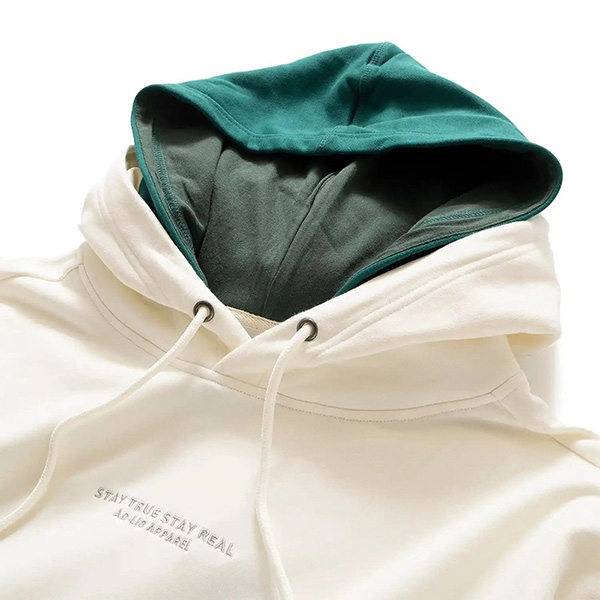
At Fusionknits, hood construction is one of the clearest quality tests. A premium hoodie usually has a hood that sits well whether it is worn up or left down. If the hood feels too small, too flat, too flimsy, or too bulky in the wrong way, the product loses visual strength immediately.
Signs of a stronger hood
- Better depth and width balance
- Cleaner front opening
- Strong panel construction
- Stable neckline connection
- Better drawcord channel finishing
Why hood quality matters so much
It defines the visual silhouette
The hood is one of the first things people notice.
It affects real wear function
A hoodie should still work as a hoodie, not only as a sweatshirt with decoration.
A better hood often makes the whole product feel more intentional.
| Hood detail | Quality effect |
|---|---|
| Better shape | Stronger silhouette |
| Stable construction | Better long-term wear |
| Clean opening | More polished look |
| Balanced scale | Better comfort and styling |
Do Rib Cuffs and Hem Tell You if a Hoodie Is Good?
Yes. Rib components are often overlooked, but they carry a lot of product pressure. Weak rib is one of the fastest ways a hoodie starts to feel cheap.
Yes, rib cuffs and hem are strong indicators of hoodie quality because they affect recovery, fit stability, and long-term appearance. High-quality rib should feel firm but comfortable, recover well after stretching, and remain attached cleanly without twisting or sagging.
At Fusionknits, cuffs and hem are considered performance parts, not only trims. The cuff should not become loose too quickly. The waistband should not lose structure after several washes. Weak rib often reveals itself faster than the body fabric.
What stronger rib usually does
- Holds sleeve opening shape
- Keeps the hem cleaner
- Supports better body proportion
- Recovers after repeated wear
- Improves comfort without over-compression
What weak rib usually causes
Cuffs become loose
The sleeves stop looking clean and controlled.
The hem starts to wave or sag
This weakens the silhouette quickly.
The garment loses shape after washing
Even a decent body fabric can look worse with poor rib quality.
| Rib behavior | Quality signal |
|---|---|
| Strong recovery | Better product quality |
| Early stretching out | Lower quality |
| Balanced tension | Better comfort and finish |
| Twisting or sagging | Weak trim control |
How Does Fit Affect Whether a Hoodie Feels High Quality?
Fit is not only a style decision. It is also a quality signal. A hoodie may have good fabric and still feel disappointing if the proportions are poorly controlled.
Fit affects hoodie quality because a high-quality hoodie should feel balanced across the shoulder, chest, sleeve, body length, and hood scale. Good fit makes the garment look more intentional, feel more comfortable, and perform more consistently across repeated wear.
At Fusionknits, fit must match brand direction. A premium regular-fit hoodie should not fit like oversized streetwear, and an oversized hoodie still needs correct volume distribution. Good fit means the garment behaves the way it was intended to behave. Poor fit makes the hoodie feel generic or unfinished.
Fit signs of a better hoodie
- Balanced shoulder line
- Correct body length for category
- Comfortable chest ease
- Better sleeve proportion
- Strong hood-to-body balance
- Proper relationship between body and rib finish
Why fit influences quality perception
Better fit looks more expensive
The product feels more deliberate.
Better proportion improves daily wear
The hoodie layers and moves more naturally.
Wrong fit can cancel strong fabric value
A premium fleece still loses impact if the body balance is poor.
| Fit area | Strong quality signal |
|---|---|
| Shoulder | Stable and natural |
| Body length | Matches category role |
| Sleeve shape | Balanced and comfortable |
| Overall silhouette | Intentional and consistent |
Does a High-Quality Hoodie Need Better Wash Performance?
Absolutely. Real hoodie quality should survive use, not only presentation. A hoodie that looks good once but breaks down after laundering is not truly high quality.
Yes, a high-quality hoodie should have strong wash performance. It should resist major shrinkage, surface damage, twisting, color loss, and shape collapse after repeated laundering. Long-term consistency is one of the clearest signs of real quality.
At Fusionknits, wash testing is one of the most important parts of hoodie review. A hoodie must keep enough softness, structure, and balance after laundering. Customers do not judge only the first wear. They judge the third wash, the fifth wash, and the tenth wear.
Strong wash-performance signs
- Controlled shrinkage
- Stable color retention
- Limited twisting
- Better pilling resistance
- Rib recovery after washing
- Hood and body still balanced after care
Why wash performance matters so much
Hoodies are washed often
Weakness appears fast in this category.
Repeat wear is the product test
The customer expects the hoodie to stay useful over time.
Better maintenance value improves brand trust
A hoodie that keeps its quality supports stronger reorder behavior.
| Wash factor | Why it matters |
|---|---|
| Shrinkage control | Protects fit |
| Surface durability | Protects appearance |
| Color stability | Protects visual value |
| Recovery after wash | Protects structure |
What Trims and Finishing Details Make a Hoodie Better?
Quality often becomes most visible in the smaller details. Drawcords, eyelets, labels, wash finish, and even the inner brushing level can separate a strong hoodie from an average one.
A high-quality hoodie usually uses better trims and cleaner finishing, including stronger drawcords, neater eyelets, better label application, cleaner inside finishing, smoother surface treatment, and better pre-shrinking or garment finishing where appropriate. These details strengthen both performance and premium perception.
At Fusionknits, finishing is where the product gains discipline. A hoodie may have the right fabric and fit, but weak trim choices can still reduce the full result. A cheap drawcord, a weak eyelet, or poor inside finishing often signals inconsistency to the customer.
Better trim and finishing signals
- Strong drawcord quality
- Clean metal or reinforced eyelets when used
- Better label attachment
- Smoother inner construction
- More controlled brushing or washing finish
- Better hand-feel consistency across production
Why trims still matter
Customers interact with them directly
Hands touch the drawcord, hood, labels, and pocket constantly.
Details influence quality perception
Small weaknesses make the garment feel less premium.
Better finishing supports repeat use
The hoodie ages more gracefully.
| Detail | Strong quality sign |
|---|---|
| Drawcord | Durable and clean |
| Eyelet | Reinforced and neat |
| Inner finish | Comfortable and controlled |
| Surface finish | Smooth and consistent |
How Should Brands Judge Hoodie Quality Professionally?
The strongest brands do not judge quality by one feature only. They review the full product system because hoodie quality is cumulative. It comes from several things working well at the same time.
Brands should judge hoodie quality by reviewing fabric, construction, fit, hood shape, rib performance, trim quality, and wash results together. A high-quality hoodie should feel strong at first touch, but it must also prove its value through wear, laundering, and repeat use.
At Fusionknits, this means quality is not a surface impression. It is a repeated performance result. A brand should ask whether the hoodie remains attractive and functional after real use, not only whether it looks good in a first sample.
Better professional review questions
- Is the fabric stable enough?
- Does the hoodie pill too quickly?
- Does the hood hold shape?
- Do the cuffs and hem recover well?
- Does the fit remain balanced after washing?
- Are trims strong and consistent?
- Does the garment still feel good after repeat use?
Why this review method works
Some weaknesses only appear after testing.
It protects brand credibility
A better hoodie reduces complaint risk.
It improves category clarity
The product performs in line with its price and positioning.
| Review area | What to check |
|---|---|
| Fabric | Surface, weight, recovery |
| Construction | Seams, pocket, hood join |
| Fit | Proportion and consistency |
| Wash testing | Shrinkage and durability |
Conclusion
A high-quality hoodie is not just a soft hoodie or a heavy hoodie. It is a hoodie built from a strong product system. That system includes better fabric, stronger construction, more balanced fit, better hood shape, stronger rib recovery, cleaner trims, and dependable wash performance. High quality shows up not only in the first hand feel, but in how well the garment holds its shape, surface, and comfort after repeated wear and laundering. Heavyweight fleece can help, but true quality still depends on the discipline behind the whole garment.
At Fusionknits, we define a high-quality hoodie as one that performs well over time, not one that simply makes a strong first impression.
The best hoodies feel comfortable, look intentional, and stay stable through real-life use. When fabric, fit, hood, rib, construction, and finishing are all aligned correctly, the hoodie becomes more than a casual basic. It becomes a reliable, premium, and commercially valuable product that earns repeat wear and long-term customer trust.