Many buyers think a sweatshirt has only one clear name, but in real apparel language, the category is wider than that. Different markets, product types, and customer groups often use different words for very similar garments. That creates confusion in sourcing, product development, and product descriptions.
We see “sweatshirt” as the main category name, but other names can include pullover, crewneck, jumper, fleece top, sweat top, and in some markets simply a casual knit top. The right alternative name depends on the garment’s neckline, fabric, market, and styling role.
At Fusionknits, we know naming is not a small detail. The wrong product name can confuse buyers, delay sampling, and weaken ecommerce communication. That is why a sweatshirt should be named by both category and product details, not by guesswork.
Is “sweatshirt” the main correct name?
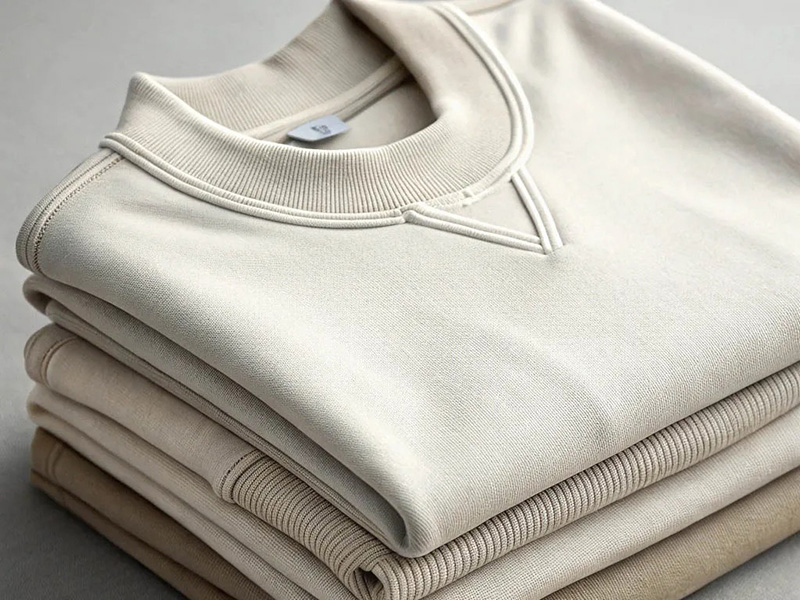
Yes. In most modern apparel markets, “sweatshirt” is still the clearest and most widely understood category name for this product. It usually refers to a long-sleeve knit top with no full front opening, often made from fleece or terry, and usually built for comfort and casual wear.
Yes, “sweatshirt” is the main correct name for the category. It is the broadest and most commercially useful term for a casual knit upper-body garment that is usually soft, long-sleeved, and comfort-led.
At Fusionknits, we usually treat “sweatshirt” as the base product family name. Then we add more specific language if needed, such as crewneck sweatshirt, oversized sweatshirt, fleece sweatshirt, or French terry sweatshirt. This keeps product naming clear and professional.
Why “sweatshirt” remains the strongest main term
- It is widely understood
- It works across many product types
- It fits both casualwear and premium basics
- It is useful in sourcing and retail language
- It allows more specific naming underneath the main category
Why clear naming matters in manufacturing
Product names guide development
A general term should still match the actual garment structure.
Product names guide customer expectation
A buyer should understand what kind of garment they are receiving.
| Main term | Meaning |
|---|---|
| Sweatshirt | Broad knit comfort-top category |
Is “crewneck” another name for a sweatshirt?
Sometimes yes, but not always. “Crewneck” is more specific than “sweatshirt.” It usually refers to the neckline shape rather than the whole category. A sweatshirt can be a crewneck, but it can also be something else, such as a quarter-zip or mock-neck version.

Yes, “crewneck” is often used as another name for a sweatshirt, but more precisely it describes a sweatshirt with a round neckline and no hood. That means every crewneck sweatshirt is a sweatshirt, but not every sweatshirt is a crewneck.
At Fusionknits, this distinction matters because many buyers say “crewneck” when they actually mean sweatshirt in general. In professional product language, crewneck is better used when the neckline is the main feature being identified.
What “crewneck” really describes
- Round neckline
- No hood
- Clean classic sweatshirt silhouette
- Often ribbed neckline finish
Why this term is useful
It makes the product more specific
The buyer understands the neckline immediately.
Many brands sell crewneck sweatshirts as a core essentials category.
| Term | Main focus |
|---|---|
| Sweatshirt | Full category |
| Crewneck | Neckline-specific sweatshirt type |
Is “pullover” another name for a sweatshirt?
Yes, in some contexts it is. But pullover is still broader than sweatshirt in some markets because it can also describe other upper-body garments that are pulled on over the head.
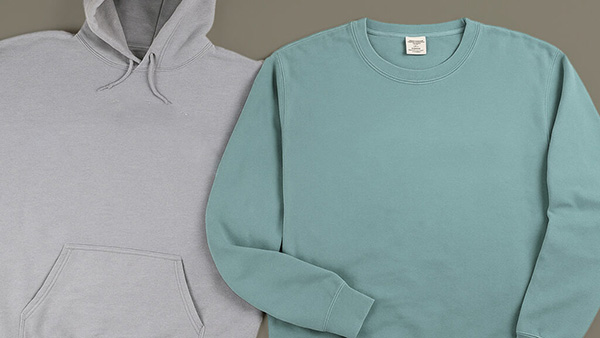
Yes, “pullover” can be another name for a sweatshirt, especially when the garment has no front opening and is worn by pulling it over the head. However, pullover is a broader term and can also apply to knitwear or other casual tops, not only sweatshirts.
At Fusionknits, we use “pullover” carefully. It is helpful when the main goal is to separate a top from zip-up styles, but it should not replace “sweatshirt” in every case. A pullover can be a sweatshirt, but it can also be a sweater or another knit top depending on the market.
When “pullover” works well
- To contrast with full-zip products
- In broad casualwear descriptions
- When the garment has no front opening
When “pullover” is too broad
It does not always describe fabric or category clearly
The buyer may still need more detail.
It may include products beyond sweatshirts
This can create confusion in sourcing.
| Term | Main meaning |
|---|---|
| Pullover | Any top pulled on over the head |
| Sweatshirt | Specific soft knit comfort top |
Is “jumper” the same as sweatshirt?
This depends heavily on market and region. In some English-speaking regions, especially British English, “jumper” is common, but it often refers more strongly to what American English would call a sweater. That means it cannot always be treated as a direct replacement.
“Jumper” can sometimes refer to a sweatshirt in casual conversation, but in many markets it more often refers to a sweater or knitted pullover rather than a fleece or terry sweatshirt. This makes it a less precise alternative name in professional apparel development.
At Fusionknits, we use “jumper” with caution because international buyers may understand it differently. If the product is truly a sweatshirt, we prefer to describe it more clearly with terms like crewneck sweatshirt or fleece sweatshirt.
Why “jumper” can be confusing
- It changes by region
- It often overlaps with sweater language
- It may suggest knitted outerwear instead of fleece
- It is less exact in manufacturing communication
When the term may still appear
Retail language in certain markets
Some brands may still use it for casual comfort tops.
Regional informal use
Customers may use it loosely even when the product is technically a sweatshirt.
| Term | Risk level in sourcing |
|---|---|
| Jumper | Higher confusion risk |
| Sweatshirt | Clearer technical meaning |
Can “fleece top” or “sweat top” be used too?
Yes, but these are usually descriptive names rather than the strongest standard category names. They can still be useful in certain product contexts, especially when fabric or comfort is the key selling point.

Yes, “fleece top” and “sweat top” can be used as alternative names, especially when the product is built from brushed fleece and marketed for softness or warmth. However, these terms are usually less standard than “sweatshirt” and work better as supporting descriptions.
At Fusionknits, we sometimes use these phrases in product explanation rather than as the primary product name. For example, a product may be called a fleece sweatshirt, not simply a fleece top, because the main category still needs to remain clear.
Where descriptive names help
- Product detail pages
- Fabric-specific marketing
- Cold-weather collections
- Comfort-led storytelling
Why they are not always the best main name
They focus on one product feature
The category itself may still need stronger identification.
They are less universal
Different markets may interpret them differently.
| Descriptive name | Best use |
|---|---|
| Fleece top | Fabric-focused description |
| Sweat top | Informal support term |
| Sweatshirt | Main category name |
What is the difference between a sweatshirt and a sweater?
This is one of the most important related questions because many naming mistakes begin here. A sweatshirt and a sweater are not the same thing, even if both are long-sleeve casual tops.
A sweatshirt is usually a knit comfort garment made from fleece, terry, or sweatshirt fabric, while a sweater is usually a knitted garment made from yarn such as cotton, wool, acrylic, or blends. A sweatshirt belongs more to active casualwear, while a sweater belongs more to knitwear.
At Fusionknits, this difference matters greatly in sourcing. A sweatshirt is usually cut-and-sewn from knit fabric. A sweater is usually knitted as a garment piece or a set of garment panels. The production logic is different, the hand feel is different, and the customer expectation is different.
Main differences between sweatshirt and sweater
- Sweatshirt uses sweatshirt knit fabric
- Sweater uses yarn-based knitwear construction
- Sweatshirt feels more sporty and casual
- Sweater feels more knitwear-led and often dressier
Why this difference matters in naming
Calling a sweatshirt a sweater can mislead buyers
The fabric expectation changes immediately.
Production methods are different
A sweatshirt factory and a sweater factory may not follow the same process.
| Product | Core construction |
|---|---|
| Sweatshirt | Cut-and-sew knit fabric |
| Sweater | Yarn-knit garment |
How should brands name sweatshirts more clearly?
The best naming system starts with the core category, then adds the most important detail. This reduces confusion and gives the customer a better understanding of what the garment actually is.
At Fusionknits, we recommend naming sweatshirts by starting with “sweatshirt” and then adding the defining feature, such as crewneck sweatshirt, oversized sweatshirt, French terry sweatshirt, quarter-zip sweatshirt, or fleece sweatshirt. This method keeps naming clear, searchable, and technically accurate.
Clear naming is especially useful in B2B manufacturing because it protects the product brief. It also helps ecommerce teams avoid vague language that sounds stylish but communicates very little.
A clearer naming structure
- Start with sweatshirt
- Add neckline type
- Add fabric if relevant
- Add fit if important
- Add function if needed
Why this system works
It improves sourcing accuracy
Factories can understand the intended product more quickly.
It improves customer trust
The buyer receives a more transparent product description.
| Naming format | Example |
|---|---|
| Category + feature | Crewneck sweatshirt |
| Category + fabric | Fleece sweatshirt |
| Category + fit | Oversized sweatshirt |
So, what is the best alternative name for a sweatshirt?
The most accurate answer depends on the exact product. But in most cases, “crewneck” is the strongest direct alternative when the product is a standard hoodless sweatshirt with a round neck.
The best alternative name for a sweatshirt is often “crewneck” when the garment has a round neckline and no hood. In broader use, “pullover” can also work, but it is less precise. Terms like jumper, fleece top, or sweat top may appear in some markets, but they are usually less accurate or more region-dependent than “sweatshirt” itself.
At Fusionknits, we believe the clearest approach is still to use “sweatshirt” as the main product name unless the garment has a very specific feature that makes a more detailed term more useful.
Conclusion
Another name for a sweatshirt can be crewneck, pullover, fleece top, or in some regional markets jumper, but these terms are not always equal in precision.
“Crewneck” is often the best direct alternative when the garment has a round neckline and no hood. “Pullover” can work too, but it is broader and may describe more than only sweatshirts. “Jumper” is more region-dependent and can overlap with sweater language, which makes it less precise in professional garment development. In most cases, “sweatshirt” remains the clearest and strongest main category name.
At Fusionknits, we always recommend naming garments with both category accuracy and commercial clarity in mind. A good product name should help the buyer understand the garment immediately, reduce sourcing confusion, and support stronger product positioning. That is why we prefer “sweatshirt” as the base term, then add clear details like crewneck, fleece, oversized, or French terry when the product needs more definition.