Many running joggers look good in product photos, but the wrong fabric can quickly create problems during actual performance. Poor moisture-wicking performance, weak stretch recovery, and low durability often reduce comfort and product lifespan.
The best material for running joggers is usually a polyester and spandex blend because it provides moisture-wicking performance, stretch, durability, and lightweight comfort. Different running conditions may also require nylon blends, cotton blends, or brushed technical fabrics.
At Fusionknits, fabric selection is one of the most important stages in activewear manufacturing. For running joggers, the material directly affects breathability, flexibility, thermal regulation, and long-term wear performance.
Why Does Fabric Matter So Much For Running Joggers?
Fabric performance determines whether joggers feel comfortable during movement and repeated training sessions.
Running jogger fabrics affect moisture control, flexibility, breathability, weight, and durability. Technical fabrics help improve comfort and performance during running and training activities.
In activewear manufacturing, fabric selection should always match the intended athletic use.
Running Creates Constant Friction And Movement
Running joggers experience continuous stretching and body movement.
The fabric must handle:
- Leg movement
- Knee flexion
- Sweat exposure
- Frequent washing
- Surface friction
Low-quality fabrics often lose shape after repeated use.
Moisture Management Is Essential
Sweat accumulation can reduce comfort during running.
Technical running fabrics should support:
- Moisture wicking
- Fast drying
- Air circulation
- Heat release
Professional activewear fabrics are designed to move moisture away from the skin quickly.
Lightweight Fabrics Improve Comfort
Heavy fabrics may restrict movement during long-distance running.
Most performance joggers use lightweight knitted fabrics because they provide:
- Better mobility
- Reduced pressure
- Improved airflow
- Faster drying speed
At Fusionknits, lightweight fabric construction is commonly used in sportswear and running apparel production.
Is Polyester The Best Fabric For Running Joggers?
Polyester remains one of the most widely used materials in modern activewear manufacturing.

Polyester is considered one of the best materials for running joggers because it offers moisture-wicking performance, durability, wrinkle resistance, and lightweight comfort.
Most commercial sportswear brands use polyester-based fabrics in their running collections.
Why Polyester Performs Well
Polyester fibers naturally support activewear performance.
Key advantages include:
| Feature | Benefit |
|---|---|
| Moisture Wicking | Keeps the body drier |
| Lightweight Structure | Improves mobility |
| Fast Drying | Reduces discomfort |
| Wrinkle Resistance | Maintains appearance |
| High Durability | Suitable for repeated washing |
These properties make polyester highly suitable for running apparel.
Polyester Blends Improve Stretch
Pure polyester sometimes lacks flexibility.
Manufacturers often blend polyester with:
- Spandex
- Elastane
- Nylon
Common blend ratios include:
- 90% polyester + 10% spandex
- 88% polyester + 12% elastane
- 95% polyester + 5% spandex
The additional stretch improves comfort during movement.
Recycled Polyester Is Becoming More Popular
Many activewear brands now use recycled polyester fabrics.
Recycled polyester helps reduce:
- Plastic waste
- Resource consumption
- Environmental impact
At Fusionknits, recycled fabric options are increasingly requested in OEM activewear projects.
Are Nylon Running Joggers Better Than Polyester?
Nylon is another common material used in premium sportswear manufacturing.
Nylon running joggers usually provide a softer hand feel, stronger abrasion resistance, and better stretch recovery compared to polyester. However, nylon fabrics often have higher production costs.
Both polyester and nylon have advantages depending on the product positioning.
Nylon Feels Softer Against The Skin
Many premium sportswear brands prefer nylon because of its smooth texture.
Nylon fabrics usually offer:
- Softer hand feel
- Better drape
- Higher elasticity
- Premium appearance
This makes nylon popular in luxury activewear collections.
Nylon Has Strong Abrasion Resistance
Running joggers experience repeated friction during training.
Nylon performs well in areas such as:
- Knee movement
- Inner thigh friction
- Outdoor training
- Repeated washing
Strong abrasion resistance improves garment lifespan.
Nylon Costs More Than Polyester
Nylon fabrics generally have higher raw material costs.
This affects:
- Fabric pricing
- Production cost
- Retail positioning
For large wholesale orders, polyester blends often provide a better balance between performance and cost.
Nylon And Spandex Blends
Many premium joggers combine nylon with spandex.
Common blend structures include:
| Fabric Blend | Main Advantage |
|---|---|
| Nylon + Spandex | Stretch and softness |
| Nylon + Elastane | Shape recovery |
| Nylon + Polyester | Durability balance |
These blends are common in high-end activewear production.
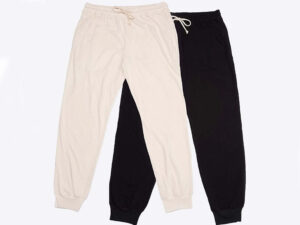
Are Cotton Joggers Good For Running?
Cotton remains popular in casual apparel, but performance running requires different fabric characteristics.
Cotton joggers provide softness and comfort, but pure cotton is usually not ideal for running because it absorbs moisture and dries slowly.
Cotton can still work in certain jogger applications when blended properly.
Why Pure Cotton Has Limitations
Cotton absorbs sweat easily.
During running, this can create:
- Heavy fabric feeling
- Slow drying
- Increased friction
- Reduced breathability
Wet cotton fabrics may become uncomfortable during long workouts.
Cotton Blends Improve Performance
Many manufacturers combine cotton with synthetic fibers.
Common blends include:
- Cotton + polyester
- Cotton + spandex
- Cotton + modal
These blends improve:
- Stretch
- Moisture management
- Durability
Cotton blends are often used for lifestyle joggers and light training products.
French Terry Cotton Joggers
French terry is commonly used in jogger manufacturing.
Features include:
- Soft inner texture
- Medium fabric weight
- Comfortable structure
French terry joggers work well for casual wear and warm-up activities, but they are less suitable for high-intensity running.
What Fabric Features Should Running Joggers Have?
Fabric composition alone does not determine performance. Fabric construction and finishing also matter.
High-quality running joggers should provide stretch, moisture management, breathability, durability, and shape retention for long-term athletic performance.
Professional sportswear manufacturing focuses on both fabric composition and technical performance.
Four-Way Stretch Construction
four-way stretch fabrics improve mobility during running.
Four-way stretch fabrics support:
- Multi-direction movement
- Better flexibility
- Reduced restriction
- Improved comfort
Most modern running joggers include elastane or spandex for this reason.
Breathability And Ventilation
Good airflow helps regulate body temperature.
Breathable jogger fabrics often include:
- Mesh panels
- Lightweight knitting
- Moisture channels
- Ventilation zones
Breathability becomes especially important in warm climates.
Shape Retention
Poor-quality joggers may lose shape after repeated washing.
Good running fabrics should maintain:
- Elasticity
- Waistband structure
- Knee shape
- Surface smoothness
Stable shape retention improves product lifespan.
Anti-Pilling Performance
anti-pilling performance affects garment appearance and perceived quality.
Professional factories often test fabrics for:
- Surface abrasion
- Fiber stability
- Pilling resistance
At Fusionknits, anti-pilling testing is commonly included in activewear quality control procedures.
How Does GSM Affect Running Jogger Performance?
Fabric weight changes how running joggers feel during use.

GSM affects the thickness, warmth, durability, and flexibility of running joggers. Lightweight GSM fabrics are usually preferred for running and athletic activities.
Different running environments require different fabric weights.
Lightweight GSM For Performance Running
Lightweight joggers normally use:
- 180–220 GSM fabrics
Advantages include:
- Better airflow
- Faster drying
- Lower weight
- Increased mobility
This range is common in warm-weather sportswear.
Medium GSM For Versatile Use
Medium-weight joggers often use:
- 230–280 GSM fabrics
These fabrics provide:
- Better structure
- Moderate warmth
- Improved durability
They work well for year-round activewear collections.
Heavyweight Joggers For Cold Conditions
Cold-weather running joggers may use:
- 300 GSM and above
These fabrics often include:
- Brushed fleece interiors
- Thermal insulation
- Wind resistance
However, heavyweight fabrics may reduce breathability during intense activity.
What Manufacturing Factors Affect Running Jogger Quality?
Fabric quality alone does not guarantee a high-performance product.
Running jogger quality also depends on sewing construction, pattern engineering, finishing processes, and quality control systems.
Professional manufacturing improves consistency across large production runs.
Stitching Quality Matters
Running joggers require flexible and durable seams.
Common sewing methods include:
| Stitch Type | Main Purpose |
|---|---|
| Flatlock Stitch | Reduces friction |
| Overlock Stitch | Improves seam strength |
| Coverstitch | Hem finishing |
Poor seam construction can cause discomfort during movement.
Pattern Engineering Improves Fit
Jogger fit affects running performance.
Professional patterns help improve:
- Leg mobility
- Waist stability
- Tapered structure
- Comfort during movement
Pattern development is especially important for activewear production.
Fabric Finishing Processes
Technical finishes improve fabric performance.
Common finishing treatments include:
- Moisture-wicking finishing
- Anti-odor treatment
- UV protection
- Brushed finishing
These treatments enhance overall product functionality.
Quality Control In Bulk Production
Large-scale activewear manufacturing requires strict inspection procedures.
Factories should inspect:
- Fabric consistency
- Stitch durability
- Measurement accuracy
- Color matching
- Print quality
At Fusionknits, quality control is integrated throughout activewear production to support stable bulk manufacturing standards.
How Should Brands Choose The Right Running Jogger Material?
Different markets require different fabric solutions.
Brands should choose running jogger materials based on target customers, activity level, climate conditions, pricing strategy, and product positioning.
There is no single fabric solution for every activewear collection.
Performance Sportswear Brands
Technical running brands usually prioritize:
- Moisture management
- Stretch recovery
- Lightweight fabrics
- Durability
Polyester-spandex and nylon-spandex blends are common choices.
Lifestyle Activewear Brands
Lifestyle joggers often focus more on:
- Softness
- Casual comfort
- Fashion appearance
Cotton blends and brushed fabrics are frequently used in this segment.
Climate Considerations
Fabric selection should match climate conditions.
| Climate | Recommended Fabric |
|---|---|
| Hot Weather | Lightweight polyester blends |
| Cold Weather | Brushed fleece fabrics |
| Humid Areas | Quick-dry technical fabrics |
| Transitional Seasons | Medium-weight blends |
Environmental conditions strongly affect fabric performance expectations.
Conclusion
The best material for running joggers usually combines moisture management, stretch, breathability, durability, and lightweight comfort. Polyester-spandex blends remain one of the most widely used options, while nylon blends offer a more premium feel and stronger abrasion resistance.
At Fusionknits, fabric selection plays a critical role in activewear manufacturing. Choosing the right running jogger material helps brands improve comfort, garment performance, and long-term product quality across different sportswear markets.