Many buyers ask this question as if there is one universal answer. In real garment development, that is rarely true. The most popular length of shorts depends on market, gender category, age group, activity, and styling trend. A running short, a lifestyle short, and a tailored short do not follow the same length logic. That is why brands often fail when they chase one inseam without understanding the product category first.
At Fusionknits, we see one clear pattern in the market: mid-length shorts are usually the safest and most commercially popular choice, while shorter and longer lengths each dominate in specific niches. In men’s casual and active categories, 5-inch to 7-inch inseams are especially common in current retail assortments, while women’s categories show a wider spread from short sporty cuts to longer tailored and Bermuda-inspired options.
As a professional clothing manufacturer, we think the better way to answer this topic is not with one number only. The better answer is to understand which short length sells best in which category, why that happens, and how brands should choose a length that matches both trend and function.
Why is there no single “best” or “most popular” short length for every market?
Short length is not just a trend issue. It is also a product-positioning issue. A short that works in a running collection may fail in a resort collection. A short that sells well in a men’s athletic program may not fit a women’s lifestyle line. This is why brands need to separate category demand before they decide inseam.
At Fusionknits, we define short-length popularity by use case. The most popular length is usually the one that gives the best balance of comfort, mobility, visual proportion, and market familiarity for a specific customer group.
This is also why confusion happens so often. Buyers may see short shorts trending in editorial fashion and assume that all retail categories are moving shorter. In reality, mass retail usually stays more balanced. Trend pieces drive attention, but core lengths drive repeat sales. A brand may show extreme lengths in campaign images, yet sell most units in safer middle inseams.
What affects short-length popularity most?
- Activity type
- Body proportion and fit preference
- Climate and season
- Gender category
- Trend cycle
- Retail price level
- Styling purpose
Why brands should not guess
Popularity changes by category
A gym short and a street short are not judged by the same standard.
Core sales are usually more conservative
The boldest trend is not always the bestselling commercial option.
| Factor | Effect on short length |
|---|---|
| Performance use | Often favors shorter or mid lengths |
| Casual lifestyle | Usually favors mid lengths |
| Fashion trend | Can push very short or very long |
| Broad retail market | Often prefers safer middle options |
What short length is most popular in men’s shorts right now?
In the current men’s market, the strongest center of gravity is around the 5-inch to 7-inch inseam range, with 7 inches often acting as the most balanced mainstream option for casual and activewear. Retail assortments from outdoor and active retailers show repeated offerings in 5-inch, 6-inch, 7-inch, 8-inch, and 9-inch inseams, but 5-inch and 7-inch lengths appear especially visible in current performance and casual assortments.

At Fusionknits, we see 7-inch shorts as one of the most commercially reliable men’s lengths because they sit between trend and practicality. They are short enough to feel modern and mobile, but long enough to satisfy a broad mainstream customer.
At the same time, 5-inch inseams have become much more visible and accepted in men’s fashion and fitness culture. That shorter inseam has gained momentum because it gives a sportier, more confident silhouette and works especially well in running, training, and warm-weather casualwear. Men’s Health recently described 5-inch shorts as mainstream in the context of current men’s fitness style.
Still, longer options such as 8-inch or 9-inch inseams remain important for customers who want more coverage, especially in golf, utility, travel, and classic casual segments. So if the question is about the broadest men’s commercial sweet spot, we would place it around 7 inches, with 5 inches as the strong fashion-performance trend length.
Current strong men’s inseam zones
- 5-inch for running and trend-forward casual
- 6-inch for balanced sporty styling
- 7-inch for broad mainstream appeal
- 8-inch to 9-inch for conservative or utility categories
Why 7 inches works so well
It flatters more body types
It usually lands in a visually balanced place above the knee or near it.
It works across multiple categories
It fits training, casual, and travel shorts better than a more extreme inseam.
| Men’s inseam | Typical role |
|---|---|
| 5" | Sporty and trend-forward |
| 7" | Mainstream bestseller range |
| 9" | More coverage, classic feel |
What short length is most popular in women’s shorts right now?
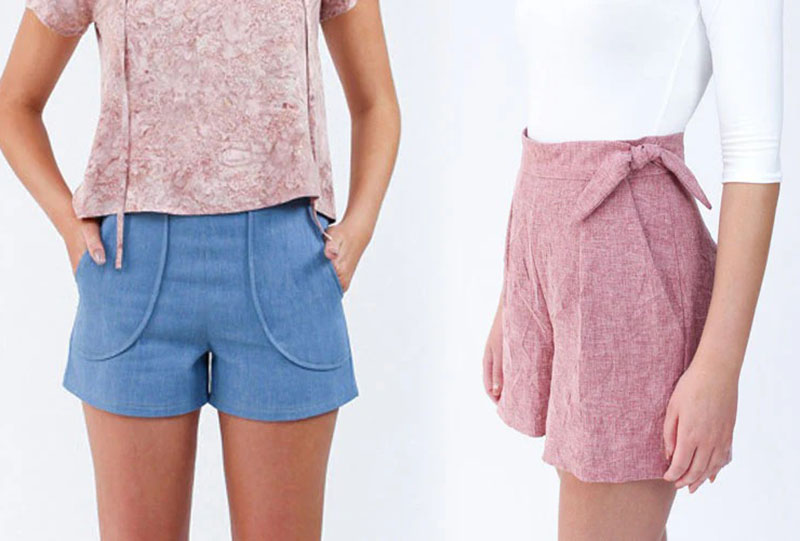
The women’s market is more fragmented than the men’s market. It includes hot shorts, boxer-inspired shorts, tailored mid-thigh shorts, athletic shorts, and longer Bermuda or jort silhouettes. Recent fashion coverage shows that women’s shorts trends currently stretch from very short styles to long jorts and Bermudas, which means there is no single dominant inseam across all segments.
At Fusionknits, we see the most popular women’s short length as category-driven rather than universal. In active and summer casual lines, shorter inseams remain strong, while in tailored and fashion categories, mid-thigh and Bermuda lengths have become highly visible.
That is important for brands because women’s shorts now operate across two strong directions at once. One direction is short, sporty, light, and easy for summer styling. The other is longer, more tailored, and more directional, especially with Bermuda shorts and longer denim shapes showing up in current trend coverage. Who What Wear and InStyle both point to a wide spread of short lengths, while style coverage in 2025 also highlights Bermuda shorts as more trend-visible than in previous years.
For commercial development, that usually means women’s brands should not rely on one short length alone. The category works better when a line includes at least one short option and one more covered option.
Current strong women’s length directions
- Short sporty inseams for active and summer styles
- Mid-thigh tailored shorts for polished casualwear
- Bermuda lengths for trend-led and modest styling
- Long jorts for denim fashion segments
Why women’s demand is more spread out
Styling expectations are wider
Women’s shorts move between athletic, resort, tailored, and streetwear much more visibly.
Trend cycles shift faster
Mini shorts and long Bermudas can both trend strongly at the same time.
| Women’s length direction | Market role |
|---|---|
| Short | Sporty, youthful, summer-driven |
| Mid-thigh | Polished and versatile |
| Bermuda | Trend-led and more covered |
Why does mid-length usually sell best in the broad commercial market?
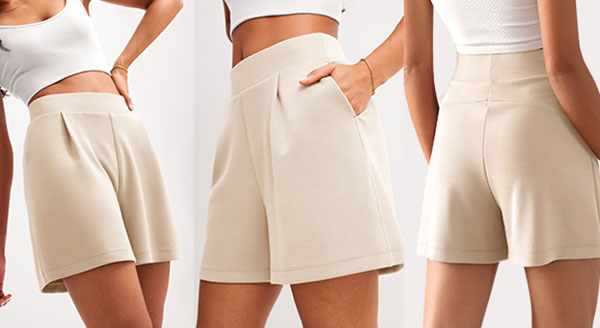
Mid-length shorts win because they reduce styling risk. They give enough coverage for comfort, enough leg exposure for mobility, and enough neutrality to work across many body types. For manufacturers and brands, that makes them commercially safer.
At Fusionknits, mid-length shorts are usually the best-performing core program choice because they work across more ages, more retail channels, and more styling situations than either very short or very long inseams.
This is especially important for wholesale collections and large-volume production. Buyers often want styles that can live longer than one micro-trend. Mid-length shorts usually offer that flexibility. They can be sold as casual shorts, golf-inspired shorts, uniform-adjacent shorts, or resort basics with only small changes in fabric and detailing.
Mid-length also helps reduce fit complaints. Extremely short shorts can feel too exposed for some customers. Very long shorts can feel heavy, awkward, or dated depending on the trend cycle. Mid-length avoids both extremes, which is why it tends to hold the center in broad retail assortments.
Why mid-length works commercially
- Easier to fit on more customers
- Easier to style across markets
- Lower trend risk
- Better repeat-order potential
- More retailer-friendly
Why brands rely on it
It is easier to build a core program around
Retailers often want proven lengths before they take risks on extreme options.
It gives flexibility in fabric choice
A mid-length short can work in woven, knit, performance, or tailored constructions.
| Length type | Commercial risk |
|---|---|
| Very short | Higher |
| Mid-length | Lower |
| Very long | Medium to high |
How should brands choose short length by product category?
This is the most useful development question. A brand should begin with category, not trend. Once that is clear, the inseam becomes easier to choose.
At Fusionknits, we recommend selecting short length according to end use first, then adjusting slightly for trend. This produces a stronger product than starting with trend alone.
A running short usually performs best in a shorter inseam because mobility and airflow matter most. A training short can sit slightly longer. A casual chino short often sells best in a mid-length inseam. A trend-led fashion short may go shorter or longer based on current styling direction. That is why product strategy should always come before marketing mood boards.
Strong starting points by category
- Running shorts: shorter inseams
- Training shorts: short to mid inseams
- Casual lifestyle shorts: mid inseams
- Tailored shorts: mid-thigh to longer
- Utility or travel shorts: mid to longer
- Fashion denim shorts: trend-dependent
Why this approach works better
It protects product logic
The short still performs well even if the trend shifts.
It reduces costly mistakes
A style can fail fast if the inseam does not match the use.
| Category | Best starting length direction |
|---|---|
| Running | Short |
| Gym training | Short to mid |
| Casual | Mid |
| Tailored | Mid to longer |
How do body proportion and market region affect the most popular length?
The same inseam does not look identical on every customer. Height, leg length, rise, thigh width, and overall silhouette all change how a short feels and looks. Region matters too. Some markets are quicker to adopt shorter men’s shorts or longer women’s tailored shorts, while others stay more conservative.

At Fusionknits, we do not evaluate short length by inseam number alone. We also look at rise, leg opening, fabric drape, and target market preference because these details change how the finished short is perceived.
A 7-inch inseam can feel short on one body and conservative on another. A Bermuda short can feel modern in one fashion channel and too long in another. That is why brands should develop fit blocks around their actual customer instead of copying one competitor’s inseam menu.
Fit details that change perceived length
- Front rise
- Back rise
- Leg opening width
- Fabric drape
- Waist position
- Overall silhouette
Why inseam alone is not enough
The same number does not create the same look
Pattern balance changes everything.
Regional buying behavior still matters
What sells in one market may not lead in another.
| Fit variable | Effect |
|---|---|
| Higher rise | Can make shorts feel shorter visually |
| Wider leg opening | Can look more relaxed |
| Narrow leg opening | Can make length feel longer |
What is the best short-length strategy for brands that want strong sales?
The best strategy is usually a short-length ladder, not a single hero inseam. Brands perform better when they build one core length, one trend length, and one coverage length around the same product language.
At Fusionknits, the strongest commercial short programs usually include a core mid-length option, a shorter trend option, and a longer alternative for customers who want more coverage. This helps brands serve more buyers without losing consistency in design identity.
This structure works well because it reduces dependence on one inseam. It also improves fit confidence for online customers. A customer who does not like 5-inch shorts may still buy the 7-inch version if the style language stays consistent. This is especially useful in activewear and modern casualwear.
A practical short-length program
- Core bestseller length
- Trend-forward shorter length
- More covered longer length
Why this sells better
It expands the customer base
More people can enter the line without changing brands.
It lowers style rejection
Customers can choose the same look in a different proportion.
| Program role | Typical purpose |
|---|---|
| Core length | Main volume driver |
| Shorter length | Trend and marketing driver |
| Longer length | Coverage and versatility driver |
So, what is the most popular length of shorts?
The clearest answer is this: there is no single inseam that dominates every category, but mid-length shorts are the most reliable mainstream choice. In men’s categories, 7-inch shorts are one of the strongest broad-market options, while 5-inch shorts are especially visible in current sporty and trend-forward assortments. In women’s categories, popularity is more spread out, with both short inseams and longer Bermuda-style silhouettes showing strong current relevance depending on the segment.
At Fusionknits, we would summarize it this way: the most popular short length in the commercial market is usually the balanced middle length, while shorter and longer options become highly popular inside specific trend or use categories.
Conclusion
The most popular length of shorts is not one fixed number for every market. Popularity changes by category, customer, and trend direction. Still, the broad commercial center usually belongs to mid-length shorts because they offer the best balance of comfort, proportion, versatility, and repeat-buy potential.
In men’s categories, 7-inch inseams are one of the strongest mainstream options, while 5-inch shorts have become especially visible in current active and trend-led styling. In women’s categories, short sporty styles and longer Bermuda-inspired lengths are both active, which makes the market more diverse than ever.
At Fusionknits, we treat short length as a product strategy decision, not just a fashion detail. We look at category, fit block, fabric, region, and trend cycle before recommending an inseam. That is how strong shorts programs are built. The most successful brands usually do not rely on one length alone. They build a range around one strong core length, then support it with shorter and longer options that fit different consumers and different styling needs.