Many buyers use the terms sweatpants and track pants as if they mean the same thing. In everyday conversation, that is common. In apparel manufacturing, product development, and wholesale sourcing, the difference matters much more. If a buyer confuses these two categories, the result can be wrong fabric selection, wrong fit expectations, and even the wrong target market.
At Fusionknits, we do not treat sweatpants and track pants as identical garments. Sweatpants and track pants can overlap in casual use, but they are usually different in fabric, function, appearance, and commercial positioning. Sweatpants are generally softer, heavier, and comfort-driven, while track pants are usually lighter, smoother, and more performance-oriented.
As a professional clothing manufacturer, we think this topic is important because product naming affects everything from sampling and fit comments to retail merchandising. A brand that labels sweatpants as track pants without understanding the difference may create confusion for both buyers and end consumers.
What are sweatpants?
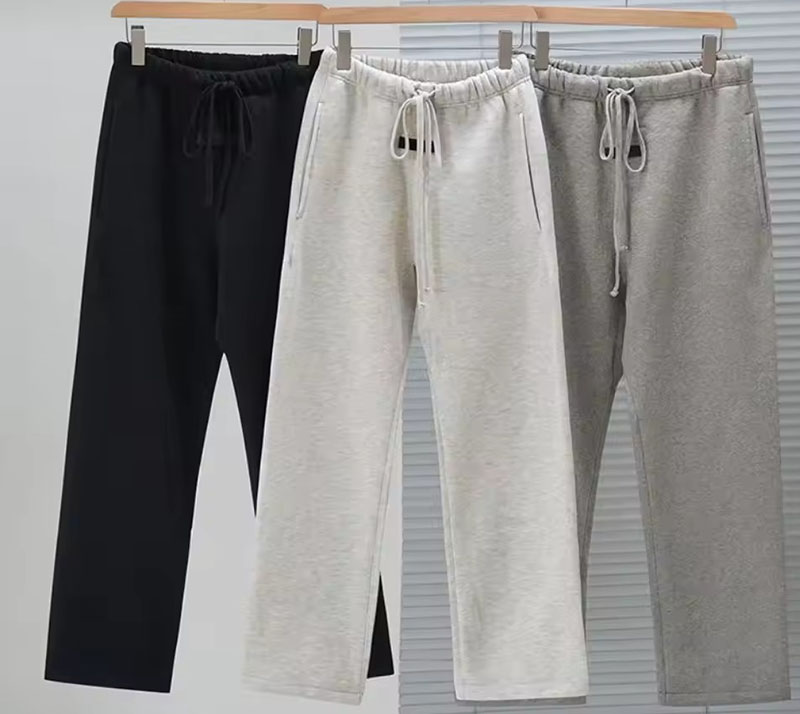
Sweatpants are usually made for comfort, warmth, and relaxed wear. They are commonly produced in cotton-rich fleece, French terry, or brushed knit fabrics. The surface may look soft and casual, while the inside often feels looped or brushed for extra comfort. Sweatpants are strongly connected to loungewear, leisurewear, and off-duty everyday dressing.
At Fusionknits, we define sweatpants as knit-bottom garments made primarily for comfort, softness, and casual wear. Their fabric is often heavier and more absorbent than track pants, which makes them ideal for lounging, travel, cooler weather, and lifestyle collections.
In construction, sweatpants often have elastic waistbands, drawcords, cuffed hems, and a relaxed shape through the thigh and calf. Some styles are more fitted, but the category still leans toward softness and comfort rather than speed, performance, or technical sport use. That is why sweatpants are now common not only in sports-inspired apparel but also in fashion basics and premium loungewear programs.
Typical features of sweatpants
- Cotton or cotton-blend fabric
- Brushed fleece or French terry interior
- Softer and thicker hand feel
- Relaxed or tapered silhouette
- Strong loungewear and lifestyle appeal
Why buyers choose sweatpants
They offer comfort first
The category is built around softness, ease, and casual daily wear.
They work well in cooler weather
Heavier knit structures help retain warmth.
| Sweatpants feature | Usual effect |
|---|---|
| Fleece or terry knit | Softness and warmth |
| Cotton-rich blend | Natural hand feel |
| Relaxed cut | Casual comfort |
What are track pants?
Track pants come from sport and training culture. Traditionally, they are associated with warm-up wear, athletic movement, and lightweight outer training bottoms. They are often made in smoother synthetic or synthetic-blend fabrics, which help with lightness, durability, and easier movement. Compared with sweatpants, they usually feel less plush and more technical.

At Fusionknits, we define track pants as lightweight or medium-weight athletic bottoms designed with movement, sport styling, and cleaner technical surfaces in mind. They are more likely to use polyester or nylon-rich fabrics, and they often target training, travel, teamwear, or sports-lifestyle categories.
Track pants may be woven or knit, depending on the brand and use. Many feature zip pockets, ankle zips, contrast panels, piping, or smooth tricot construction. They can still be comfortable, but comfort is not their only goal. Their identity is more closely tied to sport utility and athletic appearance.
Typical features of track pants
- Polyester, tricot, or technical knit fabric
- Lighter and smoother surface
- Sport-driven silhouette
- More likely to include zipper details
- Often linked to training and teamwear
Why buyers choose track pants
They look more technical
The fabric and trim language usually feel sport-specific.
They support movement and light activity
The product is often easier to wear before, during, or after training.
| Track pants feature | Usual effect |
|---|---|
| Synthetic fabric | Lightweight performance feel |
| Smooth outer face | Cleaner athletic appearance |
| Technical trims | More sport-oriented identity |
Why do people confuse sweatpants and track pants?
The confusion exists because both are long casual bottoms with elastic waists, and both are connected to sport-inspired dressing. In stores, both may be displayed near joggers, athleisure, or activewear. In everyday language, people often use whichever name feels familiar without checking the fabric or purpose.
At Fusionknits, we see this confusion most often when buyers focus only on silhouette and ignore fabric and function. A tapered bottom with a drawstring waist may be called either sweatpants or track pants by non-specialist buyers, even though the underlying product category is different.
This confusion also increased as athleisure expanded. Modern consumers wear training-inspired garments in daily life, so category boundaries feel softer than before. Still, for manufacturing, those boundaries remain useful. A fleece sweatpant and a polyester tricot track pant may look similar from a distance, but they are not the same product in sourcing terms.
Main reasons for confusion
- Similar waistband construction
- Similar long-leg silhouette
- Shared sportswear history
- Retail overlap in athleisure sections
- Casual consumer language
Why manufacturing teams should still separate them
Fabric decisions depend on category
A sweatpant fabric is not the same as a track pant fabric.
Market expectations are different
Consumers expect different comfort, weight, and styling from each.
| Reason for confusion | Why it happens |
|---|---|
| Similar shape | Both are pull-on bottoms |
| Shared styling space | Both appear in casual activewear |
| Loose naming habits | Consumers use the terms broadly |
What is the biggest difference between sweatpants and track pants?
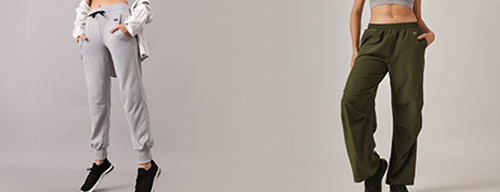
The biggest difference is the product’s fabric-and-function identity. Sweatpants are usually built around softness, warmth, and comfort. Track pants are usually built around athletic lightness, movement, and technical appearance. That one difference affects nearly every other detail in development.
At Fusionknits, the clearest way to separate the two is this: sweatpants are usually comfort-first knit bottoms, while track pants are usually sport-first bottoms with a lighter, smoother, more technical profile.
That difference can be seen in hand feel, drape, surface appearance, seasonal use, and target consumer. Sweatpants often feel more casual and home-friendly. Track pants usually feel more gym-adjacent, travel-ready, or teamwear-inspired. Even if both products are worn in everyday life, their commercial logic remains distinct.
Core category split
- Sweatpants = soft and comfort-led
- Track pants = technical and activity-led
Why this matters in product development
It changes sourcing
The wrong fabric choice can move the product into the wrong retail category.
It changes fit expectations
A track pant usually needs cleaner movement and a sharper line.
| Category | Primary identity |
|---|---|
| Sweatpants | Comfort and warmth |
| Track pants | Sport and technical ease |
Are sweatpants ever sold as track pants in retail?
Yes, this does happen. Some retailers and marketplaces use broad naming conventions, especially in casual e-commerce categories. In those environments, sweatpants may be described as track pants because the seller wants to capture broader search traffic. However, that does not mean the garments are technically identical.
At Fusionknits, we sometimes see crossover naming in retail, but in true product development, the distinction is still useful and usually necessary. A sweatpant may be marketed loosely as a track-style bottom, yet the fabric and construction still place it closer to the sweatpants category.
This is especially common in lower-price or mass-market environments where technical precision in naming is not always the priority. But for premium brands, wholesale buyers, and factory teams, accuracy becomes more important. Correct naming helps avoid confusion in sampling, costing, and category planning.
Where overlap happens most
- Broad online marketplaces
- Mass casualwear retailers
- Fashion-led athleisure programs
- Search-driven product listings
Why accurate naming still matters
It protects product clarity
The customer receives a more accurate expectation of fabric and use.
It improves sourcing communication
Factories can choose more suitable materials and construction methods.
| Retail situation | Naming accuracy level |
|---|---|
| Broad marketplace | Often loose |
| Technical activewear line | Usually more precise |
| Manufacturer tech pack | Should be exact |
How do fabrics clearly separate sweatpants from track pants?
Fabric is where the difference becomes most visible. Sweatpants usually use fleece, French terry, loopback cotton, or cotton-poly brushed knits. Track pants often use polyester tricot, interlock technical knits, woven shell fabrics, or lightweight stretch synthetics. This changes the garment’s touch, drape, breathability, and look.

At Fusionknits, fabric is the strongest technical indicator of whether a bottom should be called a sweatpant or a track pant. If the fabric is plush, absorbent, and lounge-oriented, it usually belongs to the sweatpants category. If it is smooth, low-bulk, and sport-driven, it usually belongs to the track pants category.
Fabric also changes the customer experience. Sweatpants feel warmer and cozier. Track pants usually feel cooler, slicker, and more active. One is usually chosen for downtime and relaxed styling. The other is more often selected for sporty appearance, travel, or warm-up use.
Common sweatpants fabrics
- Cotton fleece
- French terry
- Brush-back jersey
- Cotton-poly knit blends
Common track pants fabrics
- Polyester tricot
- Technical interlock
- Stretch woven blends
- Lightweight nylon-poly fabrics
| Fabric type | More likely category |
|---|---|
| Fleece | Sweatpants |
| French terry | Sweatpants |
| Polyester tricot | Track pants |
| Stretch woven technical fabric | Track pants |
How does fit differ between sweatpants and track pants?
Fit can overlap, but there are still clear tendencies. Sweatpants often have a fuller, softer shape through the seat and thigh, even when tapered. Track pants often look cleaner and slightly more athletic through the leg, with a narrower visual line and more movement-friendly finish.
At Fusionknits, sweatpants usually allow more visual softness in fit, while track pants usually need a more controlled athletic line. The difference is subtle, but it becomes clearer when fabric, hem finish, and intended use are considered together.
Track pants also more often include design choices like ankle zips, side stripes, contrast piping, or articulated knees. Sweatpants more often rely on simple rib cuffs, minimal paneling, and comfort-led shaping. Both can be tapered, but they do not communicate the same message.
Sweatpants fit direction
- Relaxed through seat and thigh
- Soft drape
- Comfort-first taper
- Rib cuff common
Track pants fit direction
- Cleaner athletic leg line
- Lighter drape
- More technical shaping
- Zip hem or clean ankle finish possible
| Fit detail | Sweatpants | Track pants |
|---|---|---|
| Thigh feel | Softer and roomier | Cleaner and more athletic |
| Hem style | Rib cuff common | Zips or narrow hems common |
| Visual identity | Relaxed | Technical |
How should brands label these products correctly?
Brands should start with fabric, then intended use, then styling language. If the product is fleece-heavy, soft, and comfort-led, sweatpants is usually the more accurate name. If the product is smoother, lighter, and more athletic in both fabric and look, track pants is usually the better label.
At Fusionknits, we advise brands to label bottoms according to technical identity first, not only trend language. This creates better sourcing clarity, better retail positioning, and better customer trust.
A brand can still use secondary language such as “sport-inspired sweatpants” or “track-inspired joggers,” but the core classification should remain accurate. This matters in wholesale catalogs, e-commerce filters, and collection architecture. Correct naming makes the whole line easier to understand.
Best labeling logic
- Start with fabric type
- Confirm intended use
- Match silhouette to category
- Add fashion wording only after technical naming is clear
Why this approach works
It improves communication with factories
The product can be developed with the right fabric and trim package.
It reduces customer confusion
The end buyer gets a clearer expectation of feel and performance.
| Labeling step | Purpose |
|---|---|
| Fabric check | Confirms category direction |
| Use check | Confirms function |
| Final naming | Aligns product and market language |
So, are sweatpants considered track pants?
Sometimes they are grouped together casually, but technically they are not the same product. Sweatpants may sit near track pants in lifestyle retail, and some consumers may use the names interchangeably. In professional garment development, though, the categories are usually different enough to justify separate naming.
At Fusionknits, our answer is clear: sweatpants are not automatically considered track pants. They may overlap in casual styling and broad sportswear language, but in manufacturing terms, sweatpants are usually softer, heavier, and comfort-led, while track pants are lighter, smoother, and more technical.
Conclusion
Sweatpants and track pants are related, but they are not usually identical. Sweatpants are typically built around softness, warmth, and casual comfort, with cotton-rich fleece or French terry fabrics leading the category. Track pants are usually linked to athletic appearance, light movement, and smoother technical surfaces, often using polyester-rich or performance-driven constructions. That difference affects fabric sourcing, fit development, category planning, and retail communication.
At Fusionknits, we treat the distinction as important because it leads to better products and clearer market positioning. A brand that understands the difference can choose the right fabric, shape, trim, and selling language from the beginning.
That creates stronger samples, cleaner wholesale communication, and a better customer experience. In casual conversation, sweatpants may sometimes be called track pants. In professional manufacturing, they should usually be evaluated as two different categories with different strengths and different commercial roles.