Loungewear looks simple, but its role in modern apparel is much bigger than many buyers first expect. It is not only about soft fabric or relaxed silhouettes. It exists because customers want clothing that feels comfortable at home, looks presentable in daily life, and fits the space between sleepwear, activewear, and casualwear.
The purpose of loungewear is to provide comfort, ease of movement, and relaxed style for everyday non-formal situations such as staying at home, working remotely, relaxing, traveling, or doing light daily activities. Good loungewear is designed to feel soft and easy like homewear, while still looking polished enough for modern lifestyle use.
At Fusionknits, we see loungewear as a function-driven category, not just a soft fashion trend. A strong loungewear product should support how people actually live now. That means the garment must balance comfort, fabric performance, styling value, and repeat wear. Once that balance is clear, the purpose of the category becomes much more practical and much more commercially important.
Why Does Loungewear Exist as a Separate Clothing Category?
Many people think loungewear is just casualwear with softer fabric, but that is too simple. The category became important because customers needed a type of clothing that could sit between sleepwear and daywear without feeling too private or too formal.
Loungewear exists as a separate clothing category because it serves a different purpose from pajamas, activewear, or standard casualwear. It is designed for comfort-led waking life, which means it supports home use, rest, light movement, and relaxed daily routines while still maintaining a presentable appearance.
This matters because each category solves a different problem. Pajamas are designed mainly for sleep. Activewear is designed mainly for movement and performance. Casualwear is often designed for general outside use. Loungewear fills the gap between them. It gives customers clothing that feels easy enough for private space, but usable enough for modern, flexible lifestyles.
Category clarity matters because the purpose of the product changes the fabric, fit, construction, and styling direction. A loungewear set should not be developed like a pajama set, and it should not be forced into a performancewear structure either.
Why the category developed so strongly
- Customers needed homewear that looked better than sleepwear
- Modern routines became less formal
- Comfort became more important in daily wardrobes
- Hybrid lifestyles increased demand for softer clothing
- The market needed products between sleep and street categories
Why this matters in apparel planning
Loungewear solves a unique use case
It is built for relaxed daily life, not just for sleep or sport.
It supports broader wardrobe flexibility
The same product may move from home to errands to travel.
It creates a strong commercial category
It supports sets, separates, layering pieces, and seasonal extensions.
| Category | Main purpose |
|---|---|
| Pajamas | Sleep |
| Activewear | Movement and performance |
| Casualwear | General daily dressing |
| Loungewear | Relaxed waking comfort |
That is why loungewear exists as its own category and not only as a softer version of other apparel types.
Is the Main Purpose of Loungewear Comfort?
Yes, but comfort is only the starting point. If comfort were the only purpose, then pajamas would already solve the whole category. Loungewear goes further because it combines comfort with broader daily use.
Yes, the main purpose of loungewear is comfort, but not comfort alone. Loungewear is meant to provide physical ease, softness, and low body pressure while still giving the wearer a cleaner and more usable appearance than sleepwear.
At Fusionknits, we see comfort in loungewear as a technical goal, not only an emotional one. The fabric must feel soft. The waistband must not over-compress. The garment must move easily during sitting, stretching, working at home, or walking around. But the product must also maintain enough shape and visual control to feel intentional rather than careless.
What comfort means in loungewear
- Soft hand feel
- Easy movement
- Low body pressure
- Flexible waist and fit
- Pleasant skin contact
- Relaxed wear over long hours
Why comfort alone is not enough
The product still needs shape
A loungewear garment should not collapse into weak homewear unless that is the intended category.
The product still needs durability
Customers wear loungewear repeatedly, so comfort has to survive washing and regular use.
The product still needs styling value
Modern customers often want comfort that feels presentable.
| Comfort element | Why it matters |
|---|---|
| Soft fabric | Better wear experience |
| Easy fit | Better all-day comfort |
| Lower pressure | Better rest and movement |
| Stable shape | Better repeat use |
That is why comfort is the foundation of loungewear, but not the full purpose.
Is Loungewear Meant Only for Staying at Home?
Not anymore. This is one of the biggest changes in the category. Loungewear still has strong homewear roots, but it now reaches far beyond that space.
No, loungewear is not meant only for staying at home. It is designed mainly for relaxed indoor wear, but modern loungewear is also used for travel, remote work, casual errands, resort use, and low-pressure daily dressing. The category now supports both private comfort and light public wear.
This wider purpose is one reason loungewear grew so much. As daily life became more flexible, customers wanted garments that could handle more than one setting without needing a full outfit change. A strong lounge set can now work in a home office, on a flight, in a hotel, or during a casual coffee run if the styling and fabric support that use.
At Fusionknits, this broader role affects how the product should be developed. Home-only lounge products can be softer and less structured. Home-to-street lounge products usually need better opacity, better recovery, and stronger silhouette balance.
Where loungewear is commonly used now
- At home
- During remote work
- During travel
- On relaxed weekends
- For casual errands
- In resort and downtime settings
Why the category expanded beyond the home
Modern dress codes became softer
People now accept more comfort-led products in daily life.
Travel wardrobes changed
Customers want clothing that feels easy without looking too private.
Hybrid routines increased
The same garment may now move through several parts of the day.
| Use setting | Is loungewear suitable? |
|---|---|
| Home relaxation | Yes |
| Remote work | Often yes |
| Quick errands | Often yes |
| Travel | Yes |
| Formal office use | Usually no |
That is why the purpose of loungewear now includes both private comfort and controlled casual visibility.
How Is Loungewear Different from Pajamas in Purpose?
This is one of the most important comparisons because the two categories are often confused. They may look similar, but their intended use is different.
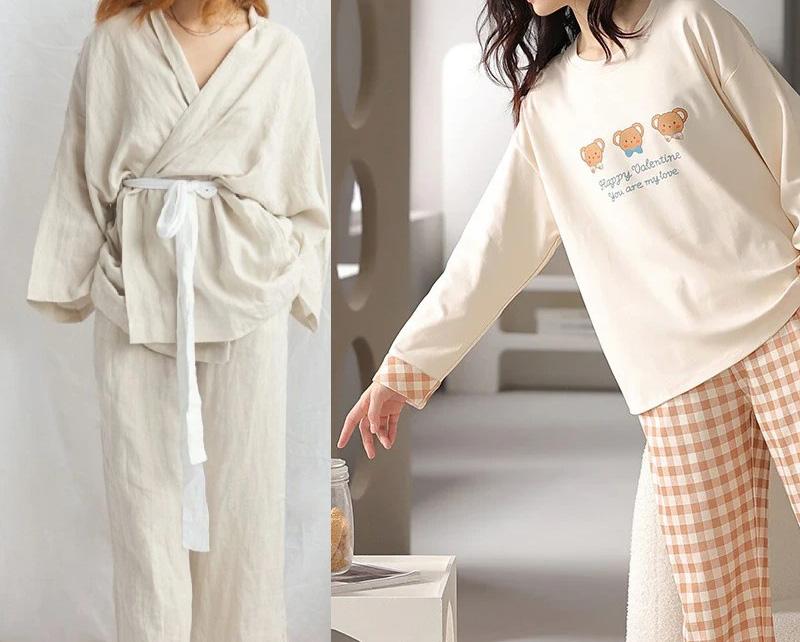
Loungewear differs from pajamas in purpose because pajamas are mainly designed for sleeping, while loungewear is mainly designed for relaxed waking hours. Pajamas prioritize nighttime comfort, while loungewear prioritizes daytime comfort with more flexibility for movement, layering, and visible wear.
At Fusionknits, we always separate the two categories clearly because product purpose changes the entire development process. Pajamas may be lighter, looser, and more sleep-specific. Loungewear often needs more visual body, stronger fabric recovery, and more styling value because it may be worn for long hours while awake.
Why the purpose differs
- Pajamas are sleep-first
- Loungewear is wake-first
- Pajamas prioritize night comfort
- Loungewear prioritizes relaxed day comfort
- Pajamas can be more private in appearance
- Loungewear often needs more presentable structure
Why this difference matters in manufacturing
Fabric direction changes
Loungewear often needs stronger shape support.
Fit logic changes
Loungewear usually requires more balance between ease and presentation.
Product positioning changes
The customer should know whether the garment is for bed, for home, or for broader use.
| Category | Main purpose |
|---|---|
| Pajamas | Sleep comfort |
| Loungewear | Relaxed waking wear |
| Crossover comfortwear | Shared sleep and lounge use |
That is why loungewear should never be treated as just another name for pajamas.
Does Loungewear Also Serve a Styling Purpose?
Yes, and this is a major reason the category became so commercially important. Loungewear is not only about feeling good. It is also about looking appropriately relaxed in a controlled and wearable way.
Yes, loungewear serves a styling purpose because it gives customers a softer and more relaxed visual identity without looking unfinished. It helps create outfits and sets that feel comfortable but still intentional, especially in minimal lifestyle, travel, and casual home-to-street wardrobes.
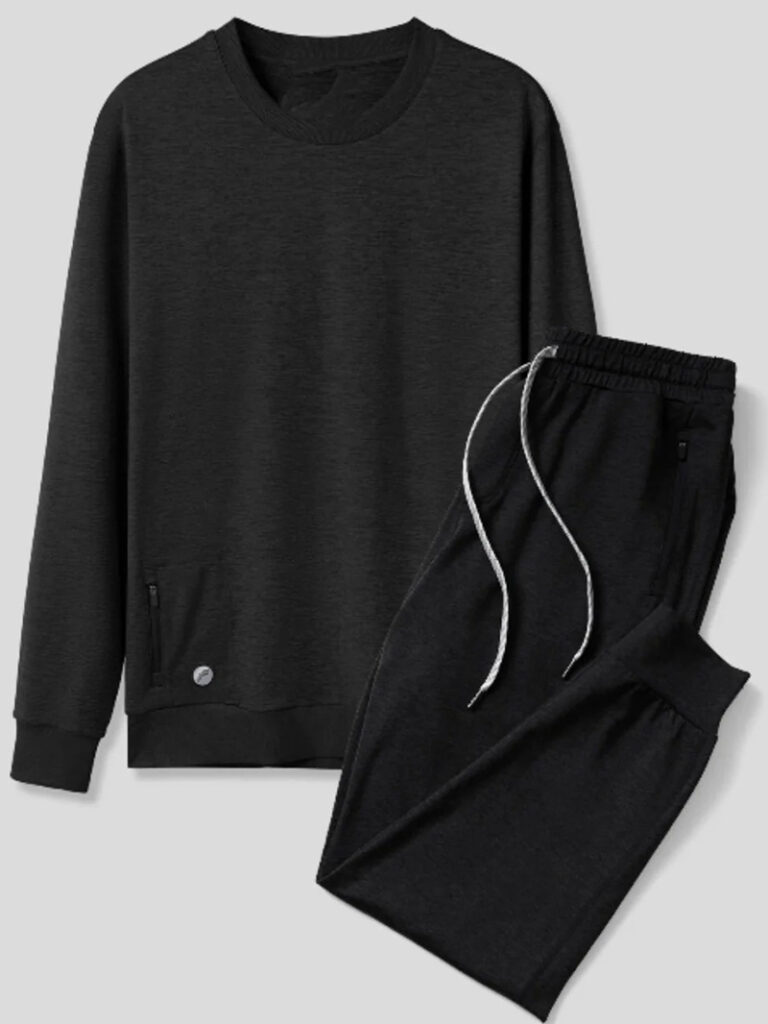
This styling role matters because modern consumers often want comfortable garments that still feel cohesive in photos, in daily routines, and in semi-public settings. Matching lounge sets, ribbed knit sets, soft wrap tops, and refined lounge pants all reflect this shift. The customer is not just buying softness. The customer is buying a softer visual lifestyle.
At Fusionknits, styling purpose is one reason loungewear fabric and silhouette matter so much. If the fabric is too weak or the fit too careless, the product loses this value quickly.
How loungewear supports styling
- Matching sets create visual consistency
- Softer silhouettes create a calm mood
- Neutral tones support easier outfit building
- Relaxed shapes support modern casualwear
- Layering pieces add more styling range
Why styling matters in this category
Customers expect presentable comfort
The garment should not feel too private or too exposed.
Visual identity supports repeat purchase
A strong look helps the customer build a fuller wardrobe.
Better styling increases market value
The product moves beyond pure homewear.
| Styling role | Customer benefit |
|---|---|
| Matching set | Easy outfit solution |
| Neutral palette | Better mix-and-match value |
| Refined silhouette | More presentable comfort |
| Layering options | Better daily flexibility |
That is why the purpose of loungewear includes visual ease as well as physical ease.
Does Loungewear Have a Practical Everyday Function?
Very much so. In fact, one of the strongest reasons for the category’s growth is that it solves practical daily wardrobe problems in a way many other categories do not.
Yes, loungewear has a strong practical everyday function because it supports long hours of wear, comfort during rest and light activity, easy layering, and simplified dressing in low-pressure daily settings. It helps people stay comfortable without changing clothes too often throughout the day.
Think about modern daily life. A person may wake up, work from home, move around the house, receive deliveries, take a short walk, or step out briefly without ever needing a full change into structured daywear. Loungewear supports that kind of routine very well.
At Fusionknits, this practical role is central to how we think about the category. Loungewear is not only for emotional comfort. It is for low-friction living.
Everyday functions loungewear supports
- Morning routines
- Home office hours
- Light indoor movement
- Relaxed downtime
- Travel and hotel use
- Quick casual transitions outside the home
Why practical function drives repeat purchase
The customer uses the garment often
High-use categories usually depend on practical value.
The product reduces dressing effort
A strong lounge set saves time and decision-making.
The category fits modern routines
People now expect clothing to adapt to more parts of the day.
| Everyday use | Why loungewear fits |
|---|---|
| Home office | Comfortable for sitting and movement |
| Travel | Easy all-day wear |
| Weekend at home | Relaxed but presentable |
| Quick errands | Better than sleepwear, softer than daywear |
That is why the purpose of loungewear is deeply practical, not only aesthetic.
What Emotional Need Does Loungewear Fulfill?
This part is often underestimated, but it matters a great deal. Loungewear is one of the categories most closely linked to mood, routine, and emotional comfort.
Loungewear fulfills an emotional need by helping people feel relaxed, safe, calm, and physically at ease in their personal space. It supports rituals of rest, recovery, and self-comfort, which is why the category often carries strong emotional value beyond its basic function.
A person does not usually put on loungewear only because they need fabric on the body. They often put it on because it signals a shift in pace. It may mean the workday is over. It may mean they are entering a calm evening. It may mean rest, personal care, or comfort after travel or stress. This emotional function helps explain why loungewear categories perform so well when the product is built correctly.
At Fusionknits, we understand that comfortwear is often purchased with both physical and emotional expectations. The garment should help the customer feel better, not just look softer.
Emotional purposes of loungewear
- Signaling rest
- Supporting calm routines
- Creating home comfort
- Helping separate work time from personal time
- Improving relaxation rituals
Why this emotional role matters commercially
Customers remember how the product makes them feel
Emotional comfort often drives loyalty.
Better comfort supports stronger brand attachment
The category can create more intimate customer relationships.
The product becomes part of routine
That increases repeat wear and repeat purchase value.
| Emotional role | Product meaning |
|---|---|
| Relaxation | Softens the day’s transition |
| Recovery | Supports rest and reset |
| Ease | Lowers physical and mental friction |
| Ritual | Becomes part of personal routine |
That is why the purpose of loungewear includes emotional ease as well as physical comfort.
Why Is Loungewear So Important in Modern Apparel Collections?
Loungewear is important because it now connects several larger market changes at once. It speaks to comfort, lifestyle flexibility, category crossover, and repeat-use value.
Loungewear is important in modern apparel collections because it sits at the intersection of comfortwear, lifestyle dressing, travelwear, homewear, and soft casual fashion. It gives brands a category that is commercially flexible and highly relevant to current customer behavior.
At Fusionknits, we see loungewear as one of the strongest growth categories because it allows brands to build product families rather than one-off garments. Tops, pants, shorts, robes, wraps, cardigans, and matching sets all connect naturally. That makes the category highly scalable when the fabric story and fit direction are well planned.
Why brands value loungewear so highly
- It supports sets and separates
- It works across seasons
- It creates repeat-purchase logic
- It suits direct-to-consumer and wholesale models
- It bridges private and public comfortwear
Why it matters for collection building
It gives brands more flexibility
One fabric story can support several product types.
It supports strong visual merchandising
Matching sets and coordinated lounge capsules sell clearly.
It reflects current customer priorities
Comfort and ease remain major purchase drivers.
| Collection strength | Why loungewear supports it |
|---|---|
| Product family building | Easy extension across categories |
| Repeat purchase | Customers need more than one set |
| Seasonal variation | Lightweight and winter lines both work |
| Lifestyle branding | Strong visual and emotional storytelling |
That is why the purpose of loungewear is not only personal. It is also strategically important in modern apparel business.
How Should Brands Define the Purpose of Their Own Loungewear Line?
Not every brand should position loungewear in the same way. Some lines should be home-first. Others should be travel-ready. Others should be premium and visually elevated. The purpose needs to be specific.
Brands should define the purpose of their loungewear line by deciding whether it is built mainly for home comfort, sleep-lounge crossover, premium matching sets, travelwear, resort comfort, or home-to-street lifestyle use. Once that purpose is clear, fabric, fit, and styling decisions become much stronger.
At Fusionknits, this is one of the most important product planning questions because the same word “loungewear” can describe very different products. A soft modal lounge set and a ponte travel lounge set do not serve the same purpose even though they belong to the same broad family.
Useful purpose directions for brands
- Home-first comfortwear
- Sleep-to-lounge crossover
- Premium lounge sets
- Travel and hotel loungewear
- Minimal home-to-street loungewear
- Seasonal resort lounge capsules
Why purpose should be defined early
It improves material selection
Different lounge roles need different fabrics.
It improves fit logic
A homewear set and an outside-ready set should not fit exactly the same way.
It improves marketing clarity
Customers understand the product more quickly.
| Lounge line purpose | Best product direction |
|---|---|
| Home-first | Softer, more relaxed shapes |
| Premium lounge | Cleaner fabrics and refined silhouettes |
| Travel lounge | Easy movement and stronger structure |
| Home-to-street | Better opacity and more polished styling |
That is how brands can turn the broad idea of loungewear into a clear and commercially useful category.
Conclusion
The purpose of loungewear is to provide comfort, ease, and relaxed styling for waking life. It exists because customers need clothing that feels softer and more comfortable than standard daywear, but more presentable and more versatile than sleepwear. Good loungewear supports home routines, remote work, rest, travel, and light daily movement while still offering enough shape and styling value to feel intentional. That is why the category now plays an important role between pajamas, activewear, and casualwear rather than replacing any one of them completely.
At Fusionknits, we see loungewear as a function-led and lifestyle-led category at the same time. Its purpose is physical comfort, but also practical ease, emotional relaxation, and modern wardrobe flexibility. When brands define that purpose clearly, they build stronger products with better fabric direction, better fit balance, and clearer category value.
In today’s apparel market, that is exactly why loungewear remains one of the most useful and commercially relevant product families to develop.