Sleepwear and loungewear often look similar at first, so many buyers and consumers use the two terms as if they mean the same thing. That confusion causes weak product positioning, unclear sourcing decisions, and mixed customer expectations. The difference is not only about style. It is about purpose, construction, fabric logic, and how the garment is meant to function in real life.
The difference between sleepwear and loungewear is that sleepwear is mainly designed for sleeping, while loungewear is mainly designed for relaxed waking wear. Sleepwear prioritizes night comfort, softness, and low body pressure during sleep, while loungewear prioritizes comfort with more structure, better visual presentation, and more flexibility for home life, travel, and light daily activities.
At Fusionknits, we treat sleepwear and loungewear as related but clearly separate product categories. Both are comfort-led, but they solve different wardrobe problems. A sleepwear set should support rest and nighttime comfort. A loungewear set should support relaxation, movement, and presentable comfort during waking hours. Once that category purpose is clear, fabric, fit, styling, and development decisions all become much more accurate.
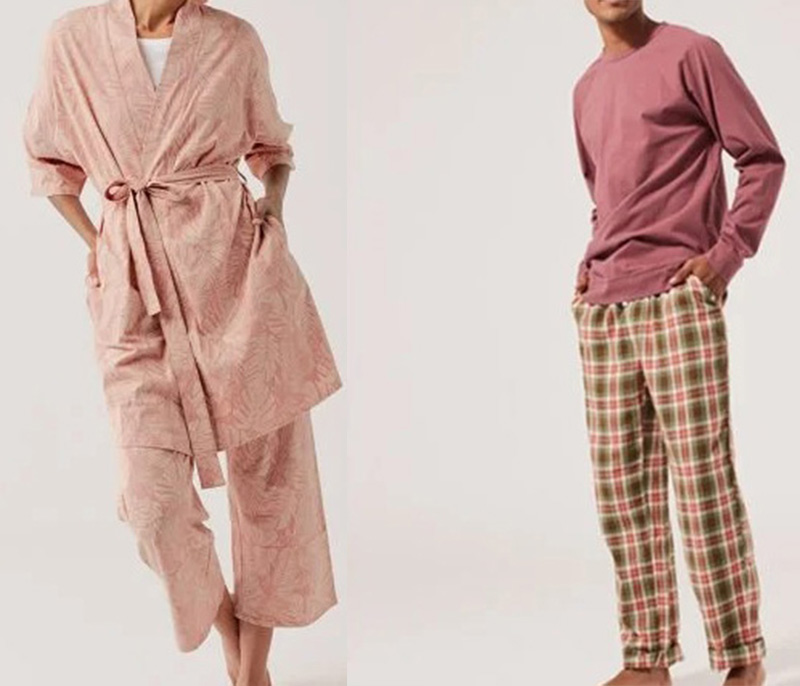
Why do people confuse sleepwear and loungewear so often?
This confusion is common because both categories belong to the broader comfortwear space. They often use soft fabrics, gentle colors, relaxed silhouettes, and matching set formats. From a distance, they can appear almost interchangeable.
People confuse sleepwear and loungewear because both categories are soft, relaxed, and associated with home use. They often share similar fabric families, easy fits, and comfort-led styling, which makes the visual difference less obvious than the functional difference.
Visual overlap can be misleading. Two garments may look similar on a hanger, but their intended use changes the full product logic. A lightweight sleep set may look close to a lounge set, yet the requirements for opacity, recovery, and daytime presentation can be completely different.
At Fusionknits, this is why category clarity matters so much. If a buyer confuses sleepwear with loungewear, the result may be a product that feels too private for daytime use or too structured for real sleep comfort.
Why the two categories overlap visually
- Both use comfort-led fabrics
- Both may include matching tops and bottoms
- Both are connected to home routines
- Both often use relaxed fits
- Both can be built in knit constructions
Why the confusion creates real problems
Product language becomes weak
If the category is unclear, the customer may not understand how the product should be used.
Fabric choice becomes less accurate
A fabric that works for sleep may not perform well for lounge use.
Styling and marketing lose clarity
The brand message becomes less precise.
| Reason for confusion | Why it happens |
|---|---|
| Soft appearance | Both categories use it |
| Matching sets | Common in both categories |
| Homewear association | Both belong to domestic comfortwear |
| Relaxed silhouettes | Visual overlap is strong |
That is why sleepwear and loungewear are often confused, even though their real purpose is different.
Is the main difference simply sleeping versus waking use?
Yes, that is the clearest and strongest difference. Once the intended use is defined, the category becomes much easier to understand and much easier to develop correctly.
Yes, the main difference is sleeping versus waking use. Sleepwear is designed first for sleep, while loungewear is designed first for awake comfort, relaxation, and low-pressure daily life. This difference in use changes the whole product direction.
At Fusionknits, we always begin by defining this purpose clearly. If the garment is mainly for bed, it belongs in sleepwear logic. If the garment is mainly for home comfort, downtime, light movement, or casual indoor living, it belongs in loungewear logic. Some products can cross between the two, but the starting purpose still matters.
The clearest category split
- Sleepwear = sleep-first
- Loungewear = wake-first comfortwear
- Sleepwear = rest-focused
- Loungewear = lifestyle-focused
- Sleepwear = bedtime use
- Loungewear = daytime or all-day home use
Why this use difference matters so much
It changes body expectations
A sleeping garment should feel different from a waking garment.
It changes design tolerance
Loungewear often needs more visual control and stronger daywear presentation.
It changes product communication
The brand should explain clearly whether the product is for bed, for home life, or for crossover use.
| Category | Primary purpose |
|---|---|
| Sleepwear | Sleeping |
| Loungewear | Relaxed waking wear |
| Crossover comfortwear | Shared sleep and home use |
That is why purpose is the most important starting point in separating sleepwear from loungewear.
How does fabric choice differ between sleepwear and loungewear?
Fabric is one of the strongest technical differences between the categories. Both use soft materials, but the type of softness and the performance requirements are not exactly the same.
Sleepwear fabrics usually prioritize softness, breathability, and low-friction contact for sleeping, while loungewear fabrics usually need softness plus more structure, better recovery, and stronger visual body for relaxed daytime wear.
Sleepwear often works well in lighter cotton jersey, modal blends, viscose blends, poplin, satin, and lightweight rib knits. Loungewear often uses French terry, brushed fleece, interlock, rib, ponte, double-knit, and cotton-stretch blends that give more body and broader daywear use.
At Fusionknits, the wrong fabric can quickly place the product in the wrong category. A fabric that feels perfect in bed may look too thin or too private for loungewear. A fabric that works beautifully as a premium lounge set may feel too structured for sleep.
Common sleepwear fabrics
- Cotton jersey
- Modal blend
- Viscose blend
- Cotton poplin
- Satin
- Lightweight rib knit
- Flannel in cooler seasons
Common loungewear fabrics
- French terry
- Brushed fleece
- Cotton jersey with better body
- Rib knit
- Interlock
- Ponte
- Cotton-elastane blends
- Modal lounge knits with stronger structure
Why fabric requirements differ
Sleepwear needs gentler sleep comfort
The garment should feel calm, light, and easy against the skin.
Loungewear needs broader functionality
The garment should hold up in sitting, walking, layering, and visible daytime use.
Shape retention matters more in loungewear
A daytime comfort garment usually needs better recovery and stronger presentation.
| Fabric priority | Sleepwear | Loungewear |
|---|---|---|
| Skin softness | Very high | High |
| Shape retention | Moderate | Higher |
| Daywear presentation | Lower | Higher |
| Structure | Lower | Moderate to higher |
That is why fabric choice is one of the clearest technical differences between sleepwear and loungewear.
Are sleepwear and loungewear cut differently?
Often yes. Even when both categories use relaxed fits, the reason behind the fit is not the same. Sleepwear is shaped for nighttime ease. Loungewear is shaped for relaxed movement while awake and often needs a cleaner silhouette.
Yes, sleepwear and loungewear are often cut differently. Sleepwear usually favors easier pressure-free fit for sleeping comfort, while loungewear usually uses a more balanced fit that still feels relaxed but looks more intentional during waking wear.
A pajama top may allow softer looseness around the torso because it is built mainly for sleep. A loungewear top may still feel easy, but it often needs better drape and stronger visual shape. The same applies to pants. Pajama bottoms may stay looser and lighter. Loungewear pants may use better leg balance, stronger waist construction, and more controlled shape.
At Fusionknits, fit is a strong category signal. The garment should tell the customer clearly whether it belongs in bed, in the living room, or in a more flexible home-to-street setting.
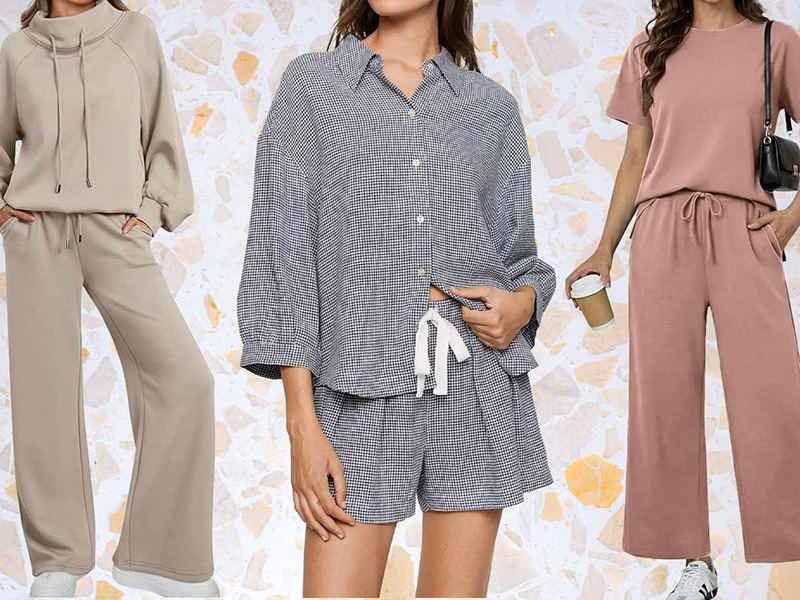
Common sleepwear fit traits
- Low body pressure
- Easier leg shape
- Softer drape
- Less visual structure
- Simpler silhouette logic
Common loungewear fit traits
More balanced shape
The garment still needs comfort, but also daytime presentation.
Better lower-body control
Pants and joggers often need cleaner lines.
More stable set proportions
Matching lounge sets often rely on better top-and-bottom coordination.
| Fit factor | Sleepwear | Loungewear |
|---|---|---|
| Main fit goal | Sleep ease | Relaxed wearable balance |
| Pressure level | Lower | Low, but more controlled |
| Silhouette definition | Softer | Cleaner |
That is why fit design helps separate sleepwear from loungewear even when both categories feel relaxed.
Does loungewear need more structure than sleepwear?
In most cases, yes. This does not mean loungewear should feel stiff. It means it usually needs more visual and functional support because it is worn while the person is awake and moving through daily routines.
Yes, loungewear usually needs more structure than sleepwear because it must stay comfortable during waking hours while also looking more presentable. Better structure helps the garment maintain opacity, shape, and confidence in home life, travel, and casual visible settings.
At Fusionknits, structure in loungewear often comes through fabric choice, better recovery, improved waistband engineering, more balanced neckline finishing, and stronger silhouette control. Sleepwear can be lighter and more private. Loungewear has to function in a wider visual and practical environment.
What “more structure” means in loungewear
- Better opacity
- Stronger fabric body
- More stable shape after wear
- Better cuff, hem, or waistband performance
- More polished presentation
Why this matters in daily use
Loungewear is often seen in more situations
It may be worn around family, guests, travel spaces, or quick errands.
The garment must hold itself better
It should not look too sleep-specific or too flimsy.
Product confidence matters
Customers want to feel comfortable without feeling underdressed.
| Product need | Sleepwear | Loungewear |
|---|---|---|
| Visual privacy | Moderate | Higher |
| Shape support | Lower | Higher |
| Daytime flexibility | Lower | Higher |
That is why loungewear usually carries more structure than sleepwear, even when both are soft.
Can sleepwear be worn as loungewear?
Sometimes yes, but not always. This depends on how the product was designed. Some pieces cross categories well. Others remain clearly sleep-specific.
Yes, some sleepwear can be worn as loungewear, especially if it has enough opacity, shape, and styling value. However, not all sleepwear works well as loungewear because many sleep-first garments are too light, too private, or too sleep-specific in appearance.
A soft modal sleep set may work well for a quiet morning at home. A lightweight satin pajama may look beautiful, but may still feel more like private sleepwear than practical loungewear. The closer the garment gets to waking use, the more important fabric body, fit balance, and visual confidence become.
At Fusionknits, crossover use should be designed deliberately. It should not happen by accident. A good crossover product needs clear product intent from the beginning.
When sleepwear crosses into loungewear more easily
- The fabric is not too thin
- The fit is not overly sleep-specific
- The set looks coordinated and presentable
- The color and trim feel lifestyle-friendly
- The product has enough structure for waking use
When crossover use is weaker
Very light nightwear
It may not provide enough daytime confidence.
Strongly sleep-coded styling
Piping, light shine, or classic pajama shapes may keep the garment in sleepwear territory.
Low recovery fabrics
The garment may lose shape too quickly outside bed use.
| Product type | Sleepwear-only or crossover? |
|---|---|
| Light satin pajama | More sleepwear-specific |
| Modal knit set | Often crossover-friendly |
| Cotton poplin pajama | Usually more sleepwear-coded |
| Rib knit comfort set | Often more crossover-friendly |
That is why some sleepwear can function as loungewear, but the categories still should not be treated as identical.
Can loungewear be used for sleeping?
Yes, many people sleep in loungewear, but that does not automatically make it sleepwear. A garment can be comfortable enough for bed without being designed first for sleep.
Yes, loungewear can be used for sleeping, especially soft knit sets, tees, and relaxed lounge bottoms. However, that does not make it true sleepwear, because loungewear is still designed first for waking comfort and relaxed lifestyle use rather than for optimized sleep function.
This distinction matters because the best sleep product is not always the same as the best lounge product. A heavier French terry set may be perfect for lounging but too warm for sleeping. A more structured lounge jogger may feel good on the sofa but not ideal in bed.
At Fusionknits, category purpose always matters more than occasional customer use. Many products can be used in more than one way, but that does not erase their primary design role.
Why some loungewear works for sleep
- Soft fabrics
- Low-pressure fit
- Familiar comfort feel
- Relaxed silhouettes
- Customer preference for multi-use garments
Why not all loungewear is ideal for sleeping
Some fabrics are too warm
Heavier lounge fabrics may trap too much heat.
Some fits are too structured
Sleep often needs softer movement logic than lounge use.
Some trims are better for day comfort than bed comfort
Waistbands, cuffs, or seams may feel fine while awake but less ideal in sleep.
| Garment type | Suitable for sleep? |
|---|---|
| Soft lounge tee | Often yes |
| Heavy terry lounge set | Sometimes too warm |
| Ponte lounge set | Less sleep-friendly |
| Modal lounge set | Often yes |
That is why loungewear can be slept in, but it should not automatically be defined as sleepwear.
How do brands market sleepwear and loungewear differently?
Strong brands do not rely only on product naming. They build the category through imagery, product descriptions, fabric language, and styling context. This is where category discipline becomes very important.
Brands market sleepwear and loungewear differently by highlighting different use moments, fabric priorities, and visual settings. Sleepwear is usually marketed around bedtime, rest, softness, and sleep comfort, while loungewear is usually marketed around home life, relaxation, travel, remote work, and soft daytime styling.
At Fusionknits, clear category language helps buyers and brands reduce confusion. When the product is described honestly, customer expectations become more accurate and the product becomes easier to position.
Common sleepwear marketing themes
- Bedtime ritual
- Soft sleep comfort
- Night routine
- Rest and recovery
- Gentle skin feel
Common loungewear marketing themes
- Relaxed home life
- Soft daily comfort
- Matching sets for easy dressing
- Travel and hotel comfort
- Work-from-home or weekend ease
Why the marketing split matters
Customers buy for a specific use
The product story should match the intended routine.
Visual context influences expectation
A set shown in bed sells differently from a set shown in a living room or on a weekend trip.
Clear messaging supports stronger conversion
The customer understands what problem the product solves.
| Marketing angle | Sleepwear | Loungewear |
|---|---|---|
| Main moment | Bedtime | Waking downtime |
| Product promise | Better sleep comfort | Better relaxed daily comfort |
| Styling context | Bedroom and night routine | Home, travel, casual lifestyle |
That is why brand positioning must keep the two categories distinct even when the fabrics or silhouettes overlap.
Which category is better for a new comfortwear brand to start with?
Both can work, but they lead in different directions. The stronger starting point depends on whether the brand wants a more focused sleep category or a more flexible lifestyle category.
Loungewear is often the better starting category for a new comfortwear brand because it supports broader product expansion, more visible styling, and more daily wear occasions. Sleepwear can also be a strong launch category, but it usually builds a more focused and sleep-specific brand identity.
At Fusionknits, we often see startup brands lean toward loungewear because it gives more room for sets, layering pieces, travelwear, and home-to-street products. Sleepwear can still perform very well, especially in giftable and premium softness markets, but it usually follows a narrower purpose.
Why loungewear is often a stronger launch category
- Broader wear occasions
- Easier product family expansion
- Strong visual merchandising
- Better crossover with casualwear
- More lifestyle storytelling flexibility
Why sleepwear can still be a strong starting point
Clear category focus
The brand message can become very direct.
Strong ritual-based selling
Sleep products often connect well with self-care positioning.
Giftability
Sleepwear often performs well in gifting seasons.
| Launch path | Main strength |
|---|---|
| Sleepwear brand | Sharper sleep-focused identity |
| Loungewear brand | Broader lifestyle relevance |
| Crossover comfortwear brand | More flexible but needs clearer discipline |
That is why the best launch path depends on whether the brand wants to lead with sleep comfort or waking comfort.
So what is the clearest way to define the difference?
After fabric, fit, structure, and styling are all considered, the simplest answer still comes back to purpose. That is the clearest way to explain the difference without oversimplifying the category.
The clearest way to define the difference is this: sleepwear is made mainly for sleeping, while loungewear is made mainly for relaxing while awake. Sleepwear supports rest in bed. Loungewear supports comfort in life outside the bed, even if that life still happens mostly at home.
At Fusionknits, this definition keeps product development practical. It helps buyers choose the right fabrics, write the right tech packs, communicate more clearly with factories, and build stronger category logic from the beginning.
Conclusion
The difference between sleepwear and loungewear is mainly a difference of purpose. Sleepwear is designed first for sleep, so it usually prioritizes softness, breathability, low body pressure, and nighttime comfort. Loungewear is designed first for relaxed waking life, so it usually requires softness plus more structure, stronger shape retention, better daytime presentation, and broader lifestyle flexibility. The two categories often overlap in fabric, color, and comfort-led styling, but they are not the same product space. Sleepwear serves bed-first comfort. Loungewear serves home-first and day-first comfort.
At Fusionknits, this difference is more than a naming issue. It is a product development issue that affects fabric selection, fit balance, opacity, recovery, styling direction, and marketing language.
When buyers and brands understand the difference clearly, they make better sourcing decisions, build more accurate collections, and create products that feel more useful and more trustworthy in the market. That is why sleepwear and loungewear should be seen as connected categories, but never treated as interchangeable ones.