Many buyers ask this question because color feels like a simple decision. In real garment sales, it is not simple at all. A T-shirt color affects sell-through, print contrast, return rate, repeat purchase, and inventory risk. A color that looks exciting in a meeting may become a slow mover on the shelf. That is why brands often lose margin not because the T-shirt is badly made, but because the color plan is wrong.
At Fusionknits, we see one clear commercial pattern: black is usually the strongest-selling T-shirt color, while white, navy, and heather gray follow closely as the safest high-volume core shades. Recent retail and print-on-demand trend reporting consistently places black at or near the top, with white, navy, dark heathers, and gray as the next most dependable sellers.
As a professional clothing manufacturer, we do not treat this topic as a fashion opinion only. We look at it from a production and wholesale point of view. The bestselling T-shirt color is usually the one that combines broad wearability, easy matching, strong print compatibility, and low styling risk. That is why neutral shades continue to dominate even when trend colors gain temporary attention.
Why does black usually sell the most?
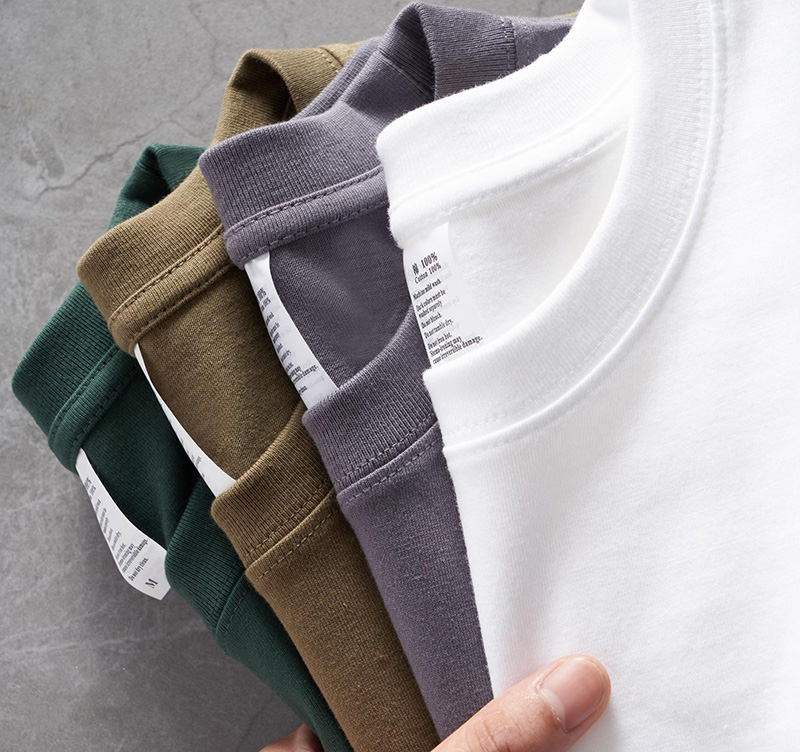
Black remains the most commercially reliable T-shirt color because it works across age groups, genders, seasons, and design styles. It is easy to pair with denim, shorts, joggers, and layered outerwear. It also performs well in both blank apparel and printed merchandise, especially when the print uses light ink or sharp contrast. Multiple current retail and print-on-demand sources list black as the top or one of the top-selling T-shirt colors.
At Fusionknits, black usually leads because it reduces customer hesitation. Buyers trust it, retailers can reorder it with confidence, and brands can use it in both basics programs and graphic collections without major risk.
Black also has a practical advantage. It hides minor marks better than white or lighter tones, and it often gives the garment a cleaner, slimmer, more premium visual effect. In print-based business models, black is especially important because it gives strong contrast for logos, slogans, and artwork. That makes it a core color for both wholesale blanks and branded retail product.
Why black performs so well
- Easy to style
- Works year-round
- Strong print contrast
- Broad gender appeal
- Lower visual risk for buyers
Why brands keep black in every core program
It reduces inventory risk
A black tee usually has a wider customer base than brighter seasonal shades.
It supports more design directions
Minimal branding, fashion basics, oversized streetwear, and promo apparel all work well in black.
| Color | Commercial strength |
|---|---|
| Black | Usually the strongest core seller |
| White | Very strong but higher maintenance risk |
| Navy | Stable and versatile |
| Heather gray | Strong casual basic |
Why do white T-shirts still sell so strongly?
White is usually the second major core color because it feels clean, classic, and universal. It works as a layering piece, a summer essential, and a premium basic. Current trend and product-color roundups continue to place white among the top-selling T-shirt colors, usually right behind black or alongside it in core essentials.

At Fusionknits, white is a core seller because it delivers freshness and flexibility. It performs well in basics, luxury minimal collections, resortwear, and promotional apparel, even though it is usually a little riskier than black in terms of staining and return sensitivity.
White also behaves differently depending on fabric quality. In premium cotton, cotton-modal, or combed jersey, white can feel elevated and expensive. In lower-quality fabric, it can look thin very quickly. That is why white sells well, but it also demands stronger fabric control. If opacity, surface smoothness, and shrinkage are not managed well, white becomes easier for the customer to reject.
Why white remains essential
- Strong for layering
- High summer appeal
- Clean premium image
- Wide use in basics programs
- Strong compatibility with minimal branding
Why white needs more fabric discipline
Buyers notice flaws faster
Pilling, transparency, and poor finishing show more clearly on white fabric.
Quality perception is more exposed
A weak white tee can make the whole collection look cheap.
| Color use | Why white works |
|---|---|
| Basics | Clean and timeless |
| Resort and summer | Bright and breathable visual effect |
| Fashion minimalism | Looks premium with good fabric |
Navy and heather gray are not always the number one seller, but they are among the most dependable colors in commercial programs. Current product-color sources repeatedly identify navy and heather shades as strong-selling T-shirt options after black and white.
At Fusionknits, navy and heather gray are what we would call commercial support colors. They do not always beat black in total volume, but they often produce stable reorder behavior because they feel safe, wearable, and low-risk across many markets.
Navy works because it is dark and versatile, but softer than black. It often appeals to customers who want a classic look without the visual harshness of solid black. Heather gray works because it feels casual, sporty, and easy to wear. In knit T-shirts, heather surfaces can also make the garment look more textured and relaxed, which helps in casualwear and athleisure categories.
- Easy to pair with most bottoms
- Slightly softer visual effect than black
- Strong in men’s basics and uniforms
- Works well with embroidery and tonal branding
Why heather gray performs well
- Feels casual and wearable
- Looks softer than flat solid shades
- Strong in athleisure and basics
- Popular in unisex and relaxed-fit tees
| Color | Typical role in a lineup |
|---|---|
| Navy | Safe second or third core option |
| Heather gray | Casual core and lifestyle basic |
| Dark gray heather | Graphic-friendly and modern |
Why do neutral colors usually outsell fashion colors?
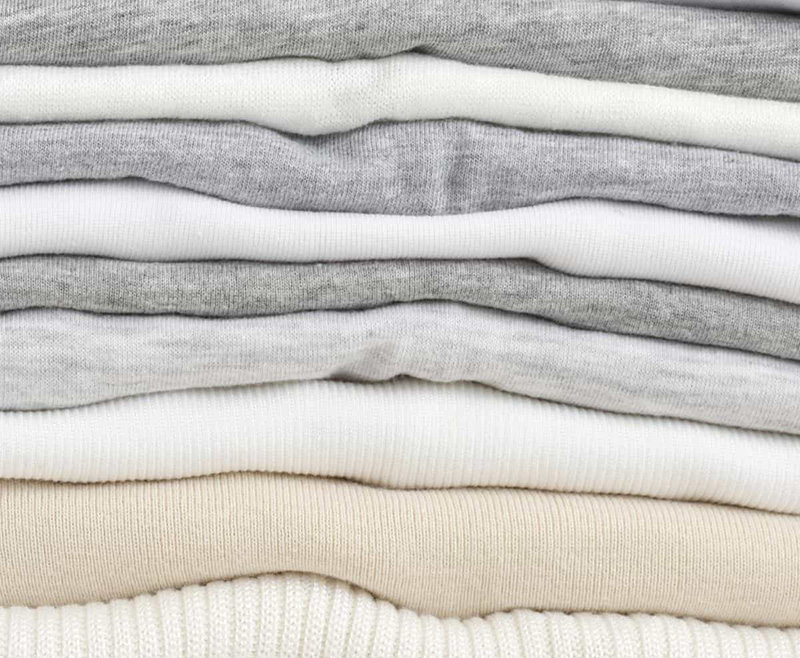
Neutral colors dominate because they match more wardrobes and create fewer buying objections. A customer can justify buying black, white, navy, or gray more easily than mustard, neon green, or seasonal coral. Recent trend coverage and POD-focused sales analysis both point to core neutrals as steady volume drivers, while trend colors create more selective demand.
At Fusionknits, neutrals outsell fashion colors because they carry less styling risk. A neutral T-shirt is easier to wear repeatedly, easier to layer, and easier for the buyer to imagine inside an existing wardrobe.
Trend colors still matter. They help collections look current and can attract attention online. But from a manufacturing and reorder point of view, they rarely replace black, white, navy, and gray as the foundation of strong T-shirt sales. Fashion colors work best when they are built around a stable neutral base, not when they replace it entirely.
Why neutrals win in volume
- More outfit compatibility
- Less trend risk
- Better repeat purchase potential
- Broader age and gender acceptance
- Easier wholesale planning
Why fashion colors still have value
They create freshness
Trend shades help collections feel new.
They support seasonal storytelling
A summer or spring launch often needs more than basics alone.
| Color group | Commercial behavior |
|---|---|
| Core neutrals | Highest stability |
| Seasonal colors | Higher visibility, less stable volume |
| Bright statement shades | Niche or short-cycle demand |
Does the target market change which T-shirt color sells best?
Yes, very clearly. The bestselling T-shirt color is not identical in every market segment. A streetwear label may move more black and washed charcoal. A resort brand may sell more white, cream, and pastel. A corporate uniform program may favor navy. A performance basics program may lean into heathers and dark solids.
At Fusionknits, we always tie color planning to the customer profile. The answer to “which color sells the most?” changes slightly depending on whether the product is for fashion retail, blanks wholesale, promotional use, e-commerce graphics, or premium basics.
Market segments that change color behavior
- Streetwear
- Premium basics
- Promotional apparel
- Uniform and workwear
- Athleisure
- Resort and seasonal retail
Why customer profile matters so much
Color is linked to identity
A customer often buys T-shirt color based on self-image, not only coordination.
Different channels reward different shades
Retail fashion, blanks wholesale, and POD do not move color in exactly the same way.
| Market type | Likely best-selling colors |
|---|---|
| Streetwear | Black, washed black, dark gray |
| Premium basics | White, black, navy, cream |
| Promotional | Black, white, navy, sport gray |
| Resortwear | White, sand, pastel tones |
How do printing and branding affect color sales?
Printability changes color performance a lot. Some shades sell not because the fabric color is inherently more fashionable, but because they present graphics more clearly. Black is a perfect example. It performs strongly partly because light prints and logos show so well on it. White also works well, but the final effect depends heavily on print style and garment quality. Current print-on-demand sources repeatedly connect bestselling colors with print visibility and versatility.

At Fusionknits, printed T-shirt programs often sell best in colors that make the decoration easier to see and easier to style. That is one reason black, white, and dark heathers outperform many brighter shades in graphic-led businesses.
How decoration changes color demand
- Black supports strong contrast
- White supports clean visual branding
- Dark heathers soften graphic intensity
- Navy works well with tonal or classic logo programs
Why blanks and branded retail can differ
Blank apparel favors broad utility
The goal is wide usability.
Branded apparel favors visual identity
The chosen color may support the design story more than raw volume.
| Decoration type | Strong color options |
|---|---|
| Bold light print | Black |
| Minimal tonal branding | Navy or washed black |
| Clean classic graphic | White |
| Casual sport graphic | Heather gray |
No. A strong T-shirt business usually needs both core colors and selective seasonal colors. Core shades drive volume and repeat sales. Seasonal colors create energy, freshness, and fashion movement. Recent trend writeups still show strong interest in earthy greens, pastels, soft cream, rust, and other seasonal tones, even though neutrals remain the volume leaders.
At Fusionknits, we recommend building every T-shirt color plan in layers. Start with the core commercial base, then add trend or seasonal shades in controlled quantities. This approach protects sell-through while still giving the collection enough visual life.
A balanced T-shirt color strategy
- Black as the lead core color
- White as the clean essential
- Navy and gray as support colors
- One or two seasonal shades for freshness
Why this strategy works
It protects margin
Core colors reduce inventory risk.
It still supports visual storytelling
Seasonal colors help the collection look current.
| Color role | Purpose |
|---|---|
| Core neutral | Volume driver |
| Secondary neutral | Reorder support |
| Seasonal accent | Trend interest |
| Limited fashion shade | Brand personality |
So, which color T-shirt sells the most?
The clearest answer is black. Current retail, blanks, and print-on-demand reporting consistently place black at or near the top, with white, navy, and heather gray close behind as the most dependable additional sellers.
At Fusionknits, we would summarize it this way: black is usually the strongest-selling T-shirt color because it combines versatility, styling ease, strong print performance, and low buyer risk. White, navy, and heather gray are the next most important colors in a commercially healthy T-shirt program.
Conclusion
Black usually sells the most because it works across the widest range of customers, styling needs, and product uses. It remains the strongest commercial T-shirt color in many current retail and print-based environments, while white, navy, and heather gray continue to perform as the most reliable follow-up core shades.
These colors succeed not only because they are classic, but because they reduce purchase hesitation, support broad wardrobe pairing, and work well with both blank and branded product strategies.
At Fusionknits, we treat T-shirt color as a business decision, not only a design choice. The best-selling color is usually the one that balances trend, usability, and production logic. That is why strong T-shirt collections are usually built on black first, then supported by white, navy, and gray, with trend colors added carefully around that core. This approach gives brands stronger sell-through, cleaner inventory management, and a better chance of turning color into long-term product success.