Many buyers use “tracksuit pants” and “sweatpants” as if they mean the same thing. That sounds harmless, but it often creates confusion in sourcing, sampling, and product development. A buyer may ask for one category and receive the other, simply because the two garments can look similar from a distance. In real manufacturing, though, they are not exactly the same.
At Fusionknits, we see tracksuit pants and sweatpants as two related but different product categories. Sweatpants are usually softer, thicker, and more comfort-driven. Tracksuit pants are usually lighter, smoother, and more sport-oriented. The difference starts with fabric, but it also extends to function, silhouette, styling, and commercial use.
We think this distinction matters because category language shapes the whole product. It affects fabric sourcing, fit blocks, trim choices, sewing methods, and even where the garment sits in the retail assortment. A brand that understands the difference can build a stronger collection and avoid expensive mistakes during development.
What are sweatpants?
Sweatpants are usually designed for comfort, softness, and relaxed wear. They are strongly linked to loungewear, casual dressing, off-duty streetwear, and everyday basics. In most cases, sweatpants are made from cotton-rich fleece, French terry, brushed jersey, or similar knit structures that feel soft against the skin.
At Fusionknits, we define sweatpants as comfort-led knit bottoms made primarily for warmth, softness, and casual daily use. Their fabric is normally heavier and more absorbent than tracksuit pants, which makes them better suited for leisurewear, cooler climates, and premium loungewear collections.
A typical pair of sweatpants has an elastic waistband, a drawcord, a relaxed or tapered leg, and often rib cuffs at the ankle. The overall effect is soft and easy. Even when the shape is slim, the garment usually still communicates comfort first. This is why sweatpants remain popular not only in sportswear lines, but also in travel, lounge, and fashion basics programs.
Common features of sweatpants
- Cotton or cotton-blend knit fabric
- Fleece or French terry interior
- Softer and heavier hand feel
- Relaxed or tapered fit
- Strong casual and lounge identity
Why brands keep investing in sweatpants
They are easy to wear
Consumers choose them for comfort, not only for sport.
They fit multiple markets
They can work in loungewear, athleisure, travel, and basic apparel.
| Sweatpants detail | Typical result |
|---|---|
| Fleece interior | Softness and warmth |
| Cotton-rich body | Casual natural hand feel |
| Rib cuffs | Classic relaxed sportswear finish |
What are tracksuit pants?
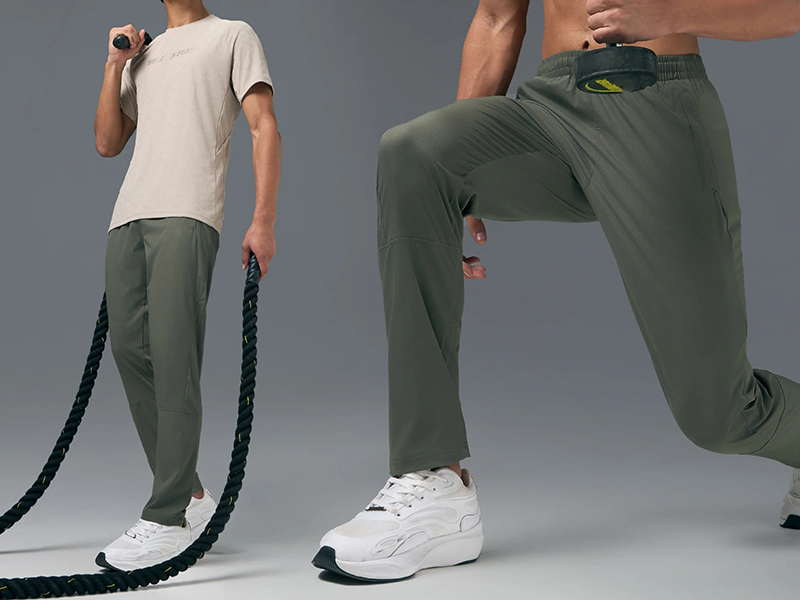
Tracksuit pants come more directly from athletic and training wear. They are part of the wider tracksuit category, which usually includes a matching jacket or zip top. Compared with sweatpants, they are often lighter, smoother, and more technical in both appearance and performance.

At Fusionknits, we define tracksuit pants as sport-oriented bottoms designed to pair with a tracksuit top or jacket, usually made in lighter technical fabrics with a cleaner athletic finish. Their identity is more connected to movement, training, teamwear, and warm-up apparel than to pure lounging.
Tracksuit pants are commonly made from polyester tricot, technical interlock knits, or lightweight woven-stretch fabrics, depending on the brand direction. They often feature zip pockets, ankle zips, side stripes, contrast panels, or sleek seam lines. The garment is usually built to feel less plush than sweatpants and more active in character.
Common features of tracksuit pants
- Polyester-rich or technical fabric
- Smoother outer surface
- Lighter overall weight
- Sport-driven silhouette
- More likely to include zippers or contrast details
Why tracksuit pants remain important
They look athletic
The visual language is cleaner and more performance-oriented.
They support mobility
They are easier to use in warm-up, training, and travel contexts.
| Tracksuit pants detail | Typical result |
|---|---|
| Tricot or technical knit | Smooth sport finish |
| Lightweight construction | Easier movement |
| Zip hems or panels | Strong athletic identity |
Why do people confuse tracksuit pants and sweatpants?
The confusion happens because both are pull-on long bottoms with elastic waists, and both belong to the broader sportswear world. From far away, they may even look similar, especially when both have tapered legs. But once fabric, hand feel, and purpose are examined more closely, the difference becomes much clearer.
At Fusionknits, we see this confusion most often when product names are chosen by silhouette alone. A tapered bottom is not automatically a sweatpant, and it is not automatically a tracksuit pant either. The fabric, finish, and use case decide the category much more accurately than the outer shape does.
The overlap also grew as athleisure became more popular. Today, consumers wear sport-inspired garments everywhere, so category lines are more flexible in daily life. Still, for sourcing and manufacturing, the distinction remains valuable. If a brand requests tracksuit pants but means fleece sweatpants, the development path changes immediately.
Why the categories get mixed up
- Similar waistband construction
- Similar long-leg silhouette
- Shared sportswear heritage
- Retail overlap in casual activewear
- Loose everyday naming habits
Why product teams should separate them
Fabric choice changes everything
The same shape in two different fabrics can belong to two different categories.
End use is different
One product leans toward comfort. The other leans toward sport.
| Source of confusion | Real issue behind it |
|---|---|
| Similar shape | Buyers ignore fabric identity |
| Same store section | Retail grouping hides technical differences |
| Casual naming | Technical product meaning gets lost |
What is the biggest difference between tracksuit pants and sweatpants?
The biggest difference is fabric identity and product purpose. Sweatpants are usually built around softness, warmth, and ease. Tracksuit pants are usually built around light movement, athletic styling, and a cleaner technical finish. This core difference shapes the whole garment.
At Fusionknits, the simplest and most accurate distinction is this: sweatpants are comfort-first bottoms, while tracksuit pants are sport-first bottoms. Once that difference is clear, the rest of the category differences become much easier to understand.
That core separation affects hand feel, drape, weight, construction, and retail positioning. Sweatpants often look more relaxed and feel more home-friendly. Tracksuit pants often look sharper, lighter, and more active. Even when both are used in casual wardrobes, they still communicate different intentions.
Core category split
- Sweatpants = warmth, softness, comfort
- Tracksuit pants = movement, sport, technical appearance
Why this changes product development
It affects sourcing
The factory must choose very different fabrics and trims.
It affects retail placement
The garment may sit in loungewear, activewear, or teamwear depending on the category.
| Category | Main identity |
|---|---|
| Sweatpants | Comfort-driven |
| Tracksuit pants | Sport-driven |
How do fabrics separate tracksuit pants from sweatpants?
Fabric is the clearest technical difference between the two. Sweatpants are usually based in fleece, French terry, brush-back knits, or other soft cotton-rich materials. Tracksuit pants are more likely to use polyester tricot, interlock, warp-knit structures, or lightweight woven synthetics.
At Fusionknits, fabric is the strongest indicator of whether a bottom should be developed as a sweatpant or as a tracksuit pant. If the fabric is plush, heavier, and absorbent, it usually belongs to the sweatpants category. If it is smoother, lighter, and more technical, it usually belongs to the tracksuit category.
This difference also affects climate use and care behavior. Sweatpants usually feel warmer and more casual. Tracksuit pants often feel cooler, more slide-friendly, and easier for movement. A consumer who wants softness for daily comfort will usually prefer sweatpants. A consumer who wants a sharp athletic look may prefer tracksuit pants.
Common sweatpants fabrics
- Cotton fleece
- French terry
- Brush-back jersey
- Cotton-poly comfort knits
Common tracksuit pant fabrics
- Polyester tricot
- Technical interlock
- Warp-knit sport fabric
- Lightweight woven stretch fabric
| Fabric type | More likely category |
|---|---|
| Fleece | Sweatpants |
| French terry | Sweatpants |
| Polyester tricot | Tracksuit pants |
| Technical woven | Tracksuit pants |
How does fit differ between tracksuit pants and sweatpants?
Fit can overlap, but there are still visible differences in direction. Sweatpants usually allow more softness in the seat, thigh, and leg shape, even when tapered. Tracksuit pants usually have a cleaner and more athletic line, with less visual bulk and a more streamlined lower leg.

At Fusionknits, sweatpants usually support a softer drape and more relaxed shape, while tracksuit pants are often engineered to look cleaner and move more easily in a sporty context. The difference is not always dramatic, but it becomes clear when fabric and trim are considered together.
Tracksuit pants more often use zip hems, contrast piping, or stripe details. Sweatpants more often use rib cuffs, simpler pocket finishes, and comfort-led silhouettes. Both can be tapered, but they do not communicate the same mood. One says lounge and lifestyle. The other says athletic structure.
Sweatpants fit direction
- Softer thigh volume
- Relaxed seat and upper leg
- Comfortable taper
- Rib cuff common
Tracksuit pants fit direction
- Cleaner leg line
- More athletic silhouette
- Less plush visual bulk
- Ankle zips or narrow hems common
| Fit element | Sweatpants | Tracksuit pants |
|---|---|---|
| Upper-leg feel | Softer and roomier | More controlled |
| Hem finish | Rib cuff | Zip hem or clean finish |
| Overall visual mood | Relaxed | Athletic |
How do styling details change the category?
Styling details can strongly reinforce the difference. Sweatpants often stay simple, with minimal seaming, tonal trims, and soft branding. Tracksuit pants are more likely to use contrast side stripes, zipper pockets, logo tapes, piping, or matching tracksuit jackets.
At Fusionknits, we see styling details as category signals. Even before touching the fabric, buyers can often identify whether a garment is closer to a sweatpant or a tracksuit pant by reading the trim language and line details.
This is why tracksuit pants frequently sit inside coordinated sets, while sweatpants more often stand alone as basics or pairing pieces. The tracksuit category is naturally more connected to matched styling. Sweatpants, on the other hand, often perform well as mix-and-match garments in broader lounge collections.
Sweatpants styling cues
- Clean, minimal seaming
- Soft logo placement
- Tonal drawcords
- Rib cuffs
- Comfort-first finish
Tracksuit pants styling cues
- Side stripes
- Contrast piping
- Zipper pockets
- Matching jacket program
- Technical trims
| Styling detail | More likely category |
|---|---|
| Rib waistband and cuff | Sweatpants |
| Side stripe and zip hem | Tracksuit pants |
| Plush comfort fabric | Sweatpants |
| Matching training set identity | Tracksuit pants |
Which one is better for casualwear and which one is better for sport?
For pure casualwear, sweatpants usually lead because they deliver more softness and warmth. For warm-up, teamwear, travel, and light sport styling, tracksuit pants often make more sense. The answer depends on what the wearer values most.
At Fusionknits, we recommend sweatpants for loungewear, casual street basics, and colder-weather comfort, while we recommend tracksuit pants for athletic sets, warm-up dressing, travel-active categories, and sport-lifestyle collections.
That does not mean tracksuit pants cannot be worn casually or that sweatpants cannot appear in sport-inspired wardrobes. Both now live inside modern athleisure. But their strongest use cases are still different. A comfort-led line usually begins with sweatpants. A teamwear or sporty lifestyle line often begins with tracksuit pants.
Best uses for sweatpants
- Lounge collections
- Home and travel comfort
- Cooler-weather casualwear
- Streetwear basics with soft hand feel
Best uses for tracksuit pants
- Teamwear programs
- Warm-up outfits
- Athletic-inspired streetwear
- Lightweight movement categories
| Use case | Better match |
|---|---|
| Relaxed comfort | Sweatpants |
| Warm-up styling | Tracksuit pants |
| Winter basics | Sweatpants |
| Sport set coordination | Tracksuit pants |
How should brands label them correctly?
Brands should classify the garment based on fabric, intended use, and visual product identity. If the garment is soft, fleece-based, and comfort-led, then sweatpants is usually the correct term. If the garment is smooth, technical, and designed as part of a tracksuit or sport set, then tracksuit pants is usually more accurate.
At Fusionknits, we advise brands to name these products according to their technical identity first. That creates better communication with factories, cleaner retail positioning, and stronger trust with wholesale buyers and end consumers.
A brand can still use crossover language such as “track-inspired sweatpants” or “soft tracksuit bottoms” if the styling supports that. But the base category should remain honest. Clear category language improves sourcing accuracy, fit development, and e-commerce filtering.
A practical naming process
- Check the core fabric
- Confirm the intended use
- Review the trim package
- Match the name to technical identity
Why this method is safer
It improves sample accuracy
The development team works from the right category from the beginning.
It reduces retail confusion
Customers know what to expect in hand feel and use.
| Naming step | Why it matters |
|---|---|
| Fabric check | Confirms category direction |
| End-use check | Protects product function |
| Label decision | Aligns technical and commercial meaning |
So, what is the difference between tracksuit pants and sweatpants?
Tracksuit pants and sweatpants are related, but they are not the same. Sweatpants are usually softer, thicker, and more comfort-driven, with cotton-rich knit fabrics like fleece or French terry. Tracksuit pants are usually lighter, smoother, and more athletic in both fabric and visual identity, often using polyester-rich technical materials and sport-oriented trims.
At Fusionknits, the difference comes down to this: sweatpants are built mainly for comfort and relaxed wear, while tracksuit pants are built mainly for athletic appearance, coordinated sports styling, and lighter movement-focused use.
Conclusion
The difference between tracksuit pants and sweatpants starts with fabric, but it does not end there. Sweatpants usually offer a softer hand feel, heavier knit structure, and stronger connection to loungewear and casual comfort.
Tracksuit pants usually offer a smoother surface, lighter weight, and stronger connection to training, warm-up dressing, and athletic styling. These differences affect fit, trim, category positioning, and consumer expectations.
At Fusionknits, we treat the two categories separately because that leads to better product development and stronger collection planning. When a brand understands whether it needs the softness of sweatpants or the technical clarity of tracksuit pants, it can make better decisions about fabric, silhouette, trims, and market placement. That creates cleaner communication with the factory, a more consistent brand message, and a better final product for the customer.