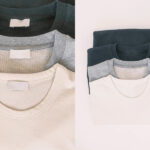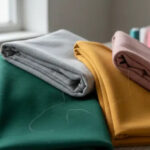
Many buyers want the acid wash look, but many of them start with the wrong fabric. That creates a common problem in development. The garment may look too flat, too damaged, or too weak after washing. In manufacturing, acid wash is not only a design effect. It is a fabric decision first.
At Fusionknits, we treat cotton as the main material for acid wash cloth. In most commercial and premium garment programs, 100% cotton jersey, cotton fleece, French terry, and other cotton-rich fabrics produce the most authentic acid wash result because they absorb dye well, react clearly to wash treatment, and develop a stronger vintage contrast.
From a professional apparel manufacturing perspective, acid wash works best when fiber, fabric construction, dye depth, and wash control are aligned from the beginning. A strong acid wash garment should look aged in a controlled way, feel softer after processing, and still keep enough fabric strength for real wear.
The key point is simple. Acid wash is not built by chemical language alone. It is built by choosing the right cloth first, then applying the right finishing process.
Why does fabric selection matter so much for acid wash cloth?
The acid wash effect depends on how the fabric reacts to color removal, abrasion, and finishing. If the base material does not respond well, the wash effect will not look deep or natural. Instead, it may look patchy, weak, or overly artificial.
At Fusionknits, fabric selection is the foundation of acid wash development because the material controls fade contrast, surface texture, softness, and garment stability after treatment.
This matters in every product category. A T-shirt, hoodie, and pair of shorts may all use acid wash, but they will not perform the same way unless the fabric is chosen correctly. Some fabrics lose too much strength. Some fabrics do not show enough wash contrast. Some fabrics twist or shrink excessively after processing. That is why a manufacturer must evaluate the base cloth before the wash formula is finalized.
What the base fabric affects in acid wash production
- Dye absorption
- Wash contrast
- Surface texture
- Shrinkage behavior
- Hand feel
- Garment strength
Why poor material choice creates weak results
The wash effect may look flat
If the fabric does not release color clearly, the garment will not show the rich highs and lows that buyers expect from acid wash.
The garment may lose commercial quality
If the fabric becomes too weak after washing, the product may look distressed in the wrong way.
| Fabric property | Effect on acid wash result |
|---|---|
| Fiber type | Controls how color reacts |
| Fabric weight | Affects strength after washing |
| Construction | Changes texture and visual depth |
Is cotton the main material used for acid wash cloth?
Yes. In most acid wash apparel programs, cotton is the main and most reliable material. Cotton takes dye well, releases color in a more natural-looking way during finishing, and softens nicely after washing. These qualities make it the strongest base fiber for acid wash garments.

At Fusionknits, we use cotton as the primary material for acid wash cloth because it produces the clearest faded contrast, the most natural vintage effect, and the soft hand feel that customers expect from washed casualwear.
This is why acid wash is so common in cotton T-shirts, sweatshirts, hoodies, and casual bottoms. Cotton supports both visual and tactile value. The surface can look older, but the garment can still feel comfortable and wearable. That balance is harder to achieve with more synthetic-heavy fabrics.
Cotton also fits the market identity of acid wash. Most acid wash garments are casual, vintage-driven, youth-oriented, or streetwear-related. Cotton supports all of those categories naturally.
Why cotton performs so well
- Strong dye uptake
- Better fade response
- Softer finish after washing
- More authentic vintage appearance
- Strong compatibility with casualwear categories
Which cotton products work best?
Cotton jersey
This is one of the strongest choices for acid wash T-shirts and tops.
Cotton fleece and terry
These constructions work especially well in hoodies, sweatshirts, and relaxed streetwear garments.
| Cotton fabric type | Acid wash suitability |
|---|---|
| 100% cotton jersey | Excellent |
| Cotton fleece | Excellent |
| Cotton French terry | Very good |
| Cotton twill | Good in selected categories |
Which fabric constructions are commonly used for acid wash garments?
Fiber is only one part of the answer. Fabric construction also plays a major role. A smooth jersey T-shirt and a brushed fleece hoodie may both use cotton, but they will show acid wash in very different ways.
At Fusionknits, the most common constructions for acid wash cloth are single jersey, heavy jersey, French terry, and brush-back fleece, because these structures support both the visual finish and the commercial garment categories where acid wash performs best.
Single jersey is common in T-shirts because it creates a cleaner, flatter acid wash surface. Heavy jersey creates a stronger premium basic feel. French terry gives more body and a slightly more textured vintage look. Fleece works very well in hoodies and sweatshirts because it adds depth and softness to the finished garment.
Construction also affects how much wash pressure the garment can tolerate. A heavier knit usually handles stronger treatment better than a light unstable knit.
Common acid wash constructions
- Single jersey
- Heavy jersey
- Slub jersey
- French terry
- Brush-back fleece
Why construction matters as much as fiber
It changes the visual character
The same dye and wash formula will look different on different knit constructions.
It changes durability
A heavier or more stable construction often survives the process more cleanly.
| Construction | Typical garment use |
|---|---|
| Single jersey | T-shirts and tank tops |
| Heavy jersey | Premium tees |
| French terry | Sweat shorts and light sweat tops |
| Fleece | Hoodies and sweatshirts |
Can cotton blends be used for acid wash cloth?
Yes, but the blend ratio matters. Cotton-rich blends can work well, especially when the manufacturer wants better shape retention, more commercial fit stability, or slightly lower shrinkage. The critical point is that cotton should still remain the dominant fiber.
At Fusionknits, cotton blends can be used successfully for acid wash garments when the cotton content stays high enough to carry the wash effect visually. High-cotton blends usually perform much better than balanced or polyester-heavy blends.
For example, an 80% cotton and 20% polyester fleece can still produce a strong acid wash hoodie. A 95% cotton and 5% elastane knit can still work for a fitted acid wash top. But as synthetic content increases, the finish usually becomes less natural and less expressive.
This is why blend selection should be strategic. A small amount of synthetic fiber can improve stability. Too much synthetic fiber can weaken the identity of the wash.
Useful blend directions
- 95% cotton / 5% elastane
- 90% cotton / 10% polyester
- 80% cotton / 20% polyester
- Cotton-rich fleece blends
Why high cotton content is still necessary
Cotton creates the wash story
The visible highs and lows in acid wash depend mainly on cotton’s dye behavior.
Too much synthetic fiber weakens authenticity
The garment may stay stable, but the visual result often looks less convincing.
| Blend type | Acid wash quality |
|---|---|
| High-cotton blend | Strong |
| Medium-cotton blend | Moderate |
| Polyester-rich blend | Weak |
Why is polyester usually not the preferred material?
Polyester is valuable in many garment categories, but it is usually not the best base for acid wash. It does not absorb and release dye in the same way as cotton, and it usually does not create the deep vintage contrast that makes acid wash attractive.
At Fusionknits, polyester is not the preferred material for acid wash cloth because it tends to produce a weaker, less organic wash effect and a more synthetic surface character.
This is not a quality problem with polyester itself. It is simply a mismatch between fiber behavior and finish goal. Polyester is excellent in sportswear, technical products, and quick-dry garments. Acid wash usually belongs to vintage casualwear, where cotton is more suitable.
When polyester content is high, the garment may resist the wash visually. It may not fade enough, or it may develop a result that feels more processed than naturally worn.
Why polyester is limited in acid wash programs
- Lower fade response
- Less natural vintage contrast
- More synthetic hand feel
- Weaker visual depth after washing
What happens when polyester is too dominant?
The wash effect becomes less readable
The customer sees less contrast and less surface story.
The garment feels less authentic
The final look may not match the expected acid wash mood.
| Material type | Acid wash performance |
|---|---|
| 100% cotton | High |
| Cotton-rich blend | Good |
| Polyester-rich fabric | Low |
Does the fabric color affect the acid wash result?
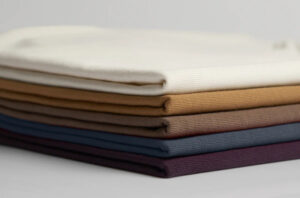
Yes, very strongly. Darker shades usually create the strongest acid wash effect because the color contrast becomes more visible after treatment. Black is one of the most common starting shades, but dark navy, charcoal, burgundy, olive, and brown can also work very well.

At Fusionknits, dark cotton fabrics are usually the best base for acid wash because they deliver the strongest visual payoff and the clearest vintage identity after finishing.
Lighter shades can still be washed, but the final result is usually softer and less dramatic. That may be useful for some product lines, especially where the brand wants a more washed-out lifestyle mood rather than a strong retro statement. Still, darker shades remain the most commercially recognizable acid wash direction.
Strong base shades for acid wash
- Black
- Charcoal
- Dark navy
- Deep olive
- Burgundy
- Brown
Why dark shades are preferred
The wash effect is more visible
Contrast is one of the main visual values in acid wash.
A richer dark base often creates a stronger and more intentional finish.
| Base shade | Contrast level |
|---|---|
| Black | Very high |
| Charcoal | High |
| Navy | High |
| Light gray | Lower |
Which garment categories use acid wash cloth most successfully?
Acid wash works best in categories that already carry a casual or vintage mood. That is why it performs especially well in T-shirts, hoodies, sweatshirts, tanks, and relaxed shorts.
At Fusionknits, the most successful acid wash products are usually cotton-based casual garments where the worn-in finish feels natural to the product category.
This is important in collection planning. Acid wash should support the garment identity, not fight it. A relaxed cotton tee can carry acid wash very naturally. A highly technical activewear top usually cannot. Good product development always matches finish logic to product logic.
Best garment categories for acid wash
- T-shirts
- Cropped tops
- Tank tops
- Hoodies
- Sweatshirts
- Casual shorts
- Washed lounge sets
Why these products perform well
The finish matches the category
Vintage and worn effects feel natural in casualwear.
Cotton is already common in these garments
That improves both visual and technical performance.
| Garment type | Acid wash compatibility |
|---|---|
| T-shirt | Excellent |
| Hoodie | Excellent |
| Sweatshirt | Very good |
| Technical active top | Low |
How should a manufacturer choose the right acid wash material?
Material selection should begin with the end product. The manufacturer should define the garment category, target wash intensity, required softness, and acceptable strength loss before choosing the base cloth.
At Fusionknits, the most effective method is to begin with a cotton-first fabric strategy, then adjust the knit construction, weight, blend level, and color depth to fit the target garment and wash outcome.
For example, a standard acid wash T-shirt usually performs well in medium-weight 100% cotton jersey. A streetwear hoodie may perform better in cotton fleece. A fitted acid wash top may benefit from a high-cotton stretch blend. These are not trend decisions alone. They are technical decisions shaped by product purpose.
Sampling is essential. A fabric that looks right before wash may behave differently after treatment. Wash testing, shrinkage review, and hand-feel evaluation should always happen before bulk approval.
A practical selection process
- Start with cotton as the main fiber
- Match construction to garment category
- Use darker shades for stronger contrast
- Test wash performance before bulk
- Review softness, shrinkage, and stability
Why testing should never be skipped
The washed garment is the real product
The unwashed fabric only shows potential, not final reality.
Small fabric differences create large finish changes
Weight, dye depth, and knit stability all influence the outcome.
| Development step | Purpose |
|---|---|
| Fiber selection | Build wash potential |
| Construction choice | Match product type |
| Wash sampling | Test real finish behavior |
| Final approval | Confirm commercial quality |
Conclusion
The material most commonly used for acid wash cloth is cotton, especially 100% cotton jersey, cotton fleece, French terry, and other cotton-rich casualwear fabrics. Cotton works best because it absorbs dye well, reacts clearly during wash processing, and produces the strong faded contrast that gives acid wash its authentic vintage look.
Cotton-rich blends can also perform well when cotton remains the dominant fiber, but polyester-heavy fabrics usually do not create the same natural result.
At Fusionknits, acid wash is treated as a material-first finish. The strongest acid wash products begin with the right cotton-based fabric, the right construction, and the right base shade before the wash process even starts. When the material is correct, the garment can achieve the right balance of vintage appearance, softness, and commercial durability. That is what separates a strong acid wash product from a weak one.