A cardigan can look polished or awkward from one small thing: fit. Many buyers focus on yarn, color, and buttons first. I see fit create bigger problems. A cardigan that is too tight can pull, twist, and lose shape. A cardigan that is too loose can look heavy, sloppy, or old. That is why this question matters more than it seems.
At Fusionknits, we do not see cardigans as garments that should always be tight or always be loose. A good cardigan should match its purpose, fabric weight, gauge, and styling role. In most cases, a cardigan should feel comfortably relaxed, with enough room for layering, but not so loose that it loses structure and proportion.
From a professional apparel manufacturing view, cardigan fit is a balance issue. The right answer changes with the product type. A fine-gauge fashion cardigan, a chunky winter cardigan, and a fitted knit top-cardigan do not follow the same fit rule. That is why strong development begins with function first, then silhouette, then market styling.
Should a cardigan fit close to the body or sit away from it?
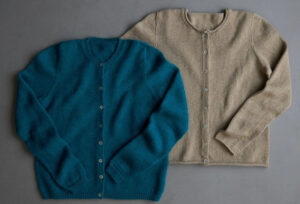
A cardigan should usually sit near the body without clinging too hard. In most commercial knitwear programs, the best cardigan fit is neither skin-tight nor oversized without control. The body should have enough ease for movement and layering, but the shape should still look intentional.
At Fusionknits, we usually recommend a controlled relaxed fit for most cardigans because it gives the best balance of comfort, layering ability, and visual polish. This kind of fit lets the cardigan move naturally with the body. It also reduces stress at the placket, armhole, and side seam.
A cardigan that sits too close can create tension at the bust, chest, button line, and underarm. That weakens both comfort and appearance. A cardigan that sits too far away from the body can collapse visually, especially if the yarn is soft and the structure is light. The garment then loses shape and looks less premium.
What a balanced cardigan fit usually does
- Leaves room for natural movement
- Allows a light layer underneath
- Keeps the placket lying clean
- Holds the silhouette without pulling
- Looks polished in open or closed styling
Why balance matters so much
Tightness creates technical problems
Excess tension can strain buttons, distort ribs, and shorten garment life.
Oversize without control creates visual problems
Too much volume can make the cardigan feel heavy and dated.
| Fit direction | Typical result |
|---|---|
| Too tight | Pulling and strain |
| Balanced relaxed fit | Clean and wearable |
| Too loose | Sloppy and unstable shape |
When should a cardigan be more fitted?
A cardigan should be more fitted when it is designed to act like a top rather than only a layering piece. This is common in fine-gauge women’s cardigans, cropped fashion cardigans, ribbed cardigans, and buttoned styles intended to be worn directly against the body.

At Fusionknits, we build fitted cardigans when the product is meant to create a cleaner silhouette, a sharper waist line, or a more polished top-like appearance. In these cases, a closer fit helps define the garment’s role. The cardigan becomes part of the main outfit rather than just a secondary layer.
Still, fitted does not mean restrictive. A fitted cardigan should follow the body, not squeeze it. The front should close smoothly, the sleeve should move cleanly, and the hem should sit flat. If the buttons gape or the body twists, the cardigan is too tight rather than properly fitted.
Cardigan styles that often work well with a fitted shape
- Fine-gauge button cardigans
- Cropped cardigans
- Ribbed knit cardigans
- Lightweight top-cardigans
- Feminine fashion cardigans
Why a fitted cardigan can work well
It looks more refined
The garment can feel cleaner and more fashion-led.
It layers smoothly under jackets
A closer silhouette reduces bulk under outerwear.
| Fitted cardigan feature | Benefit |
|---|---|
| Closer body line | Sharper visual shape |
| Narrower sleeve | Cleaner layering |
| Reduced bulk | More polished styling |
When should a cardigan be looser?
A cardigan should be looser when layering, warmth, drape, or relaxed styling is the main goal. This is common in chunky cardigans, winter cardigans, open-front styles, longline cardigans, and soft brushed knitwear. In these categories, tightness usually works against the product.
At Fusionknits, we prefer a looser fit in cardigans that are designed for comfort, layering, and seasonal outer-like wear. A heavier cardigan needs space to fall correctly. If that kind of garment is too tight, it loses comfort and often looks bulky instead of elegant.
A loose cardigan does not mean shapeless. Even relaxed fits need control at the shoulder, sleeve balance, and body length. The goal is freedom, not excess. A cardigan can feel cozy and relaxed while still looking deliberate.
Cardigan types that usually need more room
- Chunky knit cardigans
- Longline cardigans
- Open-front cardigans
- Winter layering cardigans
- Brushed or fluffy yarn cardigans
Why loose fit works better here
The cardigan needs to layer
Heavier knits usually need room over tees, shirts, or light tops.
The yarn needs visual space
Bulky yarn and open structures often look better with relaxed proportions.
| Loose cardigan feature | Benefit |
|---|---|
| More body ease | Better layering |
| Softer drape | More comfort |
| Relaxed silhouette | Stronger casual appeal |
Does knit gauge change whether a cardigan should be tight or loose?
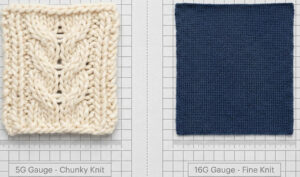
Yes, knit gauge changes the fit decision a lot. Fine-gauge cardigans usually handle closer fits better because the fabric is lighter and less bulky. Chunkier gauges often need more ease because the knit takes up more physical space and creates more visual volume.
At Fusionknits, gauge is one of the first things we review when deciding cardigan fit. Fine-gauge cardigans can support a neater body line, while mid-gauge and chunky cardigans usually need more relaxed proportions to stay wearable and attractive.
This is a technical point that many buyers overlook. They may like the fit of a fine rib cardigan and try to apply the same silhouette to a chunky cable cardigan. The result is usually poor. The second garment becomes too dense, too restrictive, or too visually heavy. Gauge should always guide fit.
How gauge changes fit planning
- Fine gauge supports cleaner fitted shapes
- Mid gauge usually needs moderate ease
- Chunky gauge usually needs relaxed volume
- Open knit structures need extra drape allowance
Why gauge matters in development
Fabric bulk changes body behavior
The same measurement does not feel the same in different knit weights.
Proportion changes visual balance
A chunky knit looks tighter faster than a fine knit.
| Knit gauge | Best fit direction |
|---|---|
| Fine gauge | Fitted to balanced |
| Mid gauge | Balanced relaxed |
| Chunky gauge | Relaxed |
Not necessarily. Buttons usually mean the fit has to be even more carefully balanced. A cardigan with buttons must close cleanly. If it is too tight, the placket will pull, the buttons may gape, and the whole front can distort. That problem appears quickly, especially in the bust and stomach area.
At Fusionknits, button cardigans should usually have enough ease to close smoothly without strain. This is one reason we often prefer measured control rather than aggressive tightness in button-front knitwear. The front opening is a stress point, so the fit must account for that.
A cardigan can still be fitted and buttoned, but the pattern must be accurate. The chest and waist need the right balance, the button spacing must be correct, and the knit recovery must be stable. Otherwise, even a visually beautiful cardigan will not perform well in wear.
- Clean placket line
- Enough chest ease
- Good button spacing
- Stable rib or band support
- Strong recovery at the front edge
The front line tells the truth
Any fit mistake becomes visible quickly when the cardigan is closed.
Tension damages appearance
Gaping buttons make the garment look smaller and cheaper.
| Button-front fit | Result |
|---|---|
| Too tight | Gaping and pulling |
| Balanced | Smooth closure |
| Too loose | Front loses shape |
How does cardigan length affect whether it should be tight or loose?
Length changes the fit answer. Cropped cardigans can often handle a neater fit because the body volume is shorter and easier to control. Longline cardigans usually need more ease because they carry more fabric and need better drape through the torso and hip.

At Fusionknits, shorter cardigans usually support a more structured fit, while longer cardigans usually need a looser fit to move naturally and avoid looking stiff. Length and fit should always be developed together.
A long cardigan that is too tight can feel restrictive when walking or sitting. A cropped cardigan that is too loose can feel boxy and clumsy. The body length changes how the weight of the knit behaves, so the fit cannot be separated from the silhouette.
How length changes cardigan fit
- Cropped lengths support cleaner shapes
- Hip-length cardigans work well in balanced fits
- Longline styles usually need more ease
- Duster cardigans require drape and movement room
Why length must guide fit
More length means more movement
The garment needs room to fall and swing naturally.
Shorter lengths show proportion faster
Even small fit mistakes look obvious in cropped shapes.
| Cardigan length | Best fit direction |
|---|---|
| Cropped | Fitted to balanced |
| Standard hip length | Balanced |
| Longline | Relaxed |
Should cardigans be tight or loose for layering?
For layering, cardigans should usually lean looser rather than tighter. A layering cardigan needs enough space to sit over another garment without bunching or pulling. At the same time, it should not become so oversized that it loses shape.
At Fusionknits, layering cardigans should usually be designed with functional ease. That means room at the armhole, bicep, chest, and body so the cardigan works over a tee, shirt, or light knit without strain. Layering is one of the main jobs of a cardigan, so fit must support that role.
This is especially important in autumn and winter programs. If the cardigan cannot layer comfortably, it loses a major part of its value. Customers often reject cardigans not because the yarn is wrong, but because the fit does not support real wardrobe use.
Areas that matter most in layering fit
- Armhole depth
- Upper sleeve room
- Chest ease
- Shoulder comfort
- Front overlap
Why layering fit needs planning
Everyday wear is practical
Customers usually want cardigans to work over at least one base layer.
Too-fitted cardigans become limited
The garment may look sharp but fail in actual wardrobe use.
| Layering requirement | Fit response |
|---|---|
| Tee underneath | Moderate ease |
| Shirt underneath | More ease |
| Fine knit underneath | Balanced relaxed fit |
How should manufacturers decide the right cardigan fit?
Manufacturers should not decide from trend language alone. The correct fit comes from yarn type, gauge, garment purpose, closure method, and target customer. A brand should first define what role the cardigan plays, then build the fit around that function.
At Fusionknits, cardigan fit development begins with five technical questions: Is it a layer or a top? Is it fine gauge or chunky? Is it open front or buttoned? Is it cropped or longline? Is the target customer looking for structure or ease? Once those answers are clear, the fit direction becomes much more accurate.
This process helps avoid one of the most common knitwear problems: applying the same fit idea to every cardigan. That usually weakens the collection. Strong knitwear assortments need fit variety because cardigan roles are different.
Key questions in cardigan fit development
- What is the garment purpose?
- What is the knit gauge?
- Is the style open or closed?
- What is the intended layering use?
- What is the target market silhouette?
Why technical fit planning matters
It protects the garment’s function
A cardigan should perform well in real wear, not only in a fitting review.
It improves consistency across the range
Different cardigans can still feel connected when each fit is developed logically.
| Development factor | Fit effect |
|---|---|
| Yarn bulk | Changes needed ease |
| Closure type | Changes front tension |
| Product role | Changes silhouette logic |
So, should cardigans be tight or loose?
In most cases, cardigans should be comfortably relaxed rather than tight. The best cardigan fit usually gives enough room for movement and light layering while still keeping a clean silhouette. Tight cardigans can work in fine-gauge, cropped, or top-like styles, but they still need controlled ease. Loose cardigans work well in chunky, longline, and layering categories, but they still need structure.
At Fusionknits, the most professional answer is that cardigans should usually be balanced rather than extreme. A cardigan should be fitted enough to look intentional and loose enough to feel comfortable and wearable in the role it was designed for.
Conclusion
Cardigans should not be automatically tight or automatically loose. The correct fit depends on the garment’s purpose, knit gauge, closure, length, and styling role.
Fine-gauge and top-like cardigans can support a more fitted silhouette. Chunky, longline, and layering cardigans usually need a looser fit. In most commercial knitwear programs, the strongest result comes from a balanced relaxed fit that allows movement, layering, and clean visual proportion.
At Fusionknits, cardigan fit is developed through technical reasoning rather than trend language alone. We evaluate yarn behavior, gauge, silhouette, and end use before deciding how much ease the garment needs. That is why the best cardigan fit is usually not an extreme. It is a controlled balance that lets the garment look refined, feel comfortable, and perform properly in real wear.