Cheap T-shirts may look simple, but their material choices are rarely random. In low-cost apparel manufacturing, every fabric decision is tied to price, sourcing speed, production efficiency, and basic market expectations.
Most cheap T-shirts are made of basic cotton, cotton-polyester blends, or 100% polyester, depending on the product purpose and price target. In many low-cost programs, cotton and cotton-poly blends are the most common because they balance cost, comfort, and manufacturing efficiency.
At Fusionknits, we see cheap T-shirts as a product category built around controlled compromise. The goal is not to use the best material available. The goal is to use the most suitable material for the target cost, while keeping the product commercially usable.
What materials are most commonly used in cheap T-shirts?
Low-cost T-shirts are usually built from materials that are easy to source, easy to knit, and easy to move through bulk production. That is why a few fabric types appear again and again in budget programs.
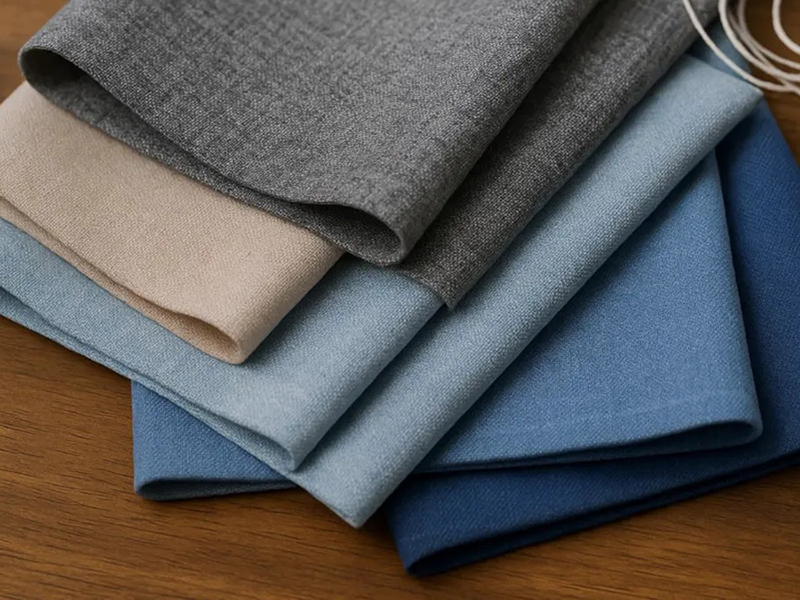
The materials most commonly used in cheap T-shirts are basic cotton jersey, cotton-polyester blends, and 100% polyester knit fabrics. These materials are common because they support large-volume production, practical cost control, and broad market use.
From a manufacturing point of view, a cheap T-shirt fabric must do more than lower raw material cost. It also needs to work well in knitting, dyeing, cutting, sewing, and packing. If the material is too unstable, too hard to process, or too inconsistent, the factory may lose time and money later in production.
At Fusionknits, we usually see three main material directions in cheap T-shirt development:
- Basic cotton
- Cotton-polyester blends
- 100% polyester
Each one serves a different type of low-cost product. Basic cotton is often used in standard casual and promotional T-shirts. Cotton-polyester blends are often chosen when the buyer wants a balance between natural feel and production stability. Polyester is common when the shirt needs stronger shape retention, easier care, or compatibility with certain print methods.
Why these materials appear so often in low-cost production
They are widely available
Factories can usually source these yarns and fabrics faster than more specialized materials.
They support scale
These materials are already common in industrial knitting and dyeing systems, so they fit large production runs well.
They simplify development
A standard material program usually needs less testing and fewer adjustments than a premium or niche fabric program.
A simple view of common cheap T-shirt materials
| Material | Why it is common in cheap T-shirts |
|---|---|
| Basic cotton jersey | Familiar, easy to sell, broad casual use |
| Cotton-poly blend | Better cost balance and shape stability |
| 100% polyester | Easy care, lower maintenance, useful in some promotional and sports products |
This is why cheap T-shirts are usually not built around premium fibers. They are built around materials that can support fast and practical bulk production.
Why is cotton still so common in cheap T-shirts?
Even in the low-price market, cotton remains one of the most common T-shirt materials. That is because consumer expectations still matter, even in budget products.

Cotton is still common in cheap T-shirts because it is familiar, breathable, comfortable for daily wear, and widely accepted by the market. Even lower-cost cotton can still support the basic product image most buyers expect from a T-shirt.
Cotton has one major advantage in low-cost products: people already trust it. A basic cotton T-shirt is easy to understand, easy to position, and easy to sell across many markets. A buyer does not need to explain what it is. The customer already knows what a cotton T-shirt should feel like and how it should be used.
At Fusionknits, we often see lower-cost cotton used in:
- Promotional T-shirts
- Event T-shirts
- Entry-level retail basics
- Private label casualwear
- Large-volume wholesale programs
That does not mean all cotton T-shirts are equal. A cheap cotton T-shirt usually uses more basic cotton yarn and more standard finishing. The surface may be less smooth. The hand feel may be less refined. The shrinkage control may also be less advanced than in higher-end products.
What kind of cotton is often used in cheap T-shirts?
Basic carded cotton
This is often used in lower-cost products because it helps keep yarn cost under control.
Standard single jersey cotton
A simple jersey structure is efficient and suitable for many budget T-shirt programs.
Lighter or standard fabric weights
Many cheap cotton T-shirts stay in lower GSM ranges to reduce fabric consumption per piece.
Why buyers still choose cotton in low-cost programs
| Cotton advantage | Why it matters in budget T-shirts |
|---|---|
| Familiar hand feel | Easier customer acceptance |
| Natural fiber image | Stronger everyday product appeal |
| Breathability | Good for basic casual use |
| Print compatibility | Useful for logos and promotional graphics |
So even when cost matters, cotton remains strong because it matches what many people expect a basic T-shirt to be.
Why are cotton-polyester blends so common in budget T-shirt programs?
In many low-cost T-shirt programs, cotton alone does not solve every production need. This is where cotton-polyester blends become very useful.
Cotton-polyester blends are common in budget T-shirt programs because they combine the comfort image of cotton with the durability, shape retention, and cost efficiency of polyester. This makes them a practical choice for large-volume, price-sensitive production.
A blend gives the factory and the buyer more flexibility. Cotton helps maintain a familiar T-shirt feel. Polyester helps improve wrinkle resistance, shape recovery, and durability. In some cases, the blend also helps control total cost more effectively than 100% cotton.
At Fusionknits, we often see cotton-poly blends used in:
- School and uniform basics
- Promotional T-shirts
- Budget retail programs
- Entry-level branded merchandise
- Large wholesale orders
This material direction is especially useful when the buyer wants a mainstream T-shirt look but also wants the product to hold up better in washing, transport, or repeated wear.
Why cotton-poly blends make sense in cheap T-shirts
Better shape retention
The polyester helps the shirt keep its form better than all-cotton in many budget constructions.
Better wrinkle resistance
This makes the shirt easier to pack, ship, and display.
Better cost balance
The blend can help support tighter price targets while keeping a more familiar casualwear image.
Blend strengths in low-cost products
| Blend benefit | Practical result |
|---|---|
| Better recovery | Shirt looks more stable after wear and wash |
| Easier care | Less effort for the end user |
| More durable structure | Better for repeated use in budget markets |
| Balanced feel | Still acceptable for casual T-shirt expectations |
This is why cotton-polyester remains one of the most common material directions in low-cost T-shirt manufacturing. It helps factories create a usable product without pushing the price too high.
Are cheap T-shirts sometimes made from 100% polyester?
Yes. Cheap T-shirts are sometimes made from 100% polyester, but this usually depends on the product category and end use.
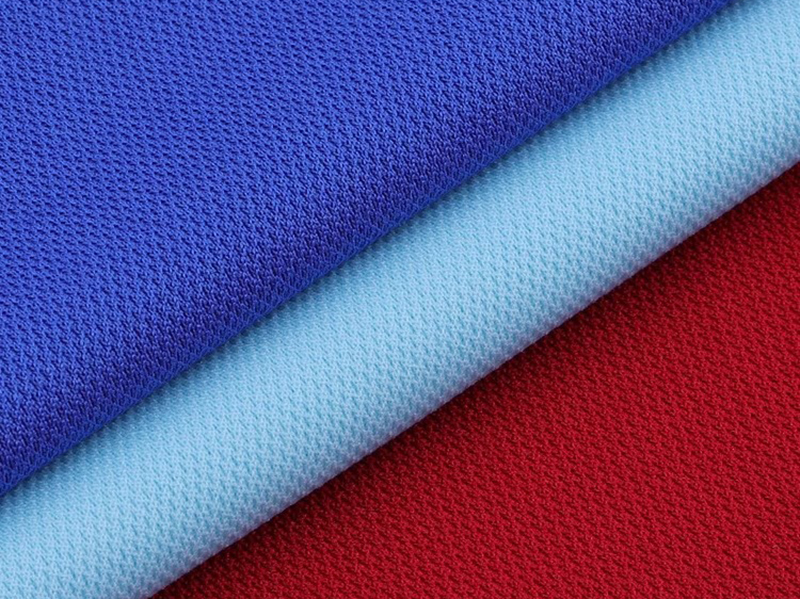
Cheap T-shirts are sometimes made from 100% polyester, especially in sportswear, event products, promotional programs, and low-cost performance styles. Polyester is used because it is durable, quick-drying, wrinkle-resistant, and suitable for certain print applications.
Polyester is not always the first choice for standard everyday casual T-shirts because some customers prefer a more natural hand feel. But when function, easy care, or print compatibility is more important than natural touch, polyester becomes much more attractive.
At Fusionknits, we often see 100% polyester used in:
- Cheap sports tees
- Running event shirts
- Teamwear basics
- Sublimation-print products
- Promotional performance T-shirts
Polyester can also support certain manufacturing goals very well. It is usually stable, dries quickly, and wrinkles less than cotton. For some product types, these advantages matter more than softness or natural feel.
Why polyester is chosen in some cheap T-shirts
Easy maintenance
It is practical for products that need low care and fast drying.
Better technical appearance
It suits sports and activewear better than standard cotton in many cases.
Good for certain print methods
This is important for all-over print or sublimation-driven products.
Polyester in budget T-shirt programs
| Polyester strength | Common concern |
|---|---|
| Good shape retention | Less natural hand feel |
| Quick drying | May feel less breathable depending on construction |
| Easy care | Not always preferred in casual basics |
| Useful in sports and print programs | Different product image from classic cotton tees |
So polyester is common in some cheap T-shirts, but mainly where the product goal supports it.
What fabric construction is most common in cheap T-shirts?
Fiber content matters, but fabric construction also plays a major role in keeping a T-shirt cheap. In most cases, the lowest-cost and most common route is also the simplest one.
The most common fabric construction in cheap T-shirts is single jersey knit. It is widely used because it is efficient to produce, flexible across different fibers, and suitable for standard T-shirt styling.
Single jersey is the classic T-shirt fabric structure for a reason. It is soft enough for casual wear, easy to knit at scale, and compatible with cotton, cotton blends, and polyester. It also fits the visual and comfort expectations most people already have for a T-shirt.
At Fusionknits, cheap T-shirts usually rely on a simple construction package:
- Single jersey body fabric
- Standard rib neckband
- Basic sleeve and bottom hems
- Conventional sewing methods
- Lighter to standard GSM levels
This combination keeps production efficient and reduces unnecessary complexity.
Why single jersey dominates budget T-shirt manufacturing
It is easy to produce
The knitting process is already well established in most factories.
It supports many fiber types
This makes it easy to shift between cotton, blends, and polyester.
It matches market expectations
Customers recognize it as normal T-shirt fabric.
Common construction choices in cheap T-shirts
| Construction choice | Why it is used |
|---|---|
| Single jersey | Standard, flexible, and efficient |
| Basic rib collar | Functional without high trim cost |
| Simple hem finishing | Fast for bulk sewing |
| Lower or standard GSM | Helps reduce fabric cost per garment |
This is one reason cheap T-shirts often feel similar even when their fiber content is different. The shared construction logic creates a similar product base.
What quality trade-offs usually appear in cheap T-shirt materials?
A cheap T-shirt can still serve its purpose well, but low material cost often means certain quality limits are accepted from the beginning.

Cheap T-shirt materials usually involve trade-offs in softness, thickness, shrinkage control, pilling resistance, surface smoothness, and long-term durability. Lower cost often means fewer upgrades in yarn quality, finishing, and quality control.
At Fusionknits, we do not see these trade-offs as surprising. They are part of how a low-cost product is built. But they should still be clear to the buyer before production begins.
A cheap T-shirt may look acceptable on first inspection, but the real difference often appears after washing, repeated wearing, or close handling. This is where the quality level of the yarn, fabric finishing, and construction becomes easier to see.
Common trade-offs in cheap T-shirt materials
Rougher hand feel
Lower-cost yarn and simpler finishing can make the fabric feel less soft.
Lighter body
Some cheap T-shirts use less fabric weight to reduce material cost.
More shrinkage risk
Basic finishing may not control shrinkage as well as better-quality processing.
Less refined surface
The fabric face may look less smooth and more uneven.
Lower durability
The garment may pill faster or lose appearance sooner.
A simple trade-off overview
| Area | Common issue in cheap T-shirts |
|---|---|
| Hand feel | Less soft and less full |
| Fabric surface | Less smooth or more irregular |
| Wash performance | More shrinkage or shape change |
| Durability | Faster wear or pilling |
| Opacity | Thin appearance in lighter colors |
This is why cheap T-shirts should not be judged by fiber content alone. Two shirts made from cotton can still perform very differently depending on the quality level behind the fabric.
How can buyers tell what a cheap T-shirt is really made of?
For buyers, one of the biggest mistakes is treating all cheap T-shirts as the same. In reality, there can be major differences between one low-cost program and another.
Buyers can tell what a cheap T-shirt is really made of by checking the fiber composition, fabric weight, knit structure, hand feel, shrinkage behavior, and print compatibility. Looking at the label alone is not enough to understand the real material quality.
At Fusionknits, we usually advise buyers to ask deeper questions when reviewing low-cost T-shirt materials. The fabric percentage tells part of the story, but it does not show yarn quality, finishing quality, or likely wash performance.
What buyers should check first
- Fiber content
- GSM or fabric weight
- Knit structure
- Surface smoothness
- Hand feel
- Shrinkage control
- Print performance
Useful questions buyers should ask suppliers
Is this 100% cotton, a cotton blend, or polyester?
This defines the basic material logic.
What yarn quality is being used?
A cheap cotton tee made from basic yarn will feel different from one made with better yarn.
What is the fabric weight?
A very light fabric may help the price, but it may also reduce perceived value.
How does the shirt perform after washing?
This is where hidden quality differences often appear.
A simple buyer review table
| Buyer question | Why it matters |
|---|---|
| What is the fiber composition? | Identifies the base material |
| What is the GSM? | Helps judge fabric substance |
| What knit structure is used? | Confirms whether it is standard jersey |
| What shrinkage should be expected? | Reduces quality risk |
| What decoration method will be used? | Makes sure the fabric suits the product design |
Good low-cost sourcing usually depends on understanding what was simplified, what was maintained, and whether that balance fits the product goal.
How should brands choose materials for cheap T-shirts without making the product too weak?
A cheap T-shirt does not need to be badly planned. It just needs a material strategy that matches the real use of the product.
Brands should choose materials for cheap T-shirts by balancing price, hand feel, durability, print needs, and end use. Basic cotton works well for simple casual programs, cotton-poly blends work well for balanced price and stability, and polyester works well for sports, event, or sublimation-based products.
At Fusionknits, we usually start by asking what the cheap T-shirt is meant to do. A giveaway shirt, a retail basic, and a sports event shirt should not all use the same fabric strategy.
Material direction by product goal
For basic casualwear
Basic cotton jersey is often the most natural choice.
For promotional and uniform use
Cotton-polyester blends usually offer the best balance.
For sports and printed event use
Polyester often makes more sense.
What helps keep a cheap T-shirt commercially usable
- Use the right fiber for the target market
- Keep the fabric construction simple
- Avoid extremely low fabric weight if possible
- Check shrinkage and print compatibility early
- Match the material to the actual use of the product
A practical low-cost selection guide
| Product goal | Best material direction |
|---|---|
| Budget everyday tee | Basic cotton jersey |
| Promotional T-shirt | Cotton-poly blend |
| Easy-care uniform tee | Cotton-poly blend |
| Cheap sports tee | Polyester knit |
| Sublimation graphic tee | 100% polyester |
A low-cost T-shirt becomes much more reliable when the material choice is practical instead of random. Even a cheap product needs a clear technical reason behind its fabric selection.
Conclusion
Most cheap T-shirts are made of basic cotton, cotton-polyester blends, or 100% polyester, depending on the target market, end use, and price level. In many low-cost apparel programs, cotton and cotton-poly blends are the most common because they offer a workable balance between comfort, cost, familiarity, and production efficiency.
For buyers, the key question is not simply whether a T-shirt is cheap. The real question is what material compromises were made to achieve that price.
At Fusionknits, we believe a strong low-cost T-shirt starts with clear material logic. When the fabric is chosen to match the product goal, even a budget T-shirt can still perform well in wholesale, promotional, and entry-level retail programs.