Many products are called loungewear today, but not all of them truly belong in the category. Some are actually sleepwear. Some are closer to casual basics. Some are soft activewear with a lounge label added for marketing. This creates confusion for buyers, brands, and customers who want to understand what really counts as loungewear.
Loungewear is clothing designed for relaxed waking wear, with a focus on comfort, ease of movement, soft fabric, and presentable casual styling. It usually includes garments such as lounge sets, knit tops, soft pants, shorts, joggers, robes, wraps, and lightweight layering pieces that are meant for home life, downtime, travel, and low-pressure daily routines rather than for sleep, formalwear, or performance sport.
At Fusionknits, we classify loungewear by purpose first. The category is not defined by one fabric, one silhouette, or one styling detail alone. A product classifies as loungewear when it is built to support comfort during waking hours while still looking intentional enough for modern home-centered and relaxed lifestyle use.
What Is the Core Definition of Loungewear?
The clearest way to classify loungewear is to start with the product’s main use. This helps separate it from sleepwear, activewear, and ordinary casual clothing.
The core definition of loungewear is relaxed clothing made for comfort during waking time, especially at home or in low-pressure settings. It should feel softer and easier than standard daywear, but more presentable and more lifestyle-ready than sleepwear.
This definition matters because many garments can look soft and still not belong to the category. A product becomes loungewear when it is intentionally designed for rest, home life, light movement, or relaxed daily comfort outside of sleep. That purpose changes the fit, the fabric, and the way the garment should perform.
At Fusionknits, loungewear is never classified only by softness. Softness matters, but category purpose matters more. A true loungewear garment should support long wear, easy movement, and a calm visual identity without becoming too sleep-specific or too performance-driven.
Core traits of true loungewear
- Built for waking comfort
- Soft and low-pressure in wear
- Suitable for home and relaxed daily use
- More presentable than sleepwear
- Less structured than standard casualwear
- Not designed mainly for sport or formal use
Why purpose matters most
Category naming affects product development
If the purpose is wrong, the whole material and fit direction can become weak.
It shapes customer expectation
A buyer should know whether the garment is for bed, for home life, or for broader casual use.
It improves collection planning
Clear category logic supports stronger assortments and clearer merchandising.
| Category factor | What it means in loungewear |
|---|---|
| Main purpose | Relaxed waking wear |
| Comfort level | High |
| Styling level | Casual but presentable |
| Body pressure | Low |
Is Comfort Alone Enough to Classify Something as Loungewear?
No. Comfort is essential, but it is not enough by itself. Many categories are comfortable, including pajamas, some activewear, and even loose casual basics. Loungewear needs a broader category identity.
No, comfort alone is not enough to classify something as loungewear. A product must also be designed for relaxed waking use, have enough visual body for daytime wear, and fit into the space between sleepwear and casualwear.
A very soft pajama set may feel comfortable, but it is still sleepwear if it is mainly built for bed. A technical jogger may feel comfortable, but it may still belong more strongly to activewear if it is designed for performance movement. Loungewear requires comfort plus the right use context and the right product balance.
At Fusionknits, this is one of the most important distinctions in product classification. The garment must be comfortable, but it must also support the right kind of comfort.
What else is needed besides comfort
- A waking-use purpose
- Enough opacity and body
- A fit suitable for daily home life
- Styling that is not too sleep-specific
- Practical use outside bed
Why comfort alone creates confusion
Many categories now use soft fabrics
This makes visual differences less obvious.
Product labels can become too broad
Brands sometimes call any soft garment loungewear.
Real usage defines category more clearly
The same level of softness can serve very different functions.
| Product type | Comfortable? | Automatically loungewear? |
|---|---|---|
| Pajamas | Yes | No |
| Lounge set | Yes | Yes |
| Technical jogger | Yes | Not always |
| Casual oversized tee | Sometimes | Not always |
What Types of Garments Usually Classify as Loungewear?
The category is broad, but it still has recognizable product families. These garments are usually designed to work together in a relaxed wardrobe system.
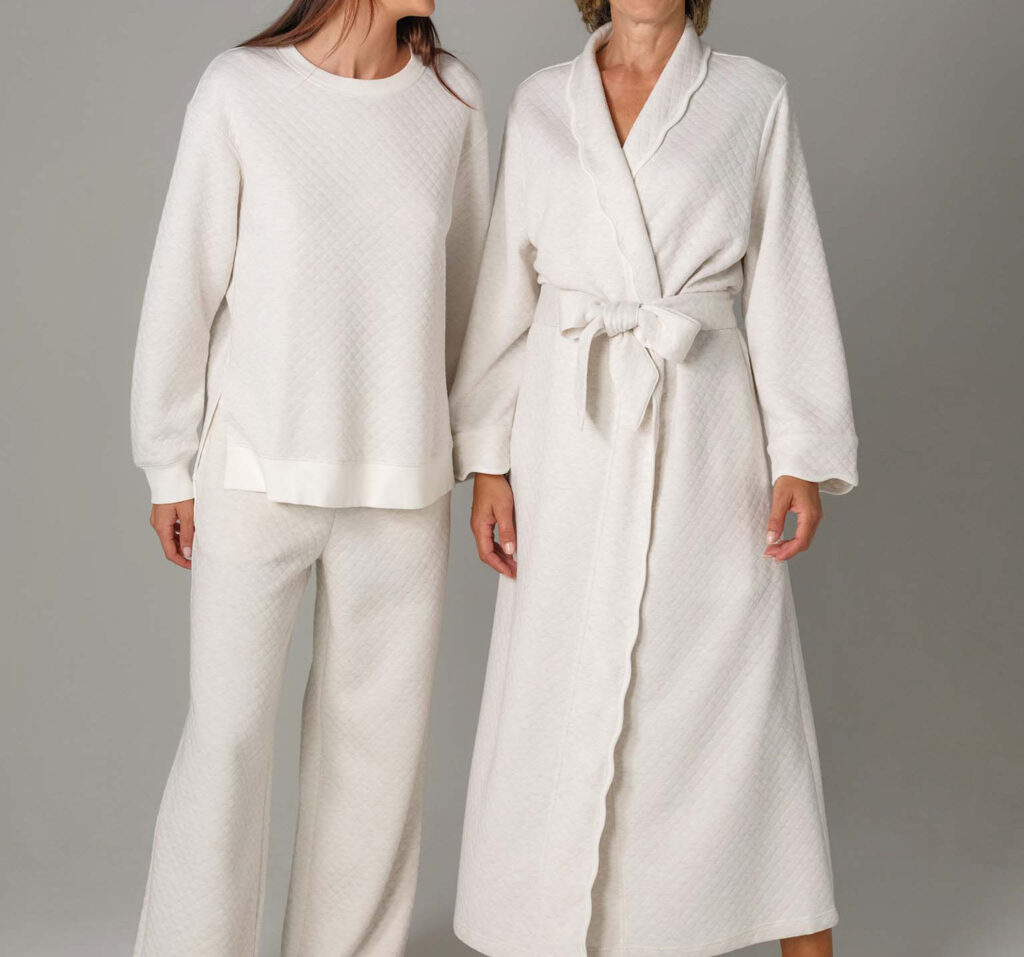
Garments that usually classify as loungewear include matching lounge sets, knit tops, relaxed pants, shorts, joggers, robes, wraps, cardigans, hoodies, sweatshirts, ribbed comfort pieces, and soft layering garments designed for indoor wear, travel, or low-pressure daily routines.
At Fusionknits, these products qualify as loungewear when they support a common function: relaxed daytime comfort with enough structure for repeated waking use. Not every jogger is loungewear, and not every robe is either. The product still needs the right material, fit, and category role.
Common loungewear garment types
- Lounge tops
- Lounge pants
- Matching knit sets
- Lounge shorts
- Soft joggers
- Robes and wraps
- Cardigans
- Hoodies and sweatshirts
- Ribbed lounge dresses in women’s collections
- Lightweight layering pieces
Why these garments fit the category
They are built for comfort-led routines
They support sitting, walking, relaxing, and home-based use.
They work in coordinated wardrobes
Loungewear is often sold as sets or easy mix-and-match pieces.
They hold broader use than sleepwear
The product should feel appropriate beyond the bedroom.
| Garment type | Common loungewear role |
|---|---|
| Matching set | Core lounge uniform |
| Soft jogger | Relaxed lower-body staple |
| Knit top | Easy daily comfort piece |
| Robe or wrap | Layering and recovery comfort |
How Is Loungewear Different from Sleepwear?
This is one of the biggest classification questions because the two categories often overlap visually. But the difference becomes clear when purpose and product behavior are examined.
Loungewear differs from sleepwear because loungewear is made for relaxed waking wear, while sleepwear is made mainly for sleeping. Sleepwear usually prioritizes nighttime softness and low body pressure, while loungewear requires more daytime flexibility, stronger presentation, and broader home or casual use.
A garment can be soft enough for both categories, but that does not make the categories identical. A true loungewear set should be easier to wear around the house for longer periods, more suitable for remote work or downtime, and often more visually stable than a sleep-first product.
At Fusionknits, this distinction affects fabric weight, trim, opacity, recovery, and product naming. A weak classification here often leads to weak product development.
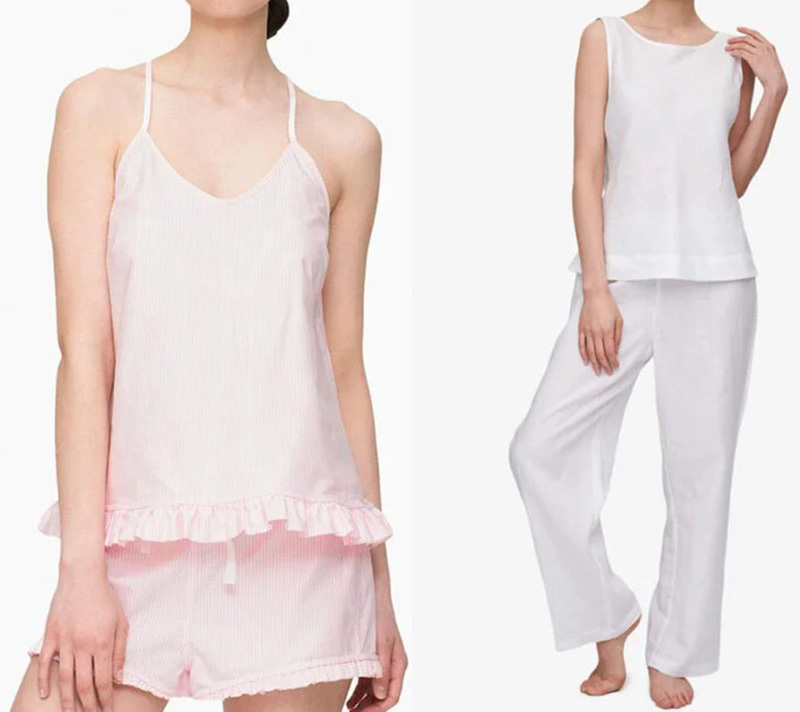
Main differences between sleepwear and loungewear
- Sleepwear is bed-first
- Loungewear is wake-first
- Sleepwear may be lighter and more private
- Loungewear often needs more shape and coverage
- Sleepwear prioritizes sleep comfort
- Loungewear prioritizes relaxed daytime comfort
Why this matters in sourcing and design
The same fabric may not suit both categories equally
A soft modal fabric may work differently depending on the final use.
Daytime wear changes product needs
Loungewear often needs stronger body and better visual confidence.
Category language changes customer expectation
A buyer should not confuse a sleep set with a lounge set.
| Factor | Sleepwear | Loungewear |
|---|---|---|
| Main use | Sleeping | Relaxed waking wear |
| Structure need | Lower | Higher |
| Daytime visibility | Lower | Higher |
| Styling value | Lower | Broader |
What Fabrics Commonly Classify as Loungewear Fabrics?
Loungewear is not defined by one fabric, but certain fabrics are strongly associated with the category because they support softness, recovery, and everyday relaxed wear.
Fabrics that commonly classify as loungewear fabrics include French terry, cotton jersey, modal blends, viscose blends, rib knits, brushed fleece, interlock, double-knit, ponte, and cotton-elastane or viscose-elastane blends. These materials work well because they support softness, ease, and presentable comfort during waking wear.
At Fusionknits, fabric classification always depends on final use. A very light jersey may behave more like sleepwear. A heavier ponte may behave more like premium lounge or soft citywear. Fabric alone does not define the category, but it strongly influences whether the product qualifies as lounge-ready.
Common loungewear fabric families
- Cotton jersey
- French terry
- Brushed fleece
- Modal or viscose blends
- Rib knit
- Interlock
- Double-knit
- Ponte
- Stretch-supported knit blends
What makes a fabric feel more lounge-appropriate
Soft hand feel
The fabric should support comfort over long hours.
Enough body
The garment should not feel too thin or too sleep-specific.
Good recovery
Loungewear often needs stronger shape support than sleepwear.
| Fabric type | Loungewear role |
|---|---|
| French terry | Everyday lounge sets |
| Modal blend | Premium soft lounge |
| Rib knit | Fitted comfortwear |
| Ponte | Structured premium lounge |
Does Fit Help Classify a Garment as Loungewear?
Yes. Fit is a strong category signal because loungewear is supposed to feel easy without looking too private or too careless. The garment should relax on the body, but it should still carry enough visual control.
Yes, fit helps classify a garment as loungewear because true loungewear usually uses relaxed, easy, or softly balanced fits that support movement and comfort while still feeling suitable for waking wear. It should not feel as sleep-specific as pajamas or as performance-focused as activewear.
At Fusionknits, fit is one of the most useful category indicators because it reveals the intended use very quickly. A lounge pant should feel easy in the waist and leg, but it usually still needs better shape than a pajama bottom. A lounge top should not grip like performancewear, but it also should not always collapse like sleepwear.
Common loungewear fit traits
- Relaxed but balanced
- Low body pressure
- Easy movement
- Comfortable waistlines
- Clean but soft silhouette
- Better shape than pure sleepwear
What fit helps a product feel more lounge-specific
A waking-use balance
The product should allow movement around the home, not only rest in bed.
A presentable outline
The garment should not feel too private or too exposed.
Better recovery zones
Waistbands, hems, and body lines often need more stability than sleepwear.
| Fit direction | Strong loungewear signal? |
|---|---|
| Relaxed with shape | Yes |
| Sleep-loose with very soft drape | Sometimes too sleepwear-coded |
| Tight performance fit | Usually no |
| Clean easy fit | Yes |
Can Casual Basics Count as Loungewear?
Sometimes, but not always. This depends on whether the garment was actually designed for lounge use or just happens to be soft and casual.
Some casual basics can count as loungewear if they are designed and worn as part of a comfort-led home or relaxed lifestyle wardrobe, but not every casual basic automatically qualifies. A basic T-shirt or jogger only classifies as loungewear when its purpose, fabric, and fit align with lounge use.
A standard casual tee may be just casualwear. A soft modal tee designed to pair with lounge pants in a coordinated set may classify much more clearly as loungewear. The same applies to joggers, cardigans, and sweatshirts. The category comes from the full product logic, not the garment type alone.
At Fusionknits, this is why loungewear should be seen as a system, not only a list of garment names.
When casual basics count as loungewear
- They are built for relaxed indoor or home-centered wear
- They are part of a coordinated lounge collection
- Their fabric and fit support comfort-led routines
- They are marketed for waking downtime and home life
When they do not classify as loungewear
Standard daywear-only basics
These belong more strongly to casualwear.
Sport-driven comfortwear
These may belong more strongly to activewear.
Fashion basics without lounge purpose
Softness alone does not create category identity.
| Garment | Always loungewear? |
|---|---|
| Basic tee | No |
| Lounge tee in matching set | Often yes |
| Standard jogger | No |
| Soft homewear jogger | Often yes |
Can Loungewear Be Worn Outside the House and Still Be Loungewear?
Yes. In fact, modern loungewear often includes this broader use. The category is no longer locked only inside the bedroom or living room.
Yes, loungewear can be worn outside the house and still classify as loungewear, especially when it is designed for home-to-street flexibility, travel, or relaxed daily errands. What matters is that the garment still keeps its lounge-first comfort identity even if its styling range is broader.
This is one reason the category grew so strongly. Customers now want comfort products that can move across more settings. A strong lounge set may be worn at home, on a flight, in a hotel, or for a quick coffee run. That broader use does not remove it from the category if the original product logic is still lounge-led.
At Fusionknits, we often separate home-only lounge products from lifestyle lounge products, but both still belong inside the wider loungewear family.
Where loungewear may now be worn
- At home
- During remote work
- While traveling
- For quick errands
- In relaxed resort settings
- During casual downtime outside the home
Why outside wear does not cancel the category
The comfort purpose stays the same
The garment is still built for low-pressure relaxed wear.
Modern styling expectations changed
Customers now want more versatile comfortwear.
Product development adapted
Better fabrics and cleaner fits widened the category’s use.
| Wear setting | Still loungewear? |
|---|---|
| Home relaxation | Yes |
| Travel | Yes |
| Quick errands | Often yes |
| Formal office use | Usually no |
How Should Brands and Buyers Decide if a Product Truly Classifies as Loungewear?
The strongest answer comes from asking practical category questions. If the garment passes those questions clearly, it likely belongs in the category. If not, it may belong somewhere else.
Brands and buyers should classify a product as loungewear by asking whether it is designed mainly for relaxed waking wear, whether the fabric supports comfort plus presentation, whether the fit is easy but not sleep-specific, and whether the garment can function in home life or low-pressure daily use. If the answer is yes across these points, the product usually qualifies as loungewear.
At Fusionknits, category discipline matters because it improves sourcing, tech pack accuracy, and brand clarity. Products become much easier to develop when their category role is defined early and honestly.
Useful classification questions
- Is the garment designed mainly for waking comfort?
- Is it more presentable than sleepwear?
- Is it softer and less formal than standard daywear?
- Does the fit support home life and relaxed movement?
- Is the styling broad enough for lounge-based daily routines?
Why this process works
It improves product logic
The garment becomes easier to design correctly.
It reduces category confusion
Customers and buyers understand the product more clearly.
It supports better collection planning
Loungewear lines stay more focused and useful.
| Classification question | Strong lounge answer? |
|---|---|
| Wake-first purpose | Yes |
| Comfort-led fabric | Yes |
| Relaxed but presentable fit | Yes |
| Broader than sleepwear | Yes |
Conclusion
Loungewear is classified by purpose more than by one fabric or one silhouette. A garment counts as loungewear when it is designed for relaxed waking wear, built for comfort, and styled with enough visual control to function in home life, travel, downtime, and low-pressure daily settings. Common loungewear products include lounge sets, knit tops, soft pants, shorts, joggers, robes, cardigans, and layered comfort pieces. Common fabrics include French terry, modal blends, rib knit, cotton jersey, interlock, fleece, and structured soft knits such as ponte. The category sits between sleepwear and casualwear, but it is not the same as either one.
At Fusionknits, we define loungewear through the full product system: use, fabric, fit, and presentation. Comfort alone is not enough.
A product must support waking comfort and a relaxed lifestyle role. Once brands and buyers classify loungewear this way, they can build stronger assortments, choose better materials, and create products that feel more accurate, more wearable, and more commercially effective in the market.