
A tank top looks simple, but fit changes the whole product. The wrong fit can make the garment feel awkward, expose too much, restrict movement, or lose its styling purpose. That is why the question is not only about personal taste. It is also about function, body balance, fabric behavior, and the role the tank top plays in a wardrobe.
A tank top should usually be neither too tight nor too loose. The best fit depends on its purpose. A performance tank often needs a closer fit for movement and body control, while a casual or fashion tank usually works better with a more relaxed shape. In most cases, a tank top should sit close enough to look intentional, but loose enough to stay comfortable and natural.
At Fusionknits, we see tank tops as a fit-sensitive product category. Small changes in chest width, armhole depth, neckline shape, and fabric recovery can completely change how the garment feels and performs. That is why the strongest answer is not one extreme or the other. A good tank top fit should follow the product role.
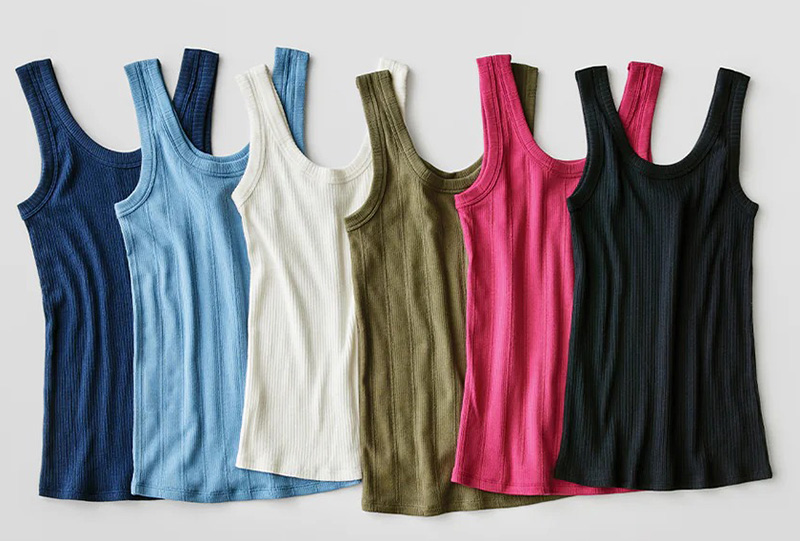
Why Does Tank Top Fit Matter So Much?
A tank top has less structure than many other tops. It has no sleeves to balance proportion, no collar to add shape, and usually fewer design details to distract from fit problems. That makes the fit much more visible.
Tank top fit matters so much because the garment sits close to the upper body and exposes the shoulder, armhole, and chest shape more directly than many other tops. If the fit is wrong, the problem becomes obvious very quickly in both comfort and appearance.
From a manufacturing point of view, tank tops are highly sensitive to pattern balance. A slightly wrong armhole can create gaping. A slightly wrong chest width can make the garment look either strained or shapeless. A weak fabric can also distort the fit after a short period of wear. That is why fit matters more than many buyers first expect.
At Fusionknits, we always treat tank tops as proportion-driven garments. The fabric, neckline, and armhole must work together or the product loses value quickly.
Why fit shows up so clearly in a tank top
- The garment is visually simple
- The shoulder and armhole are exposed
- The chest line is more visible
- There is less layering structure
- Fabric behavior becomes easier to notice
Why this matters in product development
The garment has fewer places to hide mistakes
A weak fit is easy to see right away.
Comfort problems show up fast
If the tank is too tight or too loose, the wearer feels it quickly.
The category depends on balance
A strong tank top should feel easy without looking careless.
| Fit issue | Common result |
|---|---|
| Too tight | Restriction and visible pulling |
| Too loose | Gaping and weak silhouette |
| Balanced fit | Better comfort and cleaner shape |
Should a Tank Top Usually Be Tight?
Sometimes, but not always. A close fit can work very well in certain categories, but it is not the universal answer. The purpose of the garment decides whether a tighter fit makes sense.

A tank top should be tight only when the product is designed for performance use, layering, or a body-conscious style direction. In general casualwear, a tank top should feel close to the body but not tight enough to pull, cling awkwardly, or restrict movement.
A tight tank top can be useful in activewear because it moves with the body and reduces excess fabric. It can also work in shapewear-inspired basics or fitted fashion categories. But if the fit becomes too aggressive, the garment starts to feel uncomfortable and less wearable in daily life.
At Fusionknits, we see that a close fit works best when the fabric has enough stretch and recovery to support it. Tightness without fabric support usually creates a weak product.
When a tighter tank top makes sense
- Performance training tanks
- Layering tanks worn under outer garments
- Fitted women’s basics
- Ribbed body-conscious fashion tanks
- Compression-inspired activewear styles
When tightness becomes a problem
The chest pulls visibly
This makes the product feel strained and lower in quality.
The armhole cuts too close
Movement becomes uncomfortable.
The fabric loses recovery
A tight fit in weak fabric usually stretches out quickly.
| Tight-fit use case | Is it a good fit choice? |
|---|---|
| Gym or training tank | Often yes |
| Fitted layering tank | Often yes |
| Relaxed casual tank | Usually no |
| Weak fabric fashion tank | Risky |
Should a Tank Top Usually Be Loose?
In some categories, yes. A looser tank top can feel more breathable, more relaxed, and more natural in casualwear. But again, too much looseness can weaken the product.
A tank top should be loose when the product is meant for relaxed casualwear, summer comfort, resort styling, or fashion silhouettes that depend on drape and ease. However, it should not be so loose that the armholes gap, the neckline falls awkwardly, or the body loses shape completely.
A relaxed tank top often works well in hot-weather basics, lounge categories, and men’s casualwear. It can also be strong in oversized fashion styling. But a loose tank still needs control. The shoulder width, body length, and armhole depth must all remain balanced.
At Fusionknits, we usually see that loose tanks work best when the fabric has enough body to drape cleanly instead of collapsing.
When a looser tank top makes sense
- Summer casualwear
- Relaxed resortwear
- Lounge and home comfortwear
- Men’s easy basics
- Oversized fashion styling
When looseness becomes too much
The armhole gaps heavily
The garment loses confidence and coverage.
The neckline falls too low
The product may look underdeveloped.
The body hangs without structure
The tank feels more like an unfinished undershirt than a designed garment.
| Loose-fit use case | Is it a good fit choice? |
|---|---|
| Casual summer tank | Often yes |
| Oversized streetwear tank | Often yes |
| Active training tank | Usually less ideal |
| Layering base tank | Usually no |
How Does Fabric Change Whether a Tank Top Should Be Tight or Loose?
Fabric plays a major role because fit cannot be judged separately from material. A close fit in a stretchy rib behaves very differently from a close fit in a rigid cotton jersey. The same is true for loose silhouettes.
Fabric changes whether a tank top should be tight or loose because stretch, recovery, weight, and drape all affect how the fit performs. Stretch rib and elastane blends can support a closer fit, while lighter jersey, slub cotton, or drapier knits often work better in more relaxed tank silhouettes.
At Fusionknits, we never evaluate tank fit without evaluating the fabric system at the same time. A rib tank can feel excellent when body-close because the structure supports the shape. A loose viscose tank can feel beautiful because the drape works with the relaxed silhouette. But reversing those relationships often creates product problems.
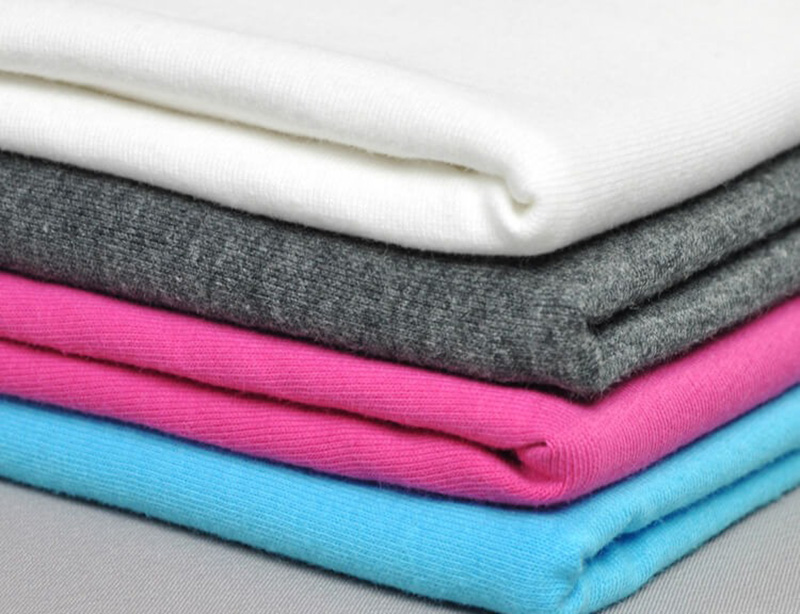
Fabrics that support a closer fit
- Cotton-elastane rib
- Nylon-elastane activewear knit
- Modal stretch rib
- Compact cotton stretch jersey
Fabrics that support a looser fit
- Lightweight cotton jersey
- Slub jersey
- Viscose or modal drapey knits
- Linen-blend knit tanks
- Soft French terry sleeveless cuts in loungewear
Why fabric-fit matching matters
Stretch supports body contact
Without enough flexibility, close fits feel harsh.
Drape supports relaxed silhouettes
A loose tank needs the right fall and movement.
Recovery protects the garment over time
A tank should keep its intended fit after wear and washing.
| Fabric type | Better fit direction |
|---|---|
| Stretch rib | Closer fit |
| Active performance knit | Closer fit |
| Lightweight jersey | Relaxed fit |
| Drapey viscose blend | Looser fit |
Should Men’s Tank Tops Fit Differently from Women’s Tank Tops?
Often yes, because the styling intention and body-shape expectations are not always the same. The core principle is still balance, but the fit direction may change by market and product role.
Yes, men’s and women’s tank tops often fit differently because the category expectations are different. Men’s tanks usually perform well in regular or relaxed fits, especially in casualwear and active basics, while women’s tanks often appear in both close-fitting and relaxed silhouettes depending on whether the product is built for layering, activewear, or fashion use.
For men’s basics, a relaxed but clean fit is often the broadest commercial answer. For women’s basics, both fitted rib tanks and relaxed drapey tanks can perform well. The best fit depends less on gender alone and more on the intended category inside that market.
At Fusionknits, we focus on category role first. A women’s fitted layering tank and a women’s loose beach tank should not be treated the same. The same is true in men’s product development.
Common men’s tank fit directions
- Regular athletic fit
- Relaxed casual fit
- Slightly close performance fit
- Looser gym or summer fit
Common women’s tank fit directions
- Fitted rib basic
- Close active tank
- Relaxed drapey tank
- Cropped body-close fashion tank
- Loose resort or lounge tank
Why fit differs by market
Styling expectations change
Some markets prefer body-conscious basics, others prefer ease.
Layering role changes
A layering tank often needs a cleaner body line.
Category identity changes
Performance, lounge, and fashion tanks all require different fit logic.
| Market | More common fit direction |
|---|---|
| Men’s casual tank | Regular to relaxed |
| Men’s active tank | Close to regular |
| Women’s layering tank | Closer fit |
| Women’s casual tank | Relaxed or fitted depending on style |
How Can You Tell If a Tank Top Is Too Tight?
A tank top becomes too tight when it stops looking intentional and starts looking stressed. The signs are usually visible and physical at the same time.

A tank top is too tight when it pulls across the chest or torso, cuts into the armhole or neckline, limits movement, or feels uncomfortable after short wear. If the fabric looks tense or the body shape is being forced instead of followed, the fit is usually too tight.
At Fusionknits, one of the clearest warning signs is strain at the chest and underarm. Another is when the neckline starts to distort because the body is pushing too hard against the pattern. A strong fitted tank should still feel smooth and flexible, not tense.
Signs a tank top is too tight
- Horizontal pulling lines across the chest
- Armhole cutting into the underarm
- Neckline distortion
- Fabric over-cling without recovery
- Discomfort when lifting the arms
- Hem riding up too easily
Why over-tight tanks underperform
They reduce comfort
The wearer feels pressure too quickly.
They make fabric weakness more visible
Poor recovery shows up faster.
They limit repeat wear
A tank that feels too tight often becomes less useful in real life.
| Tightness sign | What it suggests |
|---|---|
| Pull lines | Not enough width |
| Armhole pressure | Poor armhole balance |
| Riding hem | Too much body strain |
| Distorted neckline | Incorrect proportion |
How Can You Tell If a Tank Top Is Too Loose?
Loose can feel comfortable, but beyond a certain point it stops looking controlled. A loose tank should still have a clear relationship to the body.
A tank top is too loose when the armholes gap heavily, the neckline falls away from the body, the shoulder width feels unstable, or the body hangs without any visual structure. If the tank looks accidental rather than intentionally relaxed, it is usually too loose.
At Fusionknits, armhole gaping is one of the biggest problems in loose tanks. The product may look fine on a hanger but fail in movement. The same is true when the shoulder seam sits too far off the body or the neckline drops without enough support.
Signs a tank top is too loose
- Large armhole gaps
- Falling neckline
- Shoulder line slipping outward
- Excess body swing without control
- Visible underlayer exposure in unwanted areas
- Weak drape from low-density fabric
Why over-loose tanks can feel weak
They lose confidence
The garment stops looking designed.
They reduce styling control
Layering becomes harder and the silhouette weaker.
They can create fit inconsistency
The same tank may sit differently on different bodies in an unhelpful way.
| Loose-fit sign | What it suggests |
|---|---|
| Armhole gaping | Too much opening or width |
| Falling neckline | Weak proportion |
| Shoulder shift | Poor upper-body balance |
| Excess body collapse | Wrong fabric-fit match |
What Is the Best Overall Fit for Most Tank Tops?
Across most categories, the strongest answer is balance. The best tank top fit usually stays close enough to feel intentional, but relaxed enough to remain wearable and flattering.
The best overall fit for most tank tops is usually a balanced fit that sits near the body without clinging too tightly and allows enough ease for comfort and movement. In broad commercial terms, slightly close or regular-relaxed fits tend to outperform extreme tightness or extreme looseness.
This balanced fit works because it protects the product from both major risks. It does not feel restrictive, and it does not feel careless. It also adapts well across several categories, from layering tanks to casual summer tops.
At Fusionknits, this kind of balance usually creates the best long-term commercial value because it suits more customers and more wardrobe uses.
What balanced tank top fit usually looks like
- Smooth chest line without strain
- Armholes that stay close without cutting in
- Neckline that sits cleanly
- Enough body ease for movement
- Controlled body line without excess collapse
Why balance is the strongest answer
It increases comfort
The wearer gets ease without excess fabric.
It improves styling
The tank works alone or under layers more easily.
It broadens customer appeal
Extreme fits usually suit narrower audiences.
| Fit direction | Commercial strength |
|---|---|
| Slightly close | Strong |
| Regular balanced | Strongest broad use |
| Very tight | More niche |
| Very loose | More category-specific |
How Should Brands Decide Whether Their Tank Tops Should Be Tight or Loose?
The right answer comes from product role, not from guesswork. A brand should begin with function, then match the fit to fabric and market.
Brands should decide whether their tank tops should be tight or loose by asking what the product is meant to do. Performance tanks should usually fit closer, relaxed summer tanks should usually fit looser, and broad-market basics should usually sit in a balanced middle range. The fit should follow function, fabric, and customer expectation.
At Fusionknits, we usually recommend building tank top fit around clear product families. One brand may need a fitted rib tank, a regular casual tank, and a relaxed resort tank all in the same collection. The mistake is not having different fits. The mistake is failing to define them clearly.
Better fit-planning questions for brands
- Is the tank for performance, layering, or casual wear?
- Does the fabric support a close fit or a draped fit?
- Is the customer expecting body-conscious or relaxed styling?
- Will the tank be worn alone or under layers?
- How much movement should the product support?
Why this approach works
It improves product accuracy
The fit begins to match the actual use of the garment.
It reduces fitting mistakes
The pattern can be built with clearer intention.
It strengthens the collection
Different tank roles become easier to understand and sell.
| Product role | Better fit choice |
|---|---|
| Active tank | Closer fit |
| Layering tank | Slightly close fit |
| Casual summer tank | Regular to relaxed fit |
| Resort or fashion tank | Relaxed fit |
Conclusion
A tank top should usually be neither too tight nor too loose. The best fit depends on the purpose of the product, the fabric, and the customer it is designed for. Closer fits work best in performance tanks, layering tanks, and fitted rib basics when the fabric has enough stretch and recovery to support the shape. Looser fits work best in casual summer tanks, resortwear, loungewear, and relaxed fashion silhouettes when the fabric has enough body or drape to stay controlled. In most commercial categories, the strongest answer is a balanced fit that stays close enough to look intentional and loose enough to stay comfortable.
At Fusionknits, we see tank top fit as a product logic decision rather than a trend-only decision. A good tank top should move well, feel natural, and hold its shape in real wear.
When fit, fabric, armhole, and neckline are aligned correctly, the garment becomes much easier to wear, easier to style, and more reliable as a long-term product. That is what makes a tank top feel truly right.