Many fashion startups and apparel brands struggle to find reliable clothing manufacturers. A factory may offer low prices online, but poor communication, inconsistent quality, delayed shipping, or weak production capabilities can quickly damage a brand’s growth.
To find a factory to make your clothes, you should define your product category, research manufacturers carefully, verify factory capabilities, request samples, evaluate communication quality, and build long-term partnerships with reliable suppliers that match your brand goals.
At Fusionknits, we work with apparel brands across activewear, streetwear, loungewear, and casualwear categories. Finding the right clothing factory is not only about pricing. It is about product quality, production stability, communication efficiency, and long-term scalability.
Why Is Choosing The Right Clothing Factory So Important?
Your manufacturer directly affects product quality and customer satisfaction.
The right clothing factory helps ensure stable quality, reliable delivery, professional communication, and scalable production capacity, while the wrong factory can create delays, defects, and long-term business problems.
Manufacturing decisions strongly affect brand reputation.
Product Quality Depends On Factory Expertise
A professional clothing factory controls:
- Fabric quality
- Stitching consistency
- Fit accuracy
- Printing durability
- Garment finishing
Weak production control quickly creates customer complaints.
Delivery Delays Damage Brand Growth
Late shipments may cause:
- Missed selling seasons
- Inventory shortages
- Retail fulfillment problems
Reliable production scheduling is critical.
Communication Quality Matters
Many startups underestimate how important communication is.
Good factories provide:
- Fast responses
- Technical guidance
- Clear production updates
- Problem-solving support
Strong communication reduces production risks.
Long-Term Partnerships Improve Stability
Reliable suppliers help brands improve:
- Product consistency
- Development speed
- Manufacturing efficiency
Strong partnerships become increasingly valuable as brands grow.
At Fusionknits, long-term manufacturing cooperation is one of the most important parts of stable apparel production.
What Type Of Clothing Factory Do You Need?
Different factories specialize in different product categories.

You should choose a clothing factory based on your product category, fabric requirements, order volume, and customization needs.
Not all factories can produce every garment type professionally.
Activewear Factories Focus On Technical Fabrics
Activewear manufacturers usually specialize in:
- Stretch fabrics
- Compression garments
- Moisture-wicking materials
- Performance sewing techniques
Technical expertise matters heavily in sportswear.
Streetwear Factories Focus On Heavyweight Garments
Streetwear production often requires:
- Heavy fleece fabrics
- Oversized fit development
- Garment washing
- Puff printing or embroidery
Factories must understand fashion trends and fit engineering.
Cut-And-Sew Factories Support Custom Development
Cut-and-sew manufacturers usually provide:
- Custom patterns
- Fabric sourcing
- OEM development
- Technical sampling
This works well for brands needing unique products.
Private Label Factories Offer Faster Launching
Private label factories allow brands to customize:
- Logos
- Packaging
- Colors
- Labels
This model usually offers:
- Lower MOQ
- Faster production
- Simpler development process
Where Can You Find Clothing Factories?
There are many ways to search for manufacturers today.
Clothing factories can be found through trade shows, sourcing platforms, Google searches, LinkedIn, referrals, and direct factory websites.
Each sourcing method has advantages and disadvantages.
Alibaba Remains One Of The Most Common Platforms
Many buyers search manufacturers through Alibaba because it offers:
- Large factory databases
- Product catalogs
- Supplier communication tools
However, buyers still need careful supplier verification.
Google Search Helps Find Independent Factories
Searching directly through Google helps brands find:
- Independent manufacturers
- OEM specialists
- Boutique production factories
Direct factory websites often provide more detailed company information.
Trade Shows Allow Face-To-Face Meetings
Apparel exhibitions help buyers:
- Evaluate product quality
- Discuss development directly
- Build supplier relationships
Trade shows remain highly effective for serious sourcing.
LinkedIn Helps Verify Companies
LinkedIn can help evaluate:
- Company size
- Employee structure
- Industry experience
Professional online presence improves supplier credibility.
At Fusionknits, many long-term clients initially discover us through Google search, trade shows, and B2B sourcing platforms.
How Can You Verify If A Factory Is Legitimate?
Supplier verification is one of the most important sourcing steps.
You should verify a clothing factory by reviewing business licenses, factory certifications, production photos, customer communication quality, and sample development capability.
Many sourcing mistakes happen because buyers skip verification.
Ask For Factory Certifications
Common certifications include:
- BSCI
- WRAP
- OEKO-TEX
- GOTS
These help verify compliance and quality standards.
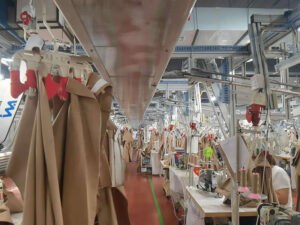
Request Factory Photos And Videos
Professional factories should provide:
- Production line photos
- Sewing department videos
- Fabric warehouse images
- Quality inspection procedures
Transparency increases trust.
Evaluate Communication Quality
Reliable factories usually provide:
- Clear answers
- Fast response time
- Technical knowledge
Poor communication often creates future production problems.
Check Sampling Capability
Professional factories should support:
- Pattern development
- Fit adjustments
- Fabric sourcing
- Technical revisions
Strong sampling ability usually reflects stronger production capability.
Why Are Samples So Important Before Bulk Production?
Sampling helps identify production issues early.
Samples allow brands to evaluate fit, fabric quality, stitching, printing, and overall construction before committing to bulk production.
Skipping sampling increases production risk significantly.
Fit Testing Prevents Size Problems
Sample fitting helps evaluate:
- Body proportions
- Sleeve length
- Waist measurements
- Stretch recovery
Proper fit development improves customer satisfaction.
Fabric Evaluation Matters
Fabric testing should include:
- Softness
- Stretch
- Weight
- Breathability
- Shrinkage
Material quality strongly affects final product performance.
Printing And Embroidery Need Inspection
Decoration quality affects:
- Durability
- Visual appearance
- Brand perception
Weak printing may crack or fade quickly.
Samples Improve Communication
Sampling helps factories and brands align on:
- Product expectations
- Construction details
- Finishing quality
This reduces misunderstandings during bulk production.
At Fusionknits, sample development is treated as a critical step before mass production begins.
How Much Should You Expect To Pay A Clothing Factory?
Manufacturing costs vary heavily by product type.
Clothing manufacturing costs depend on fabric quality, garment complexity, order quantity, customization level, and production country.
Pricing should never be evaluated only by the cheapest offer.
Fabric Quality Changes Pricing
Premium fabrics such as:
- Organic cotton
- Heavy fleece
- Technical stretch knits
cost significantly more than basic materials.
Complex Garments Require More Labor
Products with:
- Embroidery
- Multiple panels
- Technical seams
- Garment washing
increase labor costs.
MOQ Strongly Affects Pricing
Larger orders usually reduce:
- Fabric cost
- Printing setup cost
- Unit labor cost
Low MOQs generally increase per-piece pricing.
Shipping And Packaging Matter Too
Many brands forget to calculate:
- Freight cost
- Import duties
- Packaging expenses
These affect total sourcing cost significantly.
Should You Choose Local Or Overseas Clothing Factories?
Both sourcing models have advantages.
Overseas factories usually offer lower production costs and larger manufacturing capacity, while local factories may provide faster communication and shorter shipping times.
The right choice depends on brand priorities.
Overseas Factories Often Offer Better Pricing
Countries such as:
- China
- Vietnam
- Bangladesh
usually provide lower production costs because of established textile industries.
Local Factories May Improve Communication
Domestic suppliers can simplify:
- Time zone coordination
- Sampling speed
- Shipping timelines
This may help smaller startups.
Production Scale Matters
Large overseas factories often support:
- Bulk production
- Technical garment development
- Fabric sourcing integration
Scalability becomes important as brands grow.
Product Category Influences Factory Choice
Technical activewear or streetwear may require specialized overseas manufacturing expertise.
At Fusionknits, many international brands choose overseas manufacturing because of stronger fabric sourcing networks and advanced apparel production capability.
What Red Flags Should You Avoid When Choosing A Factory?
Some warning signs appear early during supplier communication.
Common factory red flags include poor communication, unrealistic pricing, weak sample quality, lack of transparency, and inconsistent production information.
Ignoring these signals often creates expensive problems later.
Extremely Cheap Pricing Is Risky
Very low pricing may indicate:
- Poor fabrics
- Weak stitching quality
- Outsourced production
- Unstable business operations
Low prices often create hidden long-term costs.
Slow Communication Creates Future Problems
Factories that respond slowly during early discussions may struggle even more during production.
Communication speed matters heavily.
Weak Samples Suggest Weak Production
Poor sample quality often predicts:
- Bulk production inconsistency
- Measurement problems
- Construction issues
Sampling reveals real factory capability.
Factories Without Technical Knowledge Are Dangerous
Reliable manufacturers should understand:
- Fabric behavior
- Pattern engineering
- Printing methods
- Production timelines
Technical support improves product quality.
How Can You Build A Strong Relationship With Your Factory?
Strong supplier relationships improve manufacturing success.
Long-term factory relationships improve communication efficiency, production stability, product consistency, and overall business growth.
Partnerships work better than transactional sourcing.
Clear Communication Helps Both Sides
Brands should provide:
- Detailed tech packs
- Accurate measurements
- Production timelines
- Clear expectations
Professional communication reduces mistakes.
Stable Orders Improve Cooperation
Factories prioritize buyers who provide:
- Consistent order volume
- Long-term planning
- Predictable business
Stability improves production support.
Respect Production Timelines
Realistic scheduling helps factories maintain:
- Better quality control
- More organized production
- On-time delivery
Last-minute pressure often creates mistakes.
Collaborative Development Creates Better Products
Strong factory relationships help improve:
- Product innovation
- Fabric sourcing
- Fit engineering
- Cost optimization
At Fusionknits, long-term manufacturing cooperation helps brands scale more efficiently while maintaining stable quality standards.
Conclusion
Finding a factory to make your clothes requires much more than searching for the cheapest supplier. Product quality, communication, technical expertise, sampling ability, and long-term reliability all play major roles in successful apparel manufacturing.
At Fusionknits, clothing manufacturing focuses on fabric quality, fit engineering, production consistency, and professional communication. Careful supplier evaluation and strong factory partnerships help brands create better apparel products while reducing sourcing risks and improving long-term business stability.