A tank top looks simple, but the material behind it changes everything. Two tank tops can look similar on a screen and still feel completely different in real wear. One may feel soft and breathable. Another may cling too much, stretch out, or lose shape after washing. That is why the real answer is not only “fabric.” The better answer is which fibers and knit structures are used, and why they are chosen.
A tank top is usually made of cotton, cotton blends, rib knit, jersey knit, modal, viscose, polyester, nylon, or elastane blends depending on the product’s purpose. The exact material depends on whether the tank is meant for layering, activewear, casual summer wear, lounge use, or fashion styling.
At Fusionknits, we see tank tops as one of the most fabric-sensitive apparel categories. Because the garment is simple and close to the body, the material has a much bigger effect on comfort, fit, and long-term quality than many buyers expect. That is why a good tank top starts with the right fabric choice.
Why Does Material Matter So Much in a Tank Top?
A tank top has very little construction to hide behind. There are no sleeves, almost no layered structure, and usually very few extra design details. That means the fabric carries most of the product’s value.
Material matters so much in a tank top because it controls softness, stretch, breathability, drape, opacity, and shape retention. Since the garment sits directly on the body and exposes the shoulder and upper chest, fabric quality becomes one of the most visible and most wearable parts of the whole product.
At Fusionknits, we often explain that a tank top is simple only on the outside. In production, it is a precision garment. If the fabric is too weak, the neckline may lose shape. If it is too stiff, the tank may feel uncomfortable. If it is too thin, the product may feel cheap or too revealing. Material choice decides almost everything.
Why fabric matters more in tanks than many buyers expect
- The garment sits close to the skin
- The silhouette is very simple
- Neckline and armhole depend on fabric behavior
- Shape retention is easy to notice
- Comfort is one of the main reasons customers buy tanks
Why this matters in development
The fabric becomes the product identity
A rib tank, a jersey tank, and a performance tank feel like different products even when their pattern is similar.
Fit and material must work together
A fitted tank needs different support than a relaxed summer tank.
| Material role | Why it matters |
|---|---|
| Softness | Affects first-touch comfort |
| Recovery | Protects long-term shape |
| Breathability | Supports warm-weather wear |
| Drape | Changes silhouette and styling |
Is Cotton the Most Common Tank Top Material?
Yes, in many everyday categories, cotton is still the most common and most trusted tank top material. It stays popular because it feels natural, breathable, and easy to wear.

Yes, cotton is one of the most common materials used for tank tops because it is soft, breathable, familiar, and versatile. Cotton works especially well in casual basics, summer tanks, layering tanks, and many rib or jersey constructions.
At Fusionknits, cotton remains one of the strongest core fibers in tank top development because it supports everyday comfort well. Customers usually trust it, and it performs naturally in warm-weather basics and close-contact garments.
Why cotton is used so often
- Soft natural hand feel
- Good breathability
- Broad market trust
- Easy care in many categories
- Strong fit with daily basics
Where cotton works best
Casual basics
Cotton tanks are easy to wear and easy to style.
Layering tanks
The fiber feels comfortable against the skin under other garments.
| Material | Best product role |
|---|---|
| Cotton | Everyday basic tank |
| Cotton jersey | Soft casual tank |
| Cotton rib | Fitted layering tank |
What Is the Difference Between Rib Knit and Jersey Knit Tanks?
This is one of the most important questions because many tank tops use the same fiber, but the knit structure still changes the entire product.
The difference between rib knit and jersey knit tanks is that rib knit has a textured vertical structure with more natural stretch and body-following support, while jersey knit is flatter, smoother, and often softer or more fluid in appearance. Rib tanks are usually stronger for fitted basics, while jersey tanks are often stronger for casual or relaxed use.
At Fusionknits, we always separate fiber from knit structure when discussing tanks. A cotton rib tank and a cotton jersey tank are not the same product, even if both are mostly cotton.
Why rib knit is so common in tank tops
- Better natural stretch
- Cleaner body-skimming fit
- Strong everyday basic identity
- Better support for fitted silhouettes
Why jersey knit is also important
It feels smoother
Jersey often gives a softer and simpler casualwear mood.
It works in looser tanks
Relaxed summer tanks often rely on jersey drape more than rib structure.
| Knit type | Main product effect |
|---|---|
| Rib knit | Fitted and structured |
| Jersey knit | Smooth and relaxed |
Are Many Tank Tops Made With Stretch Blends?
Yes. Stretch blends are very common, especially in fitted tanks, activewear tanks, and layering pieces. A little stretch often improves comfort and recovery.
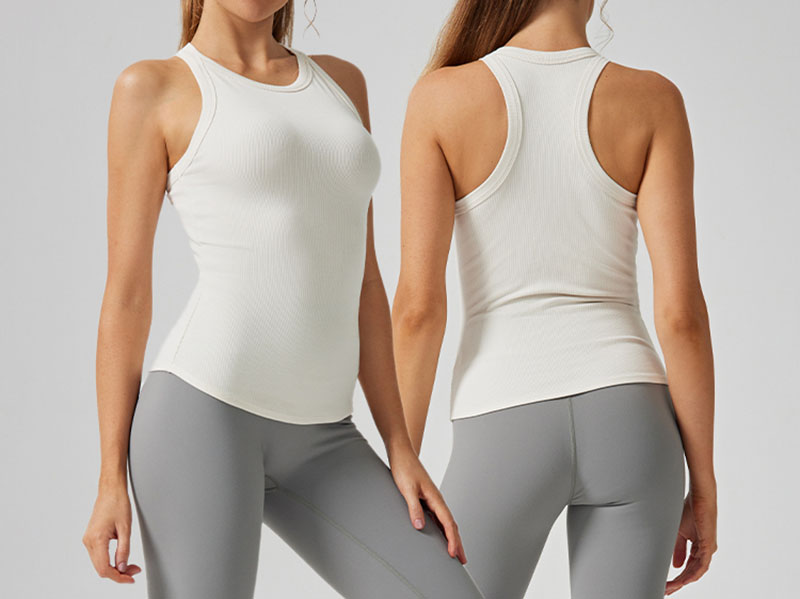
Yes, many tank tops are made with stretch blends such as cotton-elastane, modal-elastane, polyester-elastane, or nylon-elastane. These blends help the tank move better with the body, recover after wear, and hold a cleaner fitted shape.
At Fusionknits, stretch content is often one of the most important tools in tank top development. A fitted tank that has no recovery can quickly lose shape. A small amount of elastane often makes the product much more wearable.
Why stretch is added to tank fabrics
- Better shape retention
- Better movement
- More body-following fit
- Less distortion after wear
- Better neckline and armhole stability
When stretch matters most
Fitted tanks
A body-skimming shape usually needs support.
Active tanks
Movement and recovery matter even more in sports use.
| Blend type | Best use |
|---|---|
| Cotton-elastane | Fitted daily tank |
| Modal-elastane | Soft stretch tank |
| Nylon-elastane | Performance tank |
Are Some Tank Tops Made of Modal or Viscose?
Yes. Modal and viscose are common in tanks that aim for extra softness, drape, and smooth skin feel. These fibers are especially useful in loungewear, women’s basics, and fluid fashion tanks.
Yes, some tank tops are made of modal or viscose because these fibers create a softer, smoother, and more fluid garment. They are often used when the tank needs drape, gentle skin feel, or a more elevated soft-basic identity.
At Fusionknits, modal and viscose blends are often selected for tanks that should feel softer and more refined than standard cotton basics. They can make a simple tank feel more luxurious, but they also need the right construction and care.
Why modal and viscose are used
- Smooth hand feel
- Softer drape
- More fluid silhouette
- Comfortable direct-skin wear
- More elevated casual feel
What buyers should watch carefully
Recovery still matters
A very soft fabric still needs enough support to hold shape.
Care behavior changes
These blends may need gentler treatment than basic cotton jerseys.
| Material | Main effect |
|---|---|
| Modal blend | Soft and refined |
| Viscose blend | Smooth and drapey |
| Cotton-modal blend | Balanced softness and comfort |
Are Activewear Tanks Made From Different Materials?
Yes, very often. Activewear tanks are usually built for movement, sweat handling, and recovery, so they do not rely on the same fabric logic as casual tanks.

Yes, activewear tanks are often made from polyester, nylon, elastane, or performance-knit blends instead of basic cotton fabrics. These materials are used because they support stretch, faster drying, body movement, and more stable athletic performance.
At Fusionknits, this is one of the clearest category shifts in tank development. A workout tank is not only a sleeveless top. It is a performance garment, and the fabric must support that function.
Why active tanks use different fibers
- Better movement support
- Faster drying
- Better recovery after stretch
- Better shape in repeated active use
- Stronger fit with training categories
Why cotton is not always the best choice here
Sweat handling matters more
Performance categories often need lower moisture retention.
Movement is heavier
The tank must stay stable during exercise.
| Material | Best role |
|---|---|
| Polyester blend | Sport and training tank |
| Nylon-elastane | Studio and active tank |
| Cotton | Better for casual everyday tank |
What About Seamless Tank Tops?
Some tanks are made in seamless or near-seamless constructions, especially in activewear, shaping basics, and comfort-led categories. In these products, the material story includes both the fiber and the production method.
Seamless tank tops are usually made from stretch yarn blends such as nylon, polyester, elastane, or mixed synthetic performance yarns that can support circular or seamless knitting. These tanks are designed to feel smooth, flexible, and low-pressure on the body.
At Fusionknits, seamless tanks are usually treated as a separate technical category because the construction method changes how the garment performs. They often feel smoother and more body-hugging than standard cut-and-sew tanks.
Why seamless tanks are used
- Less seam irritation
- Cleaner body fit
- More stretch and flexibility
- Strong in active and shaping categories
Where seamless tanks work best
Studio and activewear
The smoother construction supports movement well.
Body-conscious basics
The garment sits closer to the body with fewer interruptions.
| Tank type | Material direction |
|---|---|
| Seamless tank | Nylon or polyester stretch yarns |
| Standard cut-and-sew tank | Cotton, rib, jersey, or blends |
So, What Is a Tank Top Usually Made Of?
The most accurate answer is that tank tops are usually made from different fabrics depending on product role, but a few materials appear again and again because they consistently work well.
A tank top is usually made of cotton, rib knit, jersey knit, cotton-elastane blends, modal blends, viscose blends, polyester performance knit, or nylon-elastane depending on whether it is built for basics, layering, activewear, lounge use, or fashion. Cotton and cotton blends remain the most common everyday options, while synthetics and stretch blends are more common in performance tanks.
At Fusionknits, we usually guide buyers by category first. A fitted rib tank, a soft lounge tank, and a training tank should not all use the same material logic. Once the product role is clear, the right fabric choice becomes much easier.
Common tank-top materials by category
- Everyday basic tank: cotton jersey or cotton rib
- Fitted layering tank: cotton-elastane rib
- Soft lounge tank: modal or viscose blend
- Active tank: polyester or nylon stretch knit
- Fashion tank: depends on neckline, drape, and silhouette goal
Why this category-based answer works best
It respects real product purpose
The material should support how the tank will actually be worn.
It improves sourcing decisions
Fabric choice becomes more practical and less random.
| Tank category | Common material |
|---|---|
| Basic tank | Cotton or cotton rib |
| Fitted tank | Stretch rib blend |
| Lounge tank | Modal or viscose blend |
| Active tank | Performance knit blend |
Conclusion
A tank top is usually made of cotton, cotton blends, rib knit, jersey knit, modal, viscose, polyester, nylon, or elastane blends depending on the product’s purpose.
Cotton remains one of the most common materials because it is breathable, soft, and easy to trust in everyday wear. Rib knit is especially common in fitted basics because it supports body-skimming shape. Jersey is common in softer and more relaxed tanks. Modal and viscose blends add softness and drape. Polyester, nylon, and elastane blends are stronger in activewear and performance tanks.
At Fusionknits, we believe the best answer is always product-led. A tank top is not defined by one fiber name alone. It is defined by the right combination of fiber, knit structure, stretch, drape, and fit support. When brands understand what the tank is meant to do, they choose better materials and build much stronger products.