Many consumers ask whether Levi's products are manufactured in China. While Levi's is a global brand sourcing garments from multiple countries, production locations vary depending on style, fabric, and regional market demand. China is one of the countries that produce Levi's garments, but it is not the exclusive manufacturing hub.
At Fusionknits, we note that Levi's operates a complex global supply chain that includes China, India, Vietnam, Bangladesh, and other regions. Sourcing from multiple countries allows the brand to optimize production costs, logistics, and lead times while maintaining quality standards and consistency.
As a professional apparel manufacturer, understanding where Levi's jeans and other products are made provides insight into global garment production strategies and quality control measures.
Why Levi's manufactures in China
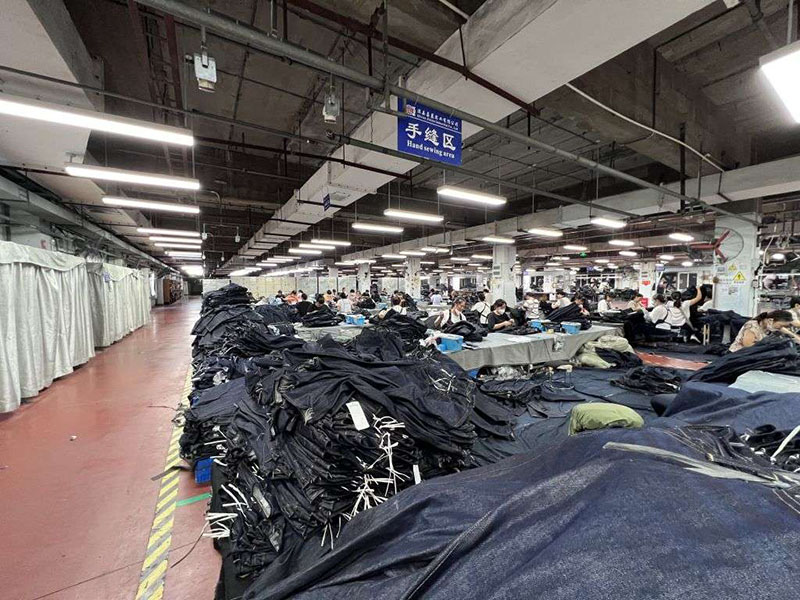
China is a key manufacturing location for Levi's due to established textile infrastructure, skilled labor, and cost efficiencies. Factories in China can produce large volumes of denim, manage complex washing processes, and handle detailed stitching efficiently.
At Fusionknits, we observe that China’s advanced manufacturing capabilities allow Levi's to maintain consistent quality, particularly for popular styles that require precision in stitching, finishing, and fabric handling. High-volume production in China helps meet global demand for Levi's products.
Benefits of Chinese manufacturing
| Factor | Advantage |
|---|---|
| Skilled labor | Handles denim finishing, embroidery, and washes |
| High production capacity | Meets large-scale global demand |
| Cost efficiency | Competitive labor and operational costs |
| Supply chain integration | Access to fabric and component suppliers |
Other countries producing Levi's
Levi's sources garments from multiple countries to balance production costs, speed, and regional demand. In addition to China, Levi's products are manufactured in:
- India: For cotton-rich denim and casual styles
- Vietnam: For performance fabrics and casual jeans
- Bangladesh: For volume production and basic apparel lines
- Mexico and the United States: For premium denim and specialty collections

At Fusionknits, we note that using multiple production locations allows Levi's to optimize pricing, ensure supply chain resilience, and meet regional consumer expectations.
Production by region
| Country | Focus | Product Examples |
|---|---|---|
| China | High-volume, mid-range denim | Classic jeans, casual shirts |
| India | Cotton-rich garments | Summer jeans, cotton polos |
| Vietnam | Performance and blended fabrics | Activewear, lightweight jeans |
| Bangladesh | Basic apparel lines | Mass-produced denim and tops |
| USA | Premium collections | Limited edition or high-end denim |
How manufacturing location affects quality
While the country of manufacture influences labor and material costs, Levi's maintains consistent quality standards across all regions. Factories undergo strict quality control, adhere to Levi's specifications, and use standardized fabrics, washes, and stitching methods.
At Fusionknits, we emphasize that quality depends on fabric selection, construction, and finishing, not just geography. Whether produced in China, India, or the US, Levi's garments meet global standards for fit, durability, and appearance.
Quality factors
| Factor | Impact |
|---|---|
| Fabric sourcing | Ensures consistent denim quality |
| Stitching standards | Maintains strength and fit |
| Washing/finishing | Achieves desired softness and style |
| QC protocols | Prevents defects and maintains brand reputation |
Why consumers care about origin
Consumers may inquire about manufacturing location due to concerns about labor standards, fabric quality, and product authenticity. Understanding that Levi's operates globally helps reassure buyers that quality is maintained regardless of production location.
At Fusionknits, we note that transparency in sourcing and consistent branding are key to consumer trust. The country of manufacture is less important than adherence to quality standards, ethical labor practices, and product consistency.
Consumer considerations
| Concern | How Levi's addresses it |
|---|---|
| Labor practices | Compliance with international labor standards |
| Fabric quality | Standardized sourcing for all regions |
| Product authenticity | Factory audits and traceable production lines |
| Consistency | Uniform specifications across all countries |
How global sourcing benefits Levi's
Producing in multiple countries allows Levi's to reduce costs, improve logistics, and meet regional demand efficiently. This strategy also provides flexibility to respond to seasonal trends, market fluctuations, and supply chain disruptions.

At Fusionknits, we recognize that diversified production enhances operational resilience and ensures product availability worldwide. Leveraging factories in China and other countries allows Levi's to balance cost-efficiency with consistent quality.
Global sourcing benefits
| Benefit | Example |
|---|---|
| Cost optimization | Manufacturing in lower-cost regions |
| Supply flexibility | Adjust production based on regional demand |
| Lead time reduction | Proximity to key markets |
| Quality consistency | Standardized processes across locations |
Conclusion
Levi's is not exclusively made in China, but China is an important manufacturing hub for mid-range denim and high-volume products. Other countries, including India, Vietnam, Bangladesh, and the US, also produce Levi's garments, depending on style, fabric, and market demand.
At Fusionknits, we view Levi's global manufacturing strategy from a professional apparel perspective. By leveraging multiple countries, the brand balances cost, quality, and delivery efficiency while maintaining consistent specifications for fit, fabric, and finish.
Whether manufactured in China or elsewhere, Levi's ensures that jeans, polos, and other garments meet global standards for durability, style, and comfort, providing consumers with reliable and high-quality apparel worldwide.