Shiny leggings have become increasingly popular in activewear, fashion, dancewear, and athleisure markets. Their glossy appearance creates a sleek and modern look, but many consumers and buyers are unsure what materials create that distinctive shine.
Shiny leggings are usually made from synthetic stretch fabrics such as polyester-spandex or nylon-spandex blends. The glossy appearance comes from fiber type, fabric construction, dyeing methods, and surface finishing treatments.
At Fusionknits, we manufacture different types of shiny leggings for fashion brands and activewear companies. Fabric composition and finishing technology are the key factors that determine shine, comfort, durability, and performance.
Why do shiny leggings use synthetic fabrics?
Synthetic fibers dominate shiny leggings manufacturing because they naturally create smoother surfaces and reflect light better than natural fibers.
Most shiny leggings use polyester or nylon blended with spandex because these materials provide stretch, durability, moisture management, and the smooth surface required for a glossy appearance.
Natural fibers like cotton generally cannot create the same reflective effect without additional coatings.
Why polyester creates shine
Polyester fibers have a naturally smooth structure that reflects light more effectively.
Benefits include:
- Glossy appearance
- Color vibrancy
- Durability
- Moisture-wicking performance
- Wrinkle resistance
This makes polyester highly suitable for fashion leggings and activewear.
Nylon creates a softer and more luxurious shine compared to polyester.
Advantages include:
- Smooth hand feel
- Better stretch recovery
- Softer compression
- Premium appearance
- Better body contouring
Many luxury activewear brands prefer nylon-spandex blends for this reason.
Why spandex is essential
Shiny leggings almost always include spandex or elastane.
Spandex improves:
- Stretch flexibility
- Compression
- Shape retention
- Recovery after movement
Without spandex, leggings would lose fit stability quickly.
What fabric blends are most common in shiny leggings?
Different blend ratios create different levels of shine, stretch, softness, and compression.

The most common shiny leggings fabrics are polyester-spandex and nylon-spandex blends, usually containing 10% to 25% spandex for flexibility and recovery.
At Fusionknits, fabric ratio selection depends heavily on the intended use of the leggings.
Common shiny leggings fabric blends
| Fabric Blend | Main Characteristics |
|---|---|
| Polyester-Spandex | High shine and durability |
| Nylon-Spandex | Soft shine and premium feel |
| Metallic Blend Fabric | Fashion-focused reflective effect |
| Coated Polyester Blend | Wet-look appearance |
Each blend supports different product categories.
Polyester-spandex leggings
This blend is common in:
- Gym leggings
- Performance activewear
- Commercial retail leggings
Advantages include:
- Better color retention
- Lower production cost
- Moisture-wicking capability
- Strong durability
These fabrics are widely used in large-scale activewear production.
Nylon-spandex leggings
Nylon blends are popular in:
- Premium activewear
- Yoga leggings
- Fashion athleisure collections
The fabric usually feels softer and smoother than polyester blends.
What creates the shiny effect on leggings?
The glossy appearance of shiny leggings comes from multiple manufacturing factors, not only the fiber itself.
The shiny effect is created through fabric knitting structure, yarn smoothness, dyeing processes, and specialized finishing treatments that increase surface reflectivity.
In modern apparel manufacturing, fabric finishing technology plays a major role in final appearance.
Key factors that create shine
| Manufacturing Factor | Effect on Appearance |
|---|---|
| Smooth yarn surface | Reflects more light |
| Tight knit structure | Creates cleaner finish |
| Dyeing method | Enhances color depth |
| Surface coating | Increases glossiness |
| Compression finish | Improves sleek appearance |
These technical details strongly influence fabric aesthetics.
Wet-look leggings finishes
Some shiny leggings use polyurethane or coating finishes to create a stronger reflective effect.
These finishes may produce:
- Patent-like appearance
- Leather-look effect
- Ultra-glossy surfaces
However, coating treatments may reduce breathability.
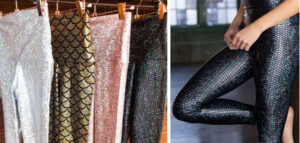
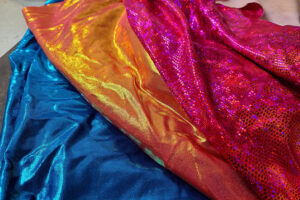
Why some shiny leggings look metallic
Metallic leggings often include:
- Metallic yarns
- Foil printing
- Laminated coatings
These materials create more dramatic visual effects for fashion-focused products.
Are shiny leggings good for workouts?
Many consumers wonder whether shiny leggings are only for fashion or if they also perform well during exercise.
High-quality shiny leggings can perform very well for workouts if the fabric includes moisture-wicking properties, strong stretch recovery, and breathable construction.
At Fusionknits, performance testing is important even for fashion-focused activewear fabrics.
Performance features needed in active leggings
- Four-way stretch
- Sweat-wicking capability
- Squat-proof opacity
- Compression support
- Shape retention
Without these features, leggings may become uncomfortable during training.
Why nylon-spandex works well for fitness
Nylon-spandex blends often provide:
- Better flexibility
- Softer compression
- Improved body contouring
- Smooth movement during exercise
This makes them highly popular in yoga and gymwear collections.
Potential performance limitations
Some highly glossy leggings may have:
- Reduced airflow
- Heavier coating layers
- Lower moisture evaporation
This depends heavily on fabric construction and finishing quality.
How are shiny leggings different from regular leggings?
The main difference lies in fabric construction and surface appearance. Regular leggings usually use matte fabrics, while shiny leggings emphasize reflectivity and sleek styling.
Shiny leggings use smoother yarns and reflective finishes that create a glossy appearance, while regular leggings focus more on natural texture and minimal surface shine.
At Fusionknits, both matte and shiny fabrics are developed for different market trends.
Visual differences
| Feature | Shiny Leggings | Matte Leggings |
|---|---|---|
| Surface Reflection | High | Low |
| Fashion Appearance | Bold and sleek | Minimal and casual |
| Fabric Texture | Smooth | Soft matte |
| Styling Trend | Fashion-forward | Everyday activewear |
Both categories remain popular in different market segments.
Why shiny leggings became fashionable
Several fashion trends increased demand for shiny fabrics:
- Athleisure growth
- Dancewear influence
- Social media trends
- Body-contouring aesthetics
- Retro fitness fashion
These trends continue driving market demand globally.
Are shiny leggings durable?
Durability depends heavily on fabric quality, spandex percentage, and finishing techniques.

High-quality shiny leggings made with strong nylon or polyester blends can be highly durable, but lower-quality coated fabrics may crack or lose shine after repeated washing.
At Fusionknits, durability testing is critical during leggings development.
Important durability testing areas
| Testing Area | Purpose |
|---|---|
| Stretch recovery | Maintains shape |
| Pilling resistance | Surface durability |
| Colorfastness | Prevents fading |
| Coating adhesion | Maintains shine |
| Seam strength | Prevents splitting |
Proper testing improves long-term garment performance.
Why some shiny leggings lose gloss
Shine reduction may happen because of:
- Low-quality coatings
- Excessive washing heat
- Fabric abrasion
- Weak dye fixation
Premium manufacturing reduces these risks significantly.
Why nylon fabrics often last longer
Nylon usually offers:
- Better abrasion resistance
- Smoother recovery
- Softer long-term wear feel
This is why premium brands often use nylon-spandex constructions.
Are shiny leggings sustainable?
Sustainability is becoming increasingly important in leggings manufacturing. Many brands now request eco-friendly shiny fabrics.
Modern shiny leggings can be made using recycled polyester, recycled nylon, and environmentally responsible dyeing technologies.
At Fusionknits, sustainable activewear development continues expanding.
Sustainable shiny leggings materials
| Sustainable Fabric | Main Benefit |
|---|---|
| Recycled Polyester | Reduces plastic waste |
| Recycled Nylon | Supports circular fashion |
| Water-Based Coating | Lower chemical impact |
| Eco Dyeing Processes | Reduced water consumption |
These materials help brands meet sustainability goals.
Challenges in sustainable shiny fabrics
Manufacturers still face several difficulties:
- Recycling coated fabrics
- Maintaining shine durability
- Controlling production cost
- Balancing softness and sustainability
This area continues evolving through textile innovation.
How should brands choose shiny leggings fabrics?
There is no single ideal shiny fabric for every leggings category. Material selection depends on target customers, performance needs, and fashion positioning.
Brands should choose shiny leggings fabrics based on stretch performance, comfort, durability, gloss level, and intended use category.
At Fusionknits, fabric development starts with defining the product purpose clearly.
Questions brands should ask before fabric selection
- Is the leggings collection fashion-focused or performance-focused?
- Does the garment require compression support?
- How important is moisture management?
- Is sustainability a priority?
- What gloss level fits the brand image?
These decisions strongly influence final fabric construction.
Recommended fabrics by category
| Product Category | Recommended Fabric |
|---|---|
| Yoga Leggings | Nylon-Spandex |
| Gym Leggings | Polyester-Spandex |
| Fashion Leggings | Coated Polyester Blend |
| Dancewear | Metallic Stretch Fabric |
| Sustainable Activewear | Recycled Nylon Blend |
Matching the correct fabric with product goals improves both performance and customer satisfaction.
Conclusion
Shiny leggings are primarily made from synthetic stretch fabrics such as polyester-spandex and nylon-spandex blends because these materials provide the smooth surface, flexibility, durability, and reflective appearance required for glossy activewear and fashion garments. The final shine level depends not only on fiber composition but also on knitting structure, dyeing methods, and specialized finishing treatments.
Polyester blends are commonly used for commercial activewear because they offer durability, moisture-wicking performance, and strong color retention. Nylon-spandex fabrics are widely preferred in premium leggings because they create a softer hand feel, smoother compression, and a more luxurious appearance. Additional coating technologies and metallic finishes can further enhance glossiness for fashion-focused collections.
At Fusionknits, we believe successful shiny leggings manufacturing requires balancing aesthetics, comfort, durability, and performance. Fabric selection, stretch recovery, coating quality, and sustainability considerations all play critical roles in the final garment quality. As athleisure and fashion trends continue evolving, shiny leggings remain an important category that combines technical fabric engineering with modern visual appeal.